Manufacturer: Mistercraft
Scale: 1/72
Additional parts: none
Model build: Jun 2026
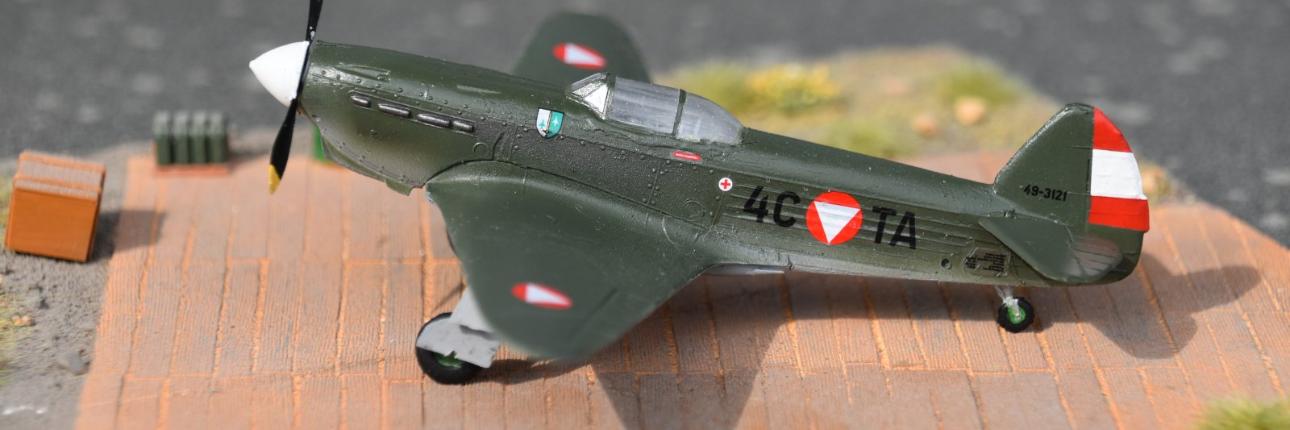
Manufacturer: Mistercraft
Scale: 1/72
Additional parts: none
Model build: Jun 2026
Upper Austria, September 1958
The morning sky above Hörsching Air Base was crystal clear, the first hint of autumn already cooling the air over the Danube Valley.
Leutnant Franz Hofer tightened the straps of his parachute as he climbed onto the wing of Yak-1 4C-TA. Painted in bronze green with its distinctive white spinner and red-white-red rudder, the aircraft looked oddly modern despite its wartime origins. Few would have guessed that the fighter had first flown more than fifteen years earlier over the Eastern Front.
"Engine start."
The Klimov engine coughed twice before erupting into its familiar deep growl. Mechanics stepped back as the propeller blurred into a silver disc. The radio crackled. 4C-TA, scramble. Unknown aircraft approaching Austrian airspace from the northeast." Hofer exchanged a quick glance with his wingman. This was no exercise.
The two Yak-1s rolled onto the runway, their tails lifting almost immediately as the old fighters accelerated. "Rotation." Within seconds both aircraft were climbing hard over the forests west of Linz. Ground Control transmitted the latest radar information. "Target crossing the border at eleven thousand feet. Estimated speed two hundred knots. No radio contact." Hofer frowned.
Not fast enough for a military jet. Too fast for a light civilian aircraft. Ten minutes later the unknown contact appeared ahead. "There!" A polished silver twin-engined aircraft glinted in the morning sun. Hofer eased alongside. A C-47 Skytrain. No national markings. No registration. No response to repeated radio calls. His orders were clear. Identify. Escort. Do not engage. The Yak's bronze-green wings rocked gently as he moved closer. Inside the transport, several men stared back through the cockpit windows. One of them finally held up a folded map before pointing helplessly toward the mountains.
Lost.
Ground Control confirmed the situation moments later. "The aircraft departed Yugoslavia this morning. Radio failure suspected. Escort to Hörsching." Hofer acknowledged. "4C-TA copies." The Yak settled into position off the transport's left wing. Despite the enormous age difference between the aircraft, both cruised comfortably together across Upper Austria. Below them, villages emerged from the morning mist while church bells echoed faintly through the valleys.
Twenty minutes later Hörsching appeared ahead. Hofer lowered his landing gear. The old Yak shuddered slightly as the wheels locked into place. He dipped his wings. The Dakota pilot understood immediately. One by one both aircraft descended toward the runway.
The transport touched down first. The Yak followed only seconds later, its narrow undercarriage bouncing once before settling firmly onto the concrete.
As the propeller slowed to a stop, Hofer climbed out and removed his helmet. The Dakota's crew approached under armed guard, visibly relieved rather than frightened. The investigation later confirmed a complete electrical failure that had disabled both radios and navigation equipment. The crew had unknowingly crossed into Austrian airspace while searching for a suitable emergency landing field. No shots had been fired. No international incident had occurred.
That evening, 4C-TA was pushed quietly back into its hangar. The maintenance chief patted the fighter's cowling. "Not bad for an old lady." The Yak had once been built for a very different war. Now, in the service of a neutral Austria, she had completed her first real interception—not by threatening an intruder, but by safely guiding a lost aircraft home.
In the squadron logbook, the entry for 18 September 1958 consisted of only a single sentence:
"First operational interception completed successfully. No weapons employed."
It would become the mission that established the reputation of Austria's forgotten fighters—the bronze-green Green Falcons that quietly guarded the skies during the earliest years of the Second Republic.

Austria's Forgotten Fighters – The Yakovlev Yak-1 in Austrian Service (1955–1962)
When Austria regained its sovereignty with the signing of the Austrian State Treaty on 15 May 1955, the newly established Austrian Air Force faced a daunting challenge. The country had no operational combat aircraft, only a handful of experienced pilots and ground crews, and virtually no aviation infrastructure. Rebuilding an air arm from scratch required immediate foreign assistance.
As part of the withdrawal of Soviet occupation forces, Moscow agreed to donate a number of aircraft to support Austria's new policy of permanent neutrality. Official records list the transfer of several Yakovlev Yak-11 advanced trainers and Yak-18 primary trainers. These aircraft formed the nucleus of Austria's pilot training program.
However, according to recently declassified documents from the Austrian Ministry of Defence, the Soviet shipment contained a little-known addition: twelve Yakovlev Yak-1M fighters.
A Hidden Part of the Soviet Aid Package
The aircraft were veterans of the Second World War, but unlike many of their contemporaries they had never been worn out in combat. During the final years of the war, a small batch of Yak-1Ms had been retained by Soviet flight schools as advanced fighter trainers. Although replaced by more modern Yak-3s and Yak-9s, they remained mechanically reliable and remarkably easy to maintain.
By 1955 the Soviet Air Force considered them obsolete. Rather than scrapping the aircraft, they were quietly included in the transfer to Austria as part of a broader military assistance package. To avoid unnecessary political attention during the sensitive negotiations surrounding Austrian neutrality, the aircraft were officially described only as advanced training aircraft, and their fighter capability was omitted from public statements.
Rebuilding Austria's First Fighters
Before entering service, all twelve aircraft underwent an extensive overhaul at Fliegerwerft Hörsching.
The modernization program focused on reliability rather than performance. Soviet radios were replaced with Austrian-built VHF equipment, electrical systems were refurbished, and several cockpit instruments were exchanged for Western-standard metric instruments. The aircraft also received new identification lights and improved radio navigation equipment for peacetime operations.
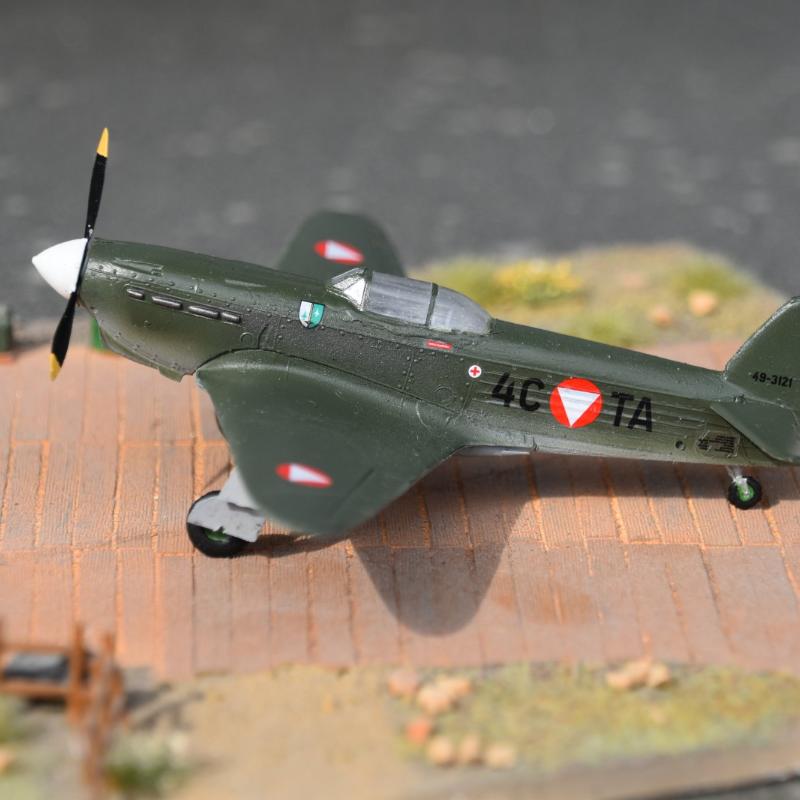
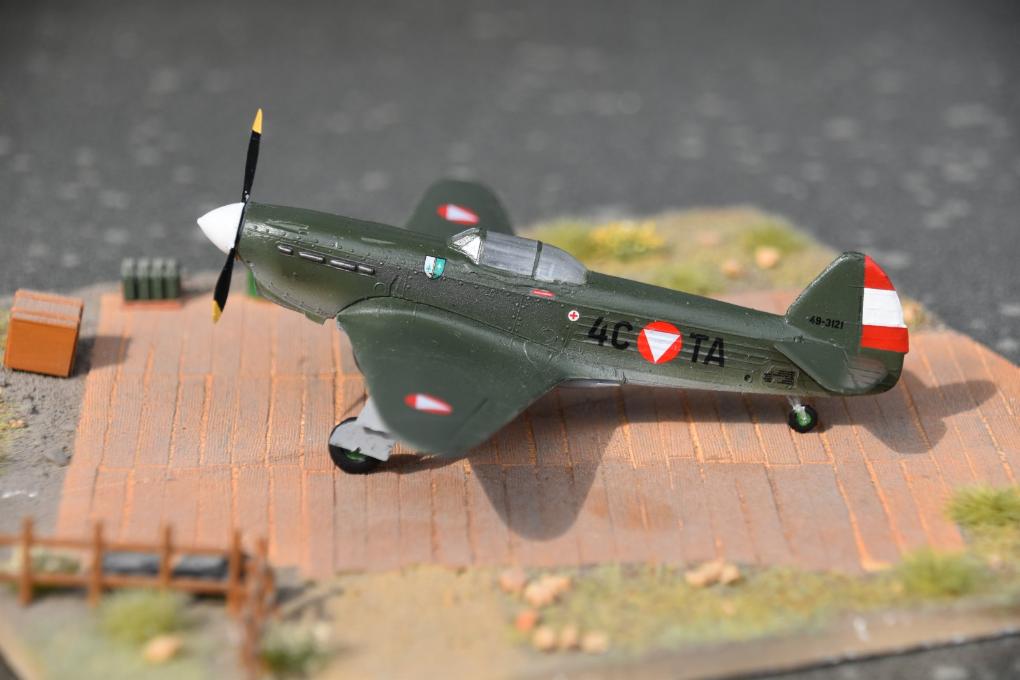
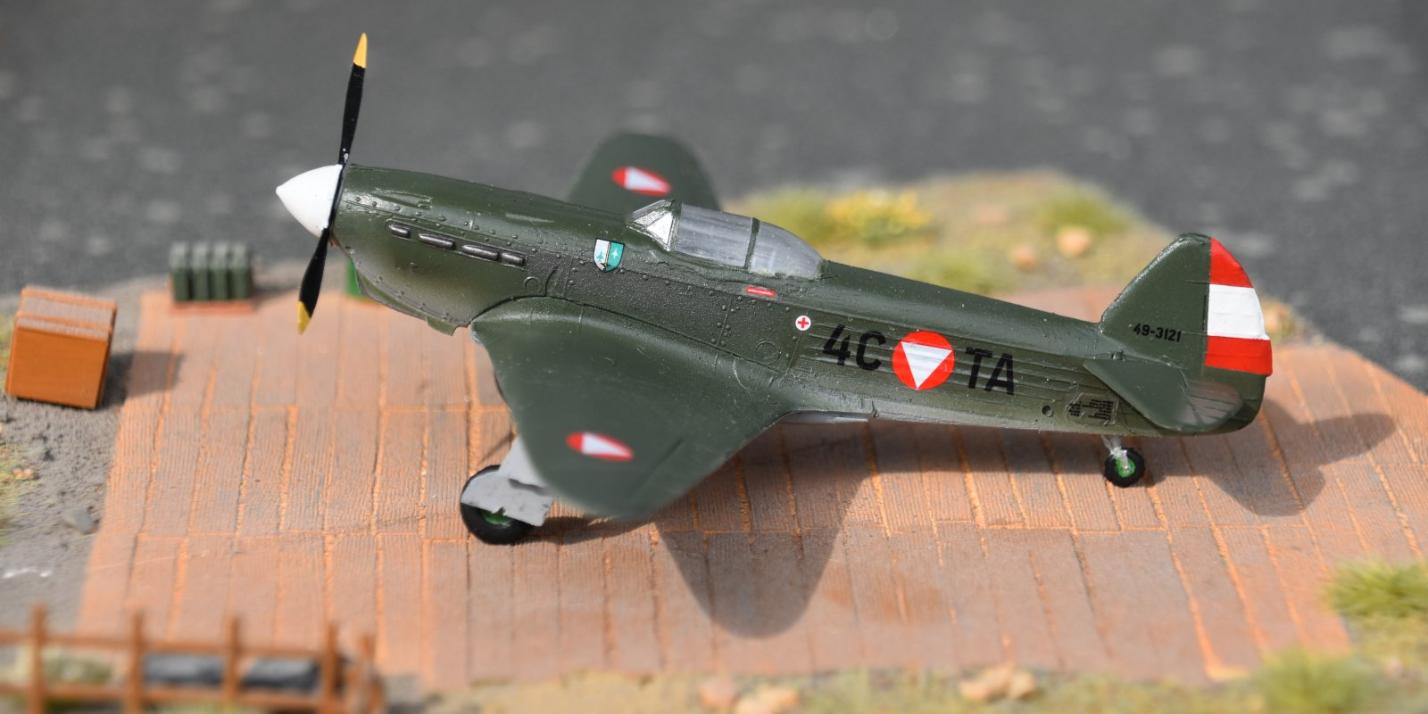
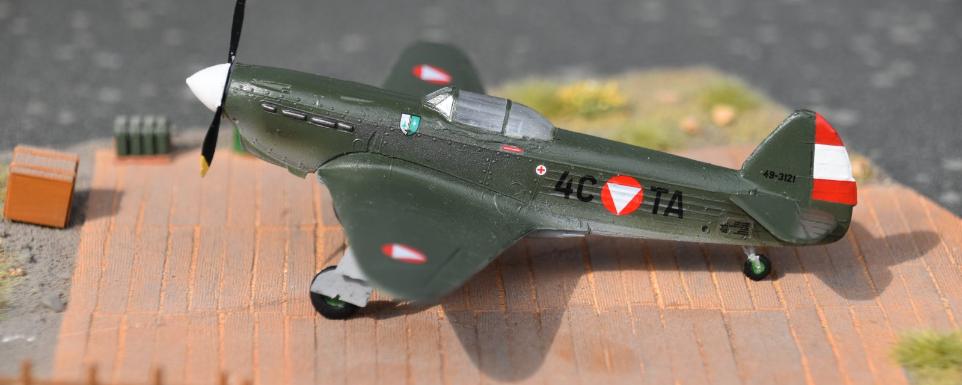
Externally, every aircraft was completely refinished in a distinctive Austrian scheme. The wartime camouflage disappeared beneath bronze green upper surfaces and fuselage sides with light grey undersides, while the movable rudder was painted in red-white-red, reflecting the national colours. A white spinner and Austrian national insignia completed the transformation.
The fighters received serials 4C-TA through 4C-TL, becoming the first operational single-seat fighters of the Austrian Second Republic.
Service in a Neutral Nation
Although Austria's neutrality prohibited offensive military planning, the Yak-1 proved invaluable during the formative years of the new air force.
The aircraft served with the newly established 1. Jagdstaffel at Hörsching Air Base, where they fulfilled a wide range of duties:
· advanced fighter conversion training,
· formation flying,
· aerobatic instruction,
· navigation exercises,
· limited weapons training,
· and occasional air-policing missions during national emergencies.
Only four aircraft retained their original armament of one 20 mm ShVAK cannon and two synchronized 12.7 mm UBS machine guns. These aircraft were used exclusively for live-fire exercises, while the remaining eight had their weapons removed to simplify maintenance and reduce operating costs.
Although capable of little more than 580 km/h, the Yak-1 provided an excellent stepping stone for pilots destined to fly modern jet aircraft.
The "Green Falcons"
Within the Austrian Air Force the Yak-1 quickly earned the unofficial nickname "Die Grünen Falken" – The Green Falcons. Their distinctive bronze-green finish, combined with the white spinner and Austrian rudder markings, made them instantly recognizable during flying displays and training exercises throughout the late 1950s.
Pilots appreciated the fighter's responsive controls and forgiving handling, although its narrow-track landing gear demanded concentration during take-off and landing. Maintenance crews valued its simple construction and the generous supply of spare parts delivered with the original Soviet shipment.
Despite their age, the aircraft achieved an impressive serviceability rate and became an important symbol of Austria's newly regained sovereignty.
Retirement
The arrival of the Saab J 29F Tunnan in 1961 marked the beginning of the jet era for Austria. The Yak-1s were gradually withdrawn from service over the following two years, with the final flight taking place in the spring of 1962.
Several aircraft became instructional airframes at technical schools, while two examples were preserved by museums. One aircraft, 4C-TG, was reportedly stored for many years before disappearing from official records, giving rise to rumours that it survives in a private collection somewhere in Central Europe.
Legacy
Overshadowed by the arrival of jet fighters, Austria's Yak-1s were largely forgotten by history. Yet for nearly seven years they represented the country's only operational fighter force and trained the first generation of Austrian military fighter pilots of the Second Republic.
Though absent from most history books, the Yakovlev Yak-1 occupies a unique place in this alternate history—not as a relic of the Second World War, but as the unlikely aircraft that bridged the gap between wartime technology and the rebirth of Austrian military aviation.

Built for a group build, this 1/72 MisterCraft Yak-1 proved to be one of the most challenging kits I have ever worked on. The overall production quality was extremely poor. The instructions often referred to parts that were either missing or incorrectly numbered, while several kit parts were so crudely molded that identifying them was difficult. Poor fit throughout the build meant that almost every assembly required significant trimming, filling, and sanding. Simply achieving a presentable model was a challenge.
Despite the kit's shortcomings, I decided to finish it as a fictional Austrian Air Force Yak-1 from the mid-1950s, depicting one of twelve surplus fighters supposedly transferred to Austria alongside Yak-11 and Yak-18 trainers. The model was airbrushed using Revell Aqua Color paints, while the Austrian markings were sourced from third-party decals.
Although I am pleased with the final result, this is a kit I cannot recommend. It demands a great deal of patience and experience, and there are far better Yak-1 kits available for anyone looking to build this iconic fighter.