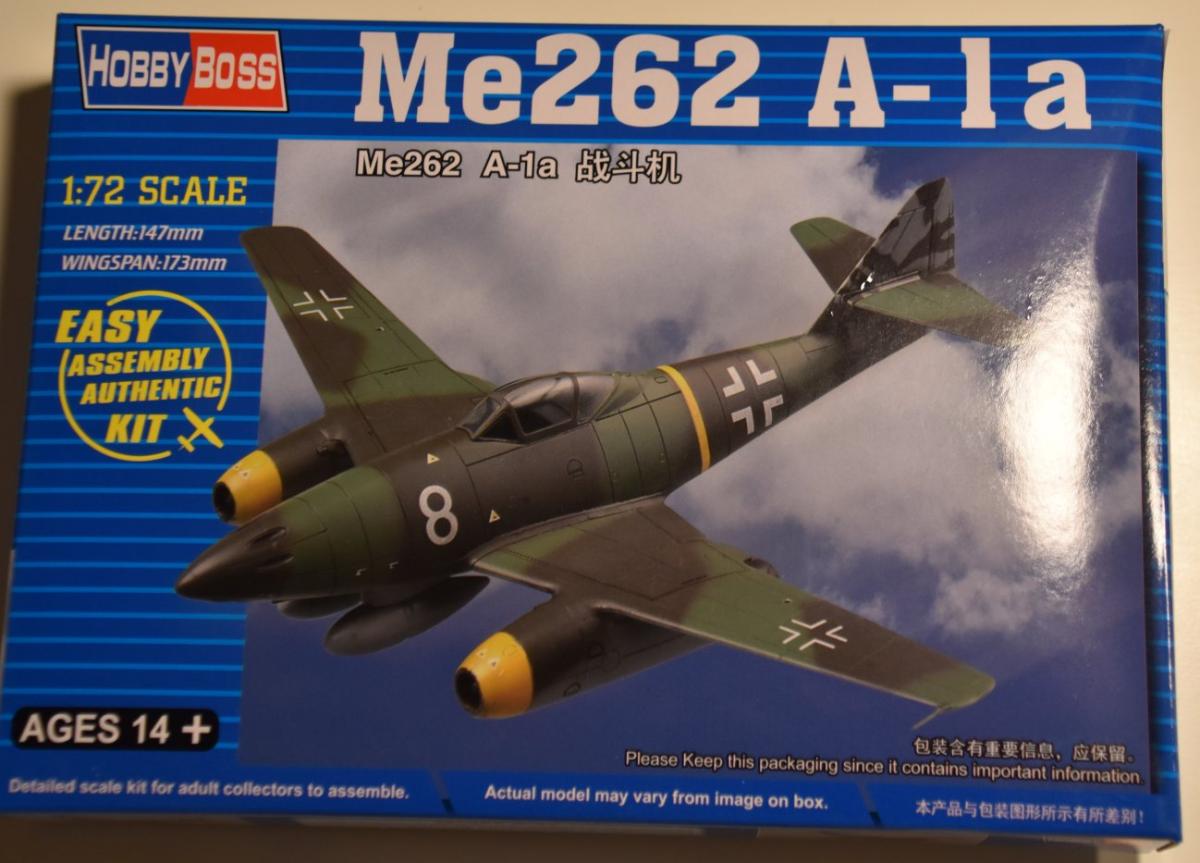
Manufacturer: HobbyBoss
Scale: 1/72
Additional parts: none
Model build: Apr - Jun 2026
Manufacturer: HobbyBoss
Scale: 1/72
Additional parts: none
Model build: Apr - Jun 2026
November 18th, 1945
Kyushu, Japan
Captain Hiroshi Takeda stood beside his Mitsubishi Ki-202 as mechanics removed the camouflage netting from the aircraft. Dawn light reflected off the jet’s metal skin while distant thunder rolled across the horizon.
Except it was not thunder.
American naval guns.
The invasion had begun.
Around the hidden airfield, crews rushed between revetments carved into the forested hillside. Fuel trucks moved carefully beneath trees while officers studied maps beside radios crackling with urgent reports from the coast. Far above them, faint white contrails crossed the morning sky.
American bombers.
Takeda climbed into the cockpit of the Ki-202 and secured his harness. The aircraft still smelled new inside—oil, fuel, hot metal. Germany had created the machine, but now it belonged to Japan.
“Kanji Squadron,” came the radio order. “Prepare for immediate launch.”
One after another, the jet engines ignited with piercing shrieks that echoed through the valley. Heat shimmered behind the aircraft as the twin turbines stabilized.
Takeda glanced toward the runway.
Beyond the hills, black smoke climbed into the sky from the coastline. American ships filled the sea. Even from miles inland, the rumble of bombardment never stopped.
The radio crackled again.
“Enemy bomber formation approaching Kagoshima. Escort fighters detected.”
Takeda lowered his goggles.
“Understood.”
The Ki-202 surged forward.
Acceleration slammed him back into the seat as the aircraft raced down the narrow strip. Seconds later the fighter lifted into the air, climbing steeply over forests and burning villages below. Six more Ki-202s rose beside him, silver wings flashing in the sunlight.
Takeda pushed the throttles farther forward.
The jet responded instantly.
Faster.
Always faster.
Clouds swallowed the formation as they climbed toward the incoming Americans. Inside the cockpit, only engine roar remained. The war below disappeared beneath white vapor.
Then they emerged above the cloud layer.
And saw the bombers.
Dozens of B-29s moved across the sky in tight formation, sunlight reflecting from their wings. Smaller fighters circled above them.
Takeda narrowed his eyes.
Something was wrong.
The escort fighters looked unfamiliar.
Not Mustangs.
Not Hellcats.
Twin engines.
Swept wings.
His blood ran cold.
They were Ki-202s.
“No…” whispered one of the Japanese pilots over the radio. “Impossible…”
Takeda stared in disbelief.
The approaching aircraft were identical to his own fighter.
For one terrible moment he wondered if American forces had captured Japanese jets somehow. Then realization struck him.
German aircraft.
The Americans were flying Me 262s too.
“Enemy jets confirmed!” Takeda shouted. “Break formation!”
The sky exploded into violence.
American jets dived toward them at terrifying speed. Cannon flashes burst across the clouds. One Ki-202 vanished almost instantly, its cockpit shattered in a burst of fire.
Takeda rolled hard left as tracers streaked past his canopy.
The closing speed was unlike anything he had ever experienced. In piston fighters, pilots circled and maneuvered. Here, battles lasted seconds.
He locked onto an American jet climbing through the bomber formation.
The enemy aircraft carried white stars on dark wings.
Otherwise, it looked exactly like his own machine.
Takeda armed his cannons and accelerated.
The American pilot spotted him at the last second. Both jets climbed toward one another head-on.
Closer.
Closer.
Too fast.
Takeda fired.
Four 30mm cannons erupted simultaneously, shaking the aircraft violently. Shells streaked past the enemy canopy. He saw impacts flash across the American jet’s wing root.
The enemy fired back immediately.
The sky between them became a storm of tracer fire.
Takeda rolled underneath the American fighter, missing collision by only meters. The Ki-202 screamed through turbulence as both aircraft passed each other at nearly a thousand kilometers per hour combined speed.
No turning fight followed.
No graceful maneuvering.
Only speed.
Only survival.
“American fighters above!” another pilot shouted.
Takeda looked upward just in time to see two enemy jets diving toward the formation. Cannon fire ripped through the clouds. One Ki-202 exploded outright. Burning debris scattered across the sky.
The Americans had numbers.
Far more than expected.
Takeda clenched his jaw and pushed the throttles fully forward. The engines howled as the Ki-202 accelerated again.
Below them, the invasion fleet stretched across the sea.
Hundreds of ships.
Countless targets.
The homeland burned beneath black smoke while the strange mirror war unfolded overhead.
Takeda tightened his grip on the controls.
If Japan was going to fall, then the enemy would pay for every mile of sky.

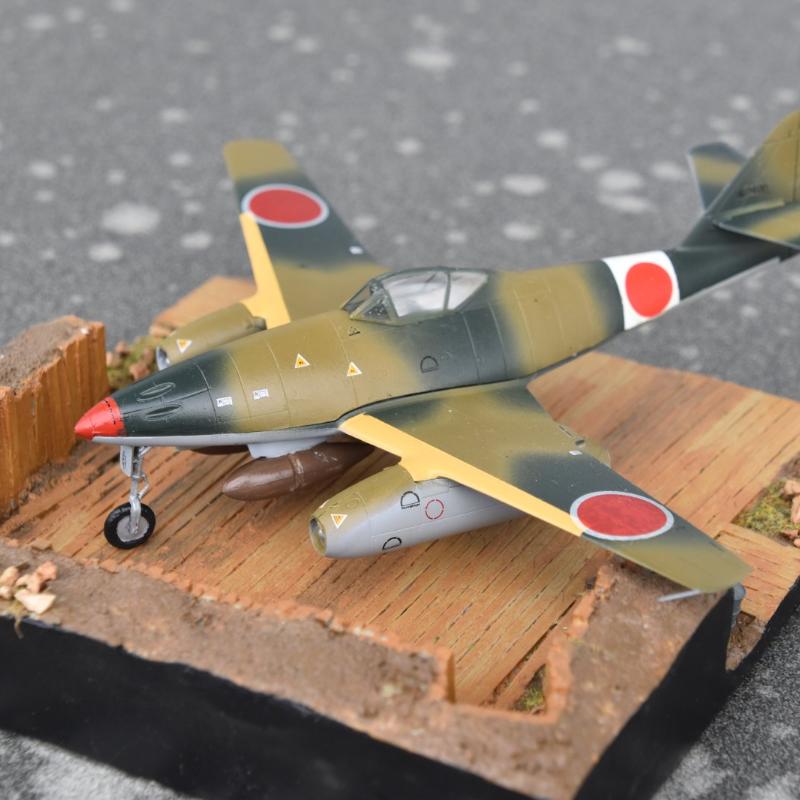
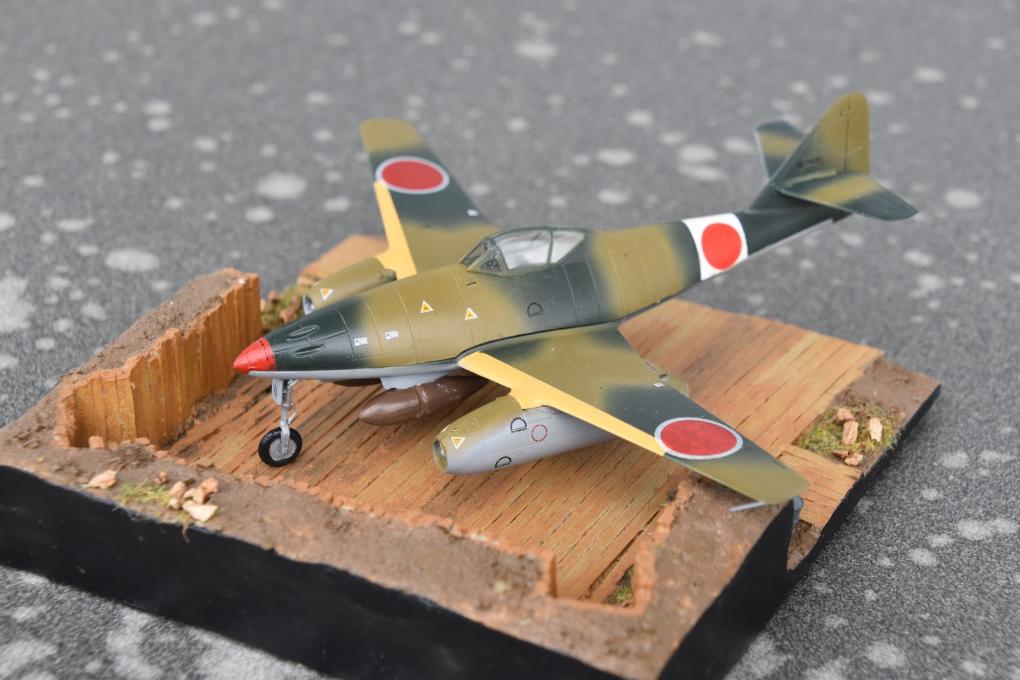
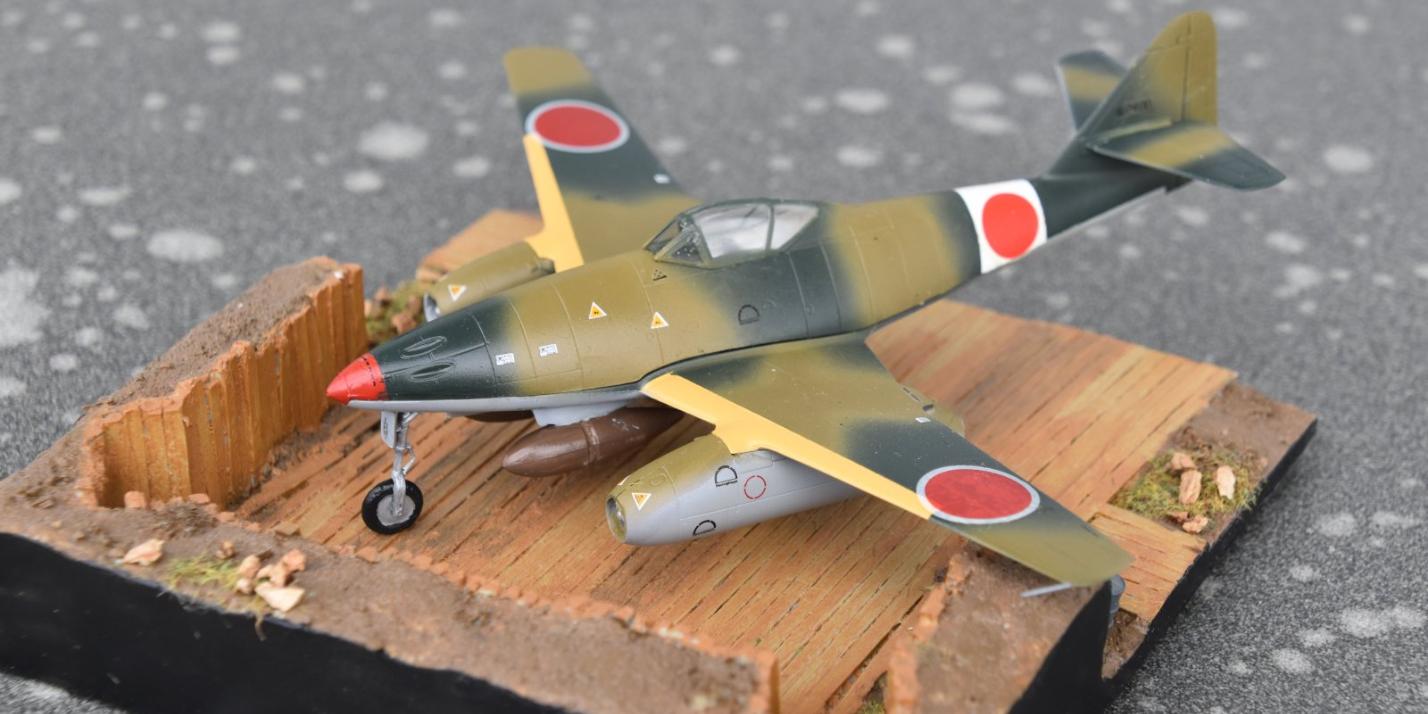
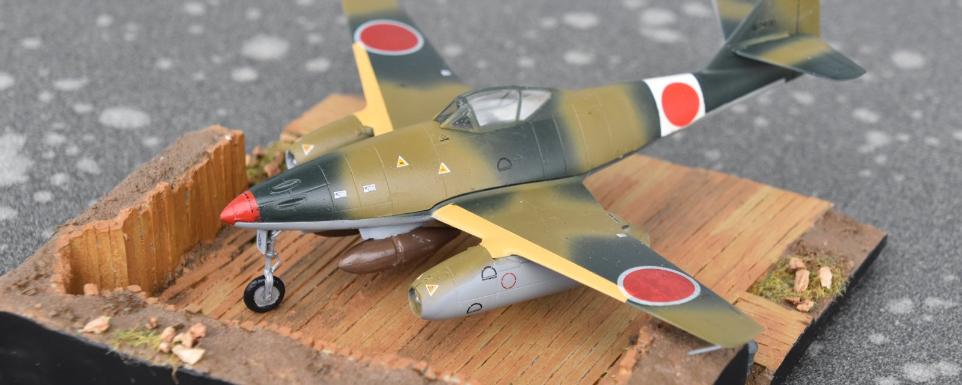
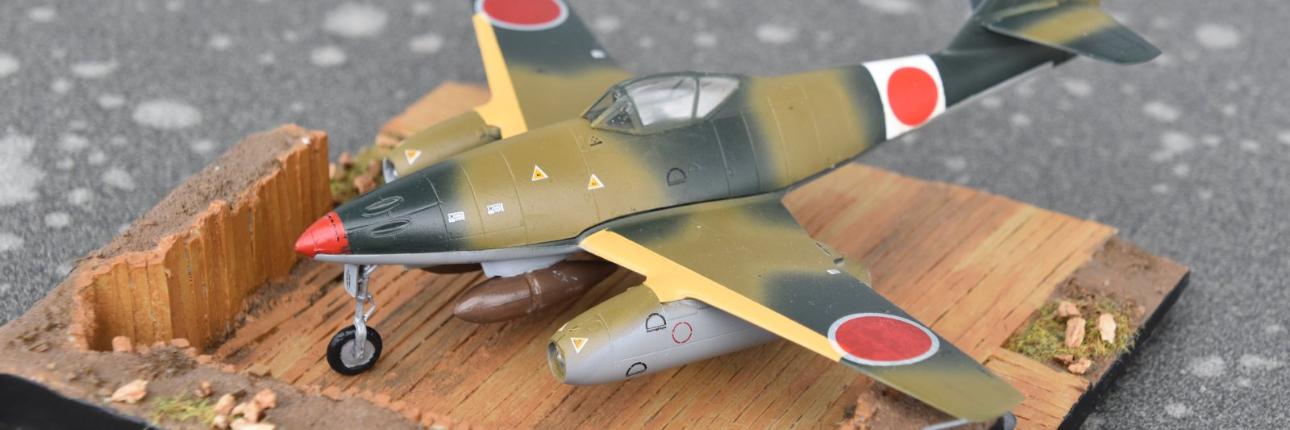
Mitsubishi Ki-202 “Kanji” – Japan’s Last Hope
In late 1944, German submarine missions arriving in Asia carried more than strategic materials—they brought complete technical documentation for the Messerschmitt Me 262, the world’s first operational jet fighter. As Japan’s military situation deteriorated, the Imperial Japanese Army ordered an emergency program to reproduce the aircraft as quickly as possible.
Mitsubishi engineers, working alongside specialists from Nakajima, adapted German blueprints for Japanese production methods while attempting to preserve the Me 262’s performance. The result was the Ki-202 “Kanji,” a near-identical copy of the German jet. Production was plagued by shortages of fuel, alloys, and experienced workers, yet small numbers entered operational service in the autumn of 1945.
Pilots selected for the Ki-202 were among the Army Air Force’s remaining veterans. Flying from concealed airfields on Kyushu, they were tasked with intercepting American bombers and defending the homeland against Operation Downfall. Though too few to alter the course of the war, the Ki-202 gave Japan, for a brief moment, a fighter capable of matching the enemy on equal terms.
Operation Downfall – Japanese Perspective
As American forces gathered for the invasion of the Japanese home islands, the Empire faced its darkest hour. Cities burned under constant bombing, fuel and supplies were scarce, and experienced pilots had become increasingly difficult to replace. Yet despite the worsening situation, the Imperial Japanese Army Air Force prepared for a final defense of the homeland.
Hidden among forests and camouflaged airfields on Kyushu was Japan’s newest weapon: the Mitsubishi Ki-202 “Kanji.” Developed from German Me 262 blueprints delivered by submarine, the Ki-202 represented the most advanced fighter Japan had ever fielded. Though only a small number were completed, military leaders hoped the aircraft could disrupt American air superiority long enough to slow the invasion.
When Operation Olympic began, Ki-202 squadrons launched against American bomber formations and naval air cover. Japanese pilots expected to face conventional propeller-driven fighters. Instead, they encountered the American Bell P-262—captured German Me 262s now flying under USAAF markings.
For the pilots of the Ki-202, the battles that followed carried a strange symbolism. In the skies above Kyushu, identical aircraft built from the same German design fought for opposite sides of the war. Combat was fast, violent, and merciless, often ending in head-on attacks where survival depended on fractions of a second.
Although Japan lacked the resources to produce the Ki-202 in sufficient numbers, the aircraft became a symbol of resistance during the final months of the war. To many Japanese pilots, the Mirror War represented one last opportunity to defend their homeland on equal technological terms against an overwhelming enemy.
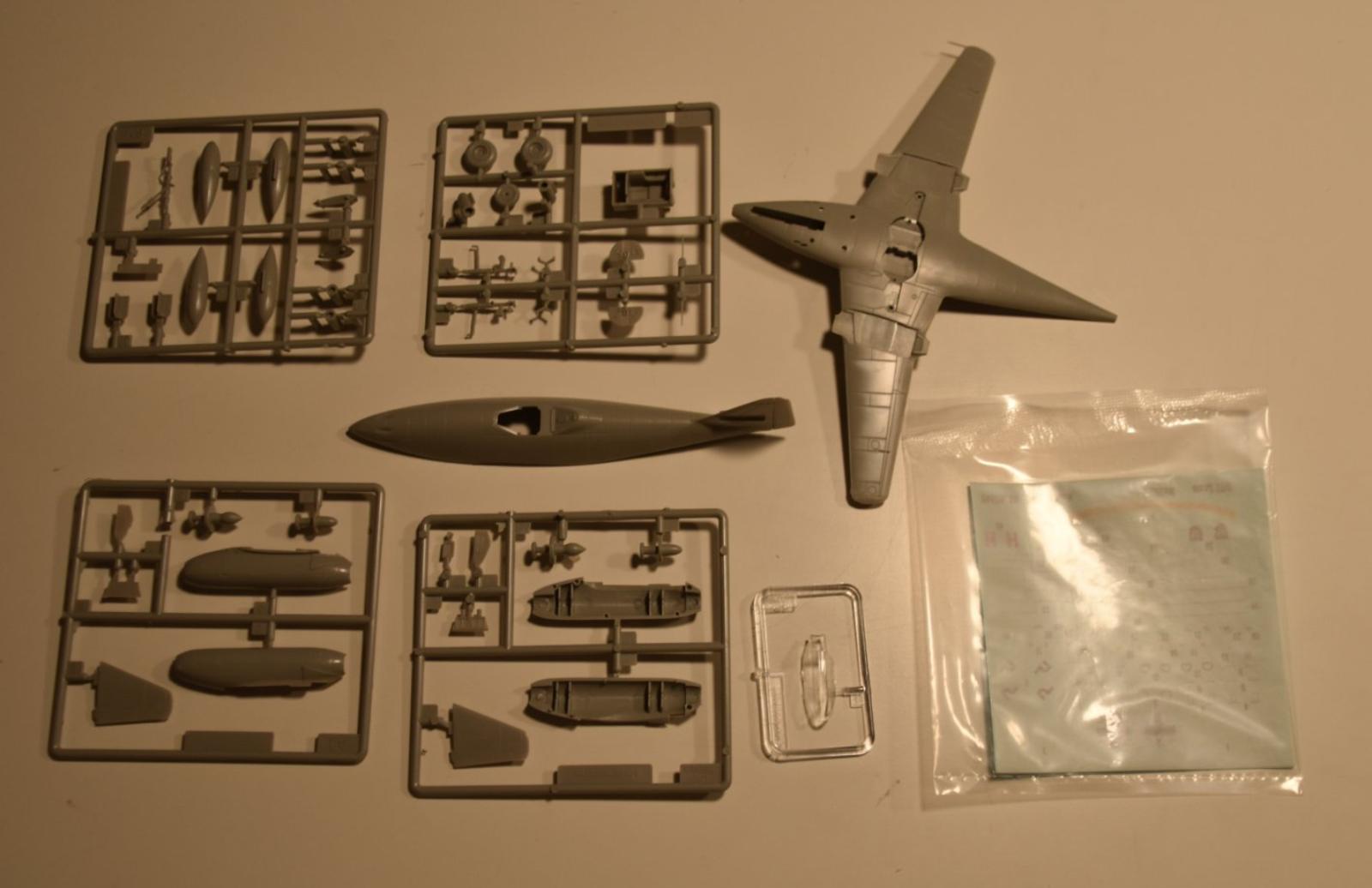
The HobbyBoss 1/72 scale Me 262 is an enjoyable and straightforward kit to build. While it is relatively simple in terms of detail, it offers excellent fit throughout the assembly process and represents very good value for money.
The model was painted using Revell Aqua Color paints. Markings were created using a combination of the kit's original decals and additional decals from the spare decal box.