Manufacturer: Kooperativa
Scale: 1/72
Additional parts: none
Model build: Jun-Oct 2019
Manufacturer: Kooperativa
Scale: 1/72
Additional parts: none
Model build: Jun-Oct 2019
The biting wind of April 1945 whipped across the desolate landscape, carrying with it the faint rumble of distant gunfire. Captain Vladimir Sokolov squinted through the swirling snow, his breath misting in the frigid air. His orders were simple: capture the Dessau Junkers factory and any unfinished aircraft projects before the Americans reached it.
Dessau, once a bustling hub of German aviation, was now a ghost town. The factory, a hulking silhouette against the gray sky, looked strangely quiet. Sokolov's men, bundled in thick coats, advanced cautiously. The silence was unnerving.
Suddenly, a flurry of activity erupted from the factory doors. A group of German figures emerged, pushing a strange, sleek object shrouded in canvas. As they approached, the canvas slipped, revealing a breathtaking sight: a jet fighter unlike anything Sokolov had ever seen. Its sleek metal fuselage gleamed even in the dying light, but what truly intrigued him were the wings – a dark, skeletal structure of wood.
"What is this?" Sokolov barked, his voice hoarse from the cold.
The lead German, a weary-looking engineer named Herr Schmidt, explained, his voice laced with despair. "The EF 1111, Captain. Our last hope. A jet fighter superior to the Me 262, but…" he trailed off, gesturing towards the wooden wings. "We ran out of metal."
Sokolov understood the desperation in Schmidt's eyes. He knew the war was lost, yet these engineers had poured their hearts into this final project. His gaze swept over the gathered Germans, their faces etched with a mixture of pride and defeat.
"We can't let this fall into American hands," Sokolov declared, a resolute glint in his eyes.
The capture of the EF 1111 was a delicate operation. Time was of the essence. With the help of German engineers, the Soviets dismantled the precious aircraft, meticulously separating the wooden components from the metal fuselage. The metal parts were loaded onto trucks, while the disassembled wooden wings were carefully packed onto horse-drawn wagons.
The trek back to Soviet lines was arduous. The constant fear of American patrols kept them on edge. Yet, they persevered, driven by the knowledge that they were carrying a technological marvel that could tip the scales in the coming Cold War.
Finally, after days of relentless travel, they reached Soviet-held territory. The EF 1111 was a jigsaw puzzle waiting to be reassembled, but in the right hands, it could revolutionize Soviet aviation.
Sokolov knew the capture of the EF 1111 wouldn't be publicized. It would become a secret weapon, a ghost in the Soviet hangar, waiting for its chance to take flight and rewrite the history of jet fighters. The fate of the EF 1111, once a symbol of German desperation, now rested in the hands of the Soviets, ready to be reborn as a weapon of the coming era.

When the Luftwaffe’s fortunes began to decline in 1944, Germany's aircraft industry scrambled to develop high-performance jet fighters to replace the increasingly vulnerable Me 262. Among the swirl of proposals and prototypes, one of the most obscure yet visionary designs was the Junkers EF 1111—almost entirely lost to history until documents resurfaced from Soviet archives in the early 1990s.
Development of the EF 1111 began at Junkers in Dessau during the summer of 1944. The RLM had issued a desperate request for a jet fighter that would outperform the Me 262, be simpler to manufacture, and conserve strategic materials such as aluminum. Junkers responded with a radical hybrid design:
Metal fuselage for structural strength,
Wooden wings and control surfaces, produced in decentralized rural workshops to avoid Allied bombing,
Twin HeS 011 or Jumo 004 engines, depending on availability,
Four MK 108 cannons in the nose for bomber interception.
By April 1945, the first prototype—EF 1111 V1—stood in final assembly, unpainted but nearly complete.
When Soviet forces entered Dessau in May 1945, the EF 1111 prototype was seized intact. In August, the unfinished aircraft, technical drawings, and several Junkers engineers were transported to the USSR as part of Operation Osoaviakhim.
The prototype was completed under Soviet supervision at the Lawotschkin design bureau and redesignated “Samolyot Yu-1111.” The first flight took place on January 11, 1947, a full year before the MiG-15 took to the skies. Test pilots praised its climb rate and high-speed handling but criticized its fragile wooden wings and overheating engine bay.
During its eighth test flight on May 8, 1947, the aircraft suffered structural failure on landing and crash-bellied at Zhukovsky Air Base. The prototype was heavily damaged and never repaired.
Despite the crash, Soviet engineers were impressed. Lawotschkin heavily borrowed from the EF 1111’s aerodynamic layout when developing the La-15 “Fantail” fighter. Key similarities included:
Trapezoidal mid-mounted wings (now fully metal),
Pressurized cockpit and tricycle landing gear,
Nose intake with buried twin engines in the fuselage.
Between 1948 and 1949, 235 La-15 fighters were produced—serving briefly alongside early MiG-15 models before being phased out.
After 1949, all traces of the EF 1111 vanished. The damaged prototype was likely scrapped, and its wooden wings burned for storage space. Only in 1993 did Russian archival files reveal photos and design notes titled “Junkers Jet Project EF-1111.”
Today, only fragments remain—three pages of flight data, a damaged windscreen preserved in a private collection, and a single photograph showing the aircraft on a snowy Soviet airfield.
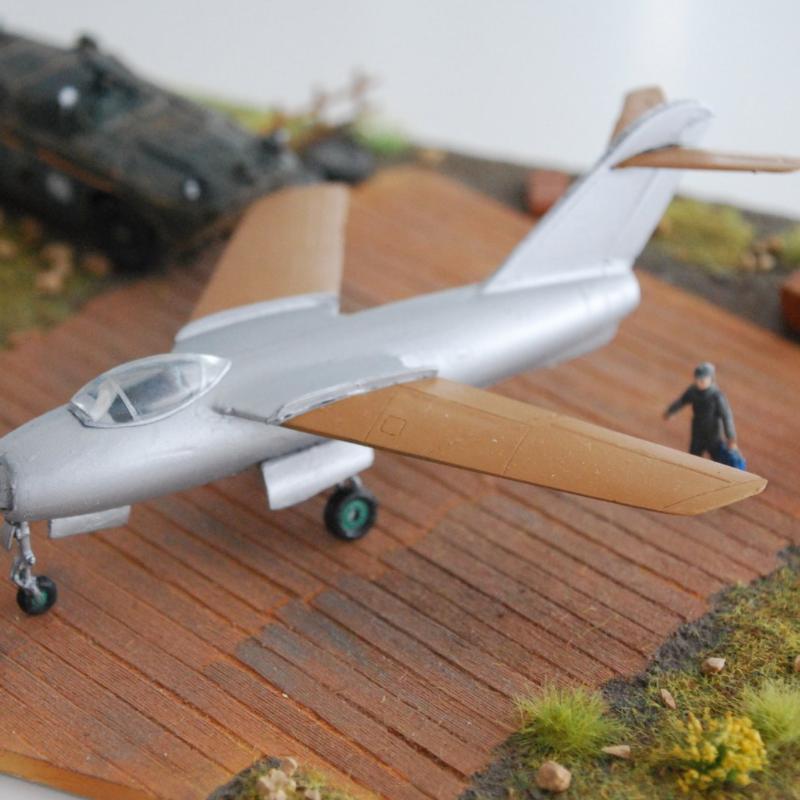
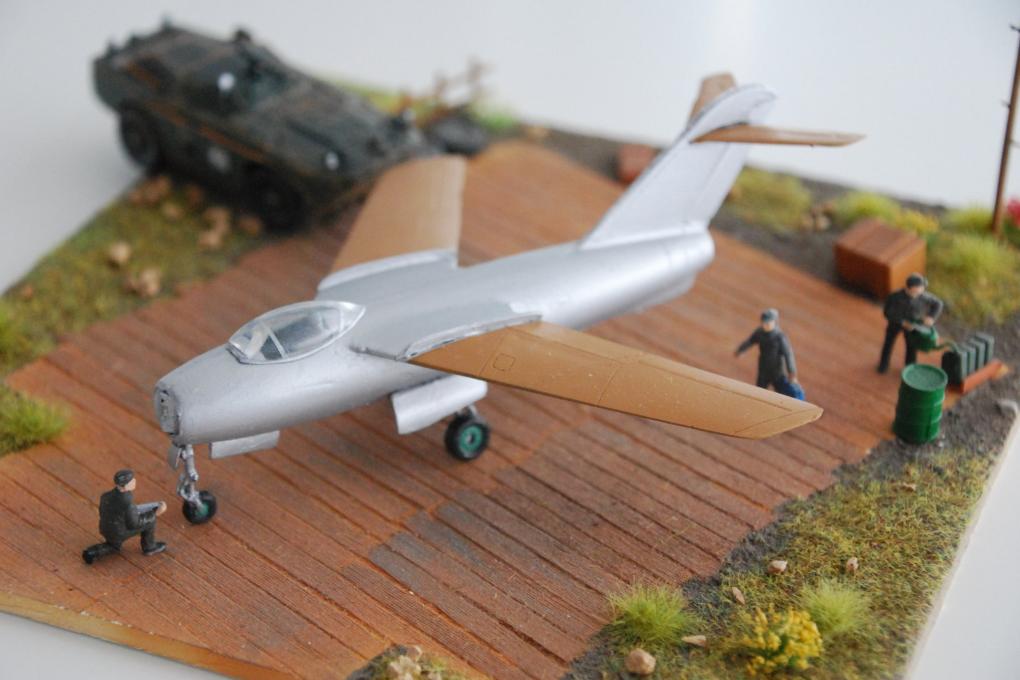
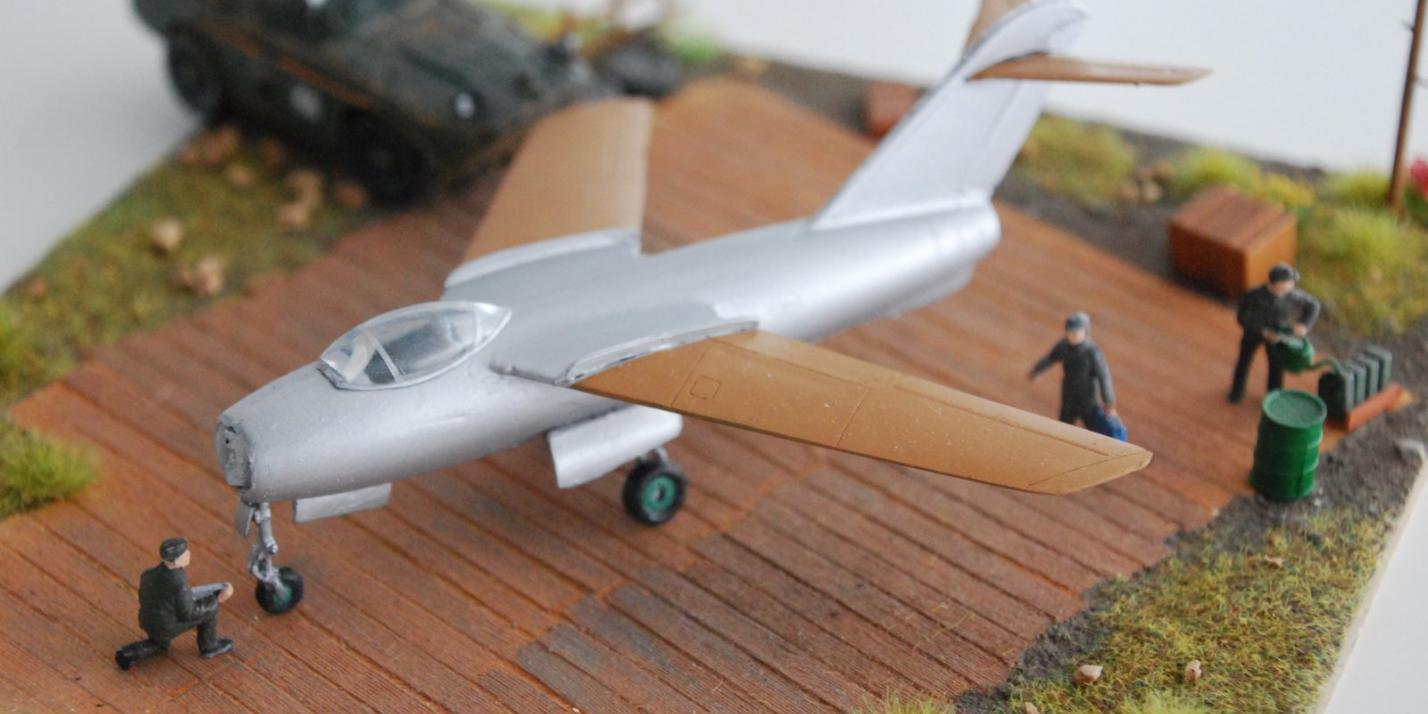
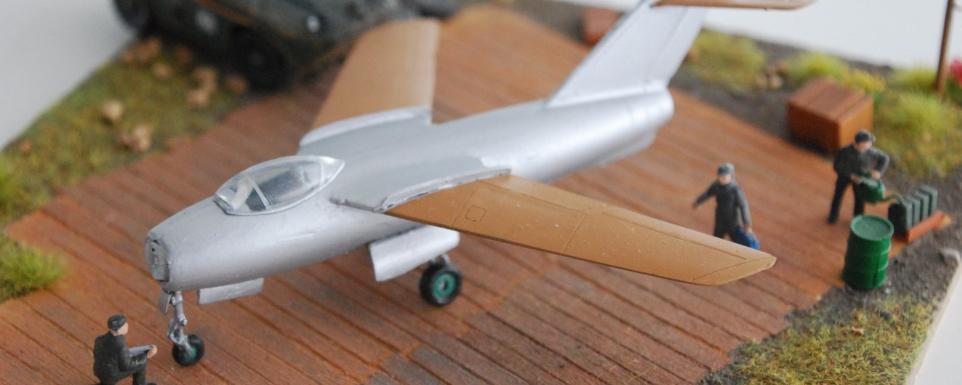
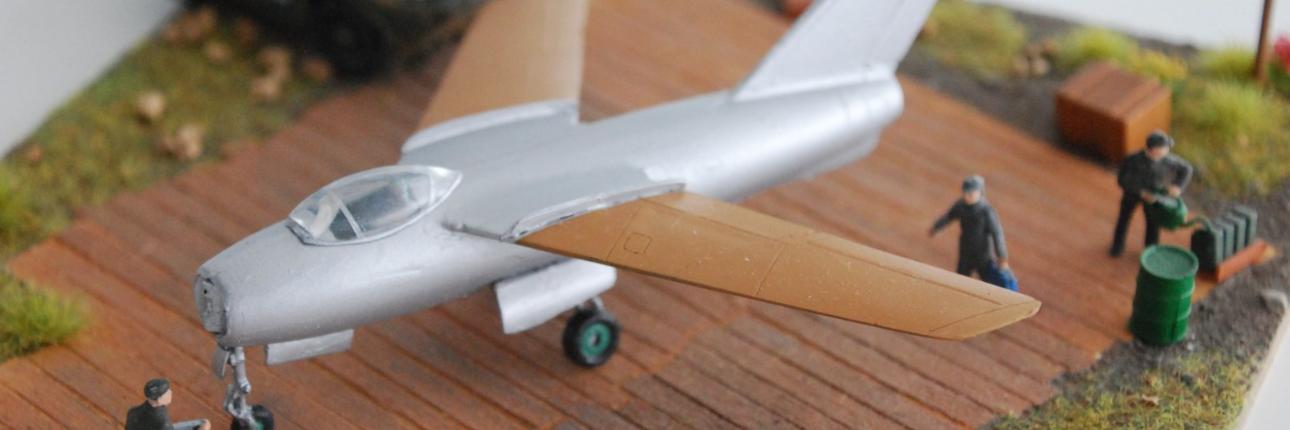
Them model shows the first EF 1111 prototype captured by Soviet forces in May 1945.
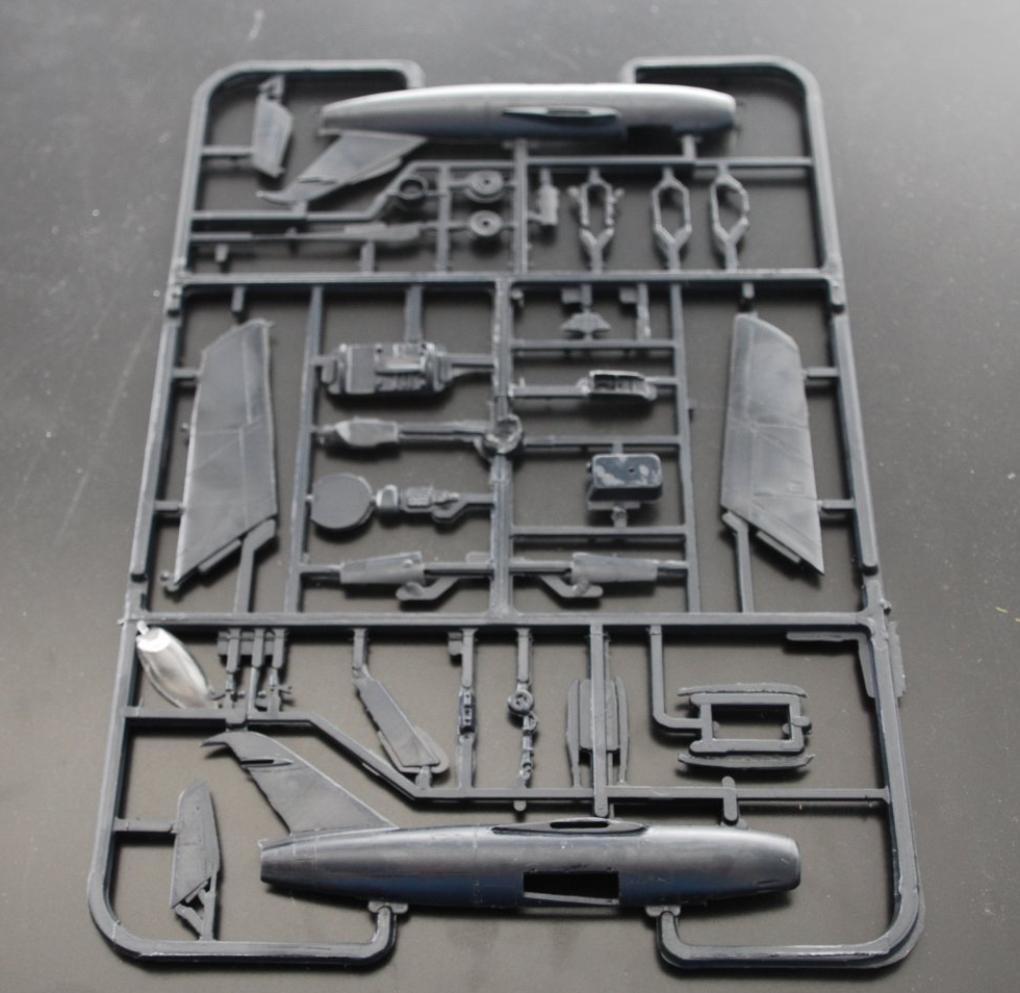
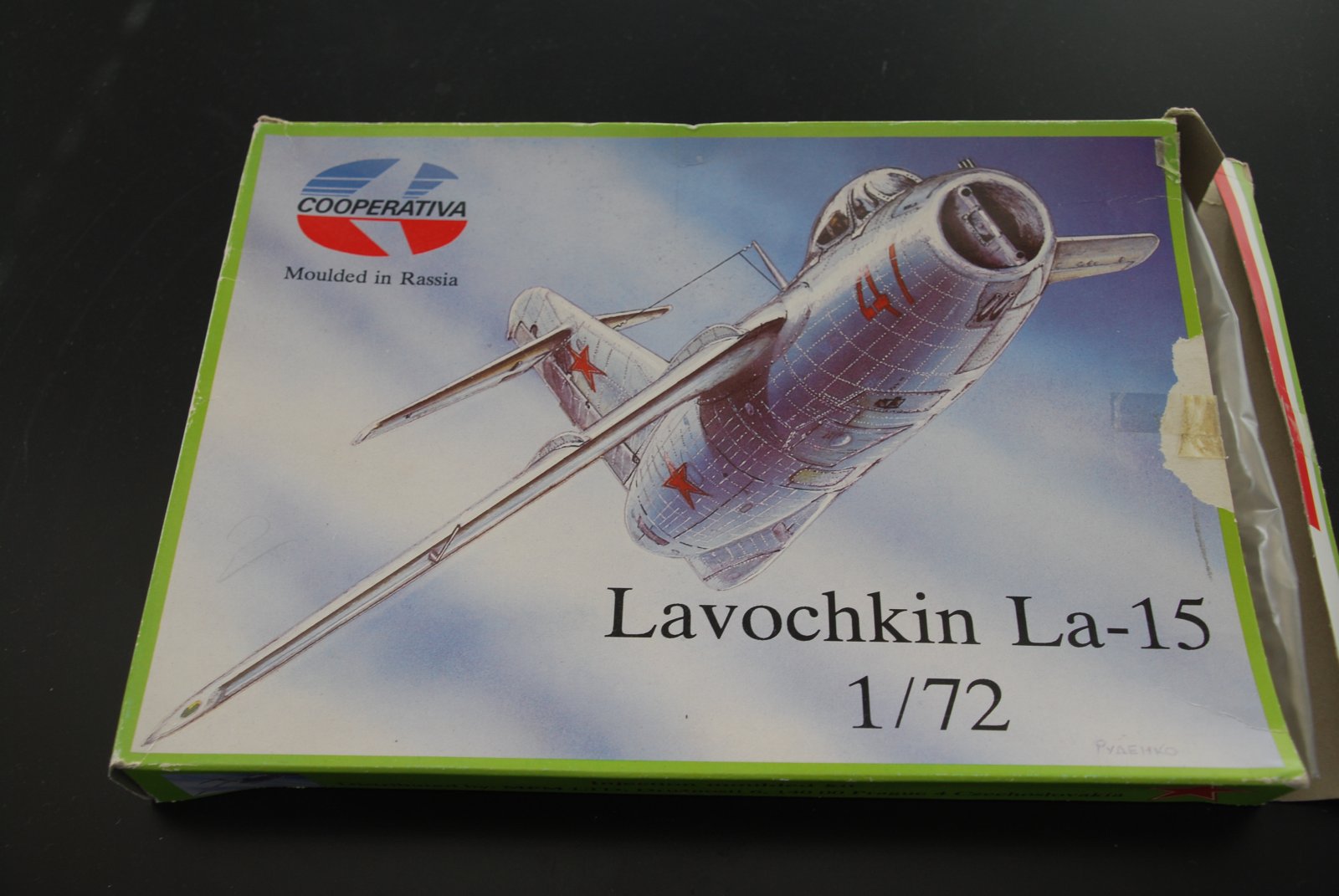
This is a 1/72 scale Kooperativa kit of a Lawotschkin La-15. Being a Russian short-run kit, the production quality was quite bad. Some parts were almost not to be identified. So I dropped the plan to build this as a Lawotschkin LA-15 and tried to save what was left over of this kit and made the EF 1111 out of it.
After using several kilograms of putty on it (at least it felt so), the model was painted with Revell Aqua Colour. No decals were used.