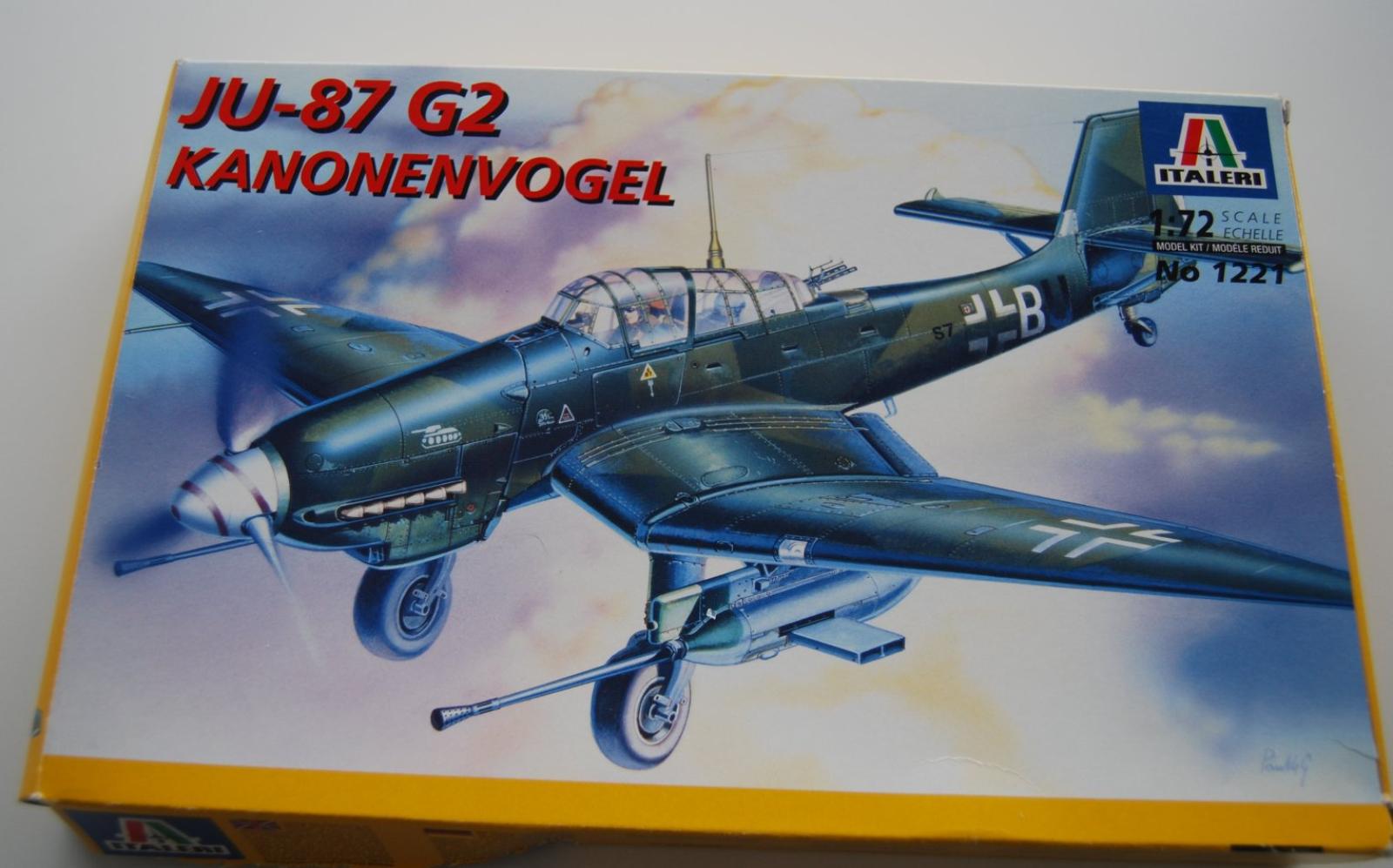
Manufacturer: Italeri
Scale: 1/72
Additional parts: some Revell Ju 87 parts
Model build: Jan-Feb 2015

Manufacturer: Italeri
Scale: 1/72
Additional parts: some Revell Ju 87 parts
Model build: Jan-Feb 2015
Lieutenant Hiro Tanaka gripped the control stick, sweat slicking his palms. Below him, the once pristine shores of Etajima were a smoldering ruin. Smoke billowed from burning buildings, and the metallic tang of blood filled the air. This wasn't the paradise he remembered from his childhood visits.
Tanaka wasn't flying the nimble A6M Zero he trained with. No, today he piloted the ungainly but brutally effective Mitsubishi 87G2, the "Kanon no Tori" - Bird of Cannons. Introduced just last year, these planes were Japan's answer to the American onslaught. Their 37mm cannons could tear through tanks, and the single 250kg bomb they carried packed a devastating punch.
But the Kiyanon no Tori, like its German cousin the Junkers Ju 87, was a slow, lumbering beast. A prime target for enemy fighters. Just that morning, Tanaka had witnessed the carnage. Half his squadron, bravely diving towards the American landing crafts, had been ripped apart by a swarm of Hellcats.
Suddenly, the radio crackled. "Godzilla sighting! Etajima Bay! All available units engage!"
Tanaka's heart hammered against his ribs. Godzilla. The mythical beast, long relegated to children's stories, was real, and it was tearing through their homeland. Panic threatened to consume him, but then a steely resolve settled in. He wouldn't let fear paralyze him. He had a job to do.
As Tanaka and his remaining comrades approached the bay, a monstrous sight met their eyes. A colossal, reptilian creature lumbered out of the water, its roar shaking the very air. Buildings crumbled beneath its titanic feet, and ships were tossed around like toys.
"Target the dorsal plates!" Captain Matsuo, their leader, barked over the radio. "Those seem to be its weak point!"
Taking a deep breath, Tanaka steered the Kiyanon no Tori into a steep dive. The wind howled in his ears, threatening to tear his canopy off. He lined up the massive creature in his sights, ignoring the tracers arcing towards him from Godzilla's hide.
With a deep roar, Tanaka unleashed the cannons. The 37mm shells slammed into Godzilla's back, erupting in orange bursts. The beast roared in pain, thrashing its tail, sending shockwaves through the air.
One by one, the remaining Kiyanon no Tori rained fire upon the behemoth. Godzilla bellowed in fury, its rage momentarily turning towards the pesky insects daring to challenge it.
The bombs found their mark. One landed with a deafening boom right behind Godzilla's head, sending a plume of smoke and debris into the air. The creature faltered, its advance momentarily stalled.
It was a meager victory, but it was enough. Godzilla, perhaps surprised by the tenacity of the aerial assault, retreated back into the sea.
As Tanaka limped his battered plane back to base, the cheers of the surviving troops echoed in his ears. They had faced a god and lived to tell the tale. The Kiyanon no Tori, the ungainly Bird of Cannons, had proven its worth.
Tanaka knew the war was far from over. But for now, they had bought themselves some precious time. And as he looked back at the smoldering ruins of Etajima, a sliver of hope flickered within him. They may have lost the battle, but they hadn't lost the war. Not yet.
Lieutenant William "Wild Bill" Evans gripped the control stick, his knuckles white. Below, the once idyllic shores of Etajima were a smoldering ruin. But it wasn't American bombs or Japanese artillery that wrought the destruction. It was Godzilla, a colossal prehistoric leviathan tearing through the island like a child through a sandcastle.
Evans wasn't one for theatrics. He'd seen enough horrors in the Pacific to turn a man's hair white overnight. But Godzilla? That was a whole new level of nightmare. Yet, here he was, staring at the beast through his Hellcat's canopy, not with the intent to destroy, but to defend.
The radio crackled. A voice, heavily accented but unmistakably Japanese, spoke in broken English. "American pilot. Stand down. We must work together to repel this… creature."
Evans blinked. Working with the enemy? It was a concept so outlandish it almost made sense. Godzilla was a threat to everyone, not just the Japanese. He glanced towards his wingman, Captain Miller, who simply gave a grim nod.
Suddenly, four Mitsubishi 87G2s – lumbering Kiyanon no Tori dive bombers – roared past Evans, their cannons barking defiance at the monstrous reptile. These were the very planes American fighters had been hunting relentlessly. Now, they were unexpected allies.
The sky erupted in chaos. Godzilla bellowed in fury as the combined American and Japanese air force rained fire upon it. Evans weaved through the tracers, adrenaline coursing through his veins. This wasn't how he imagined ending the war, but survival had a strange way of rewriting the script.
One Kiyanon no Tori wasn't so lucky. A burst of green energy, like a bolt of lightning, erupted from Godzilla's back, ripping the plane apart in a fiery explosion.
Evans felt a pang of morbid respect for the fallen pilot. Enemy or not, they were all in this fight together. He focused on his own task, peppering Godzilla's back with machine gun fire. It was a gnat bothering a giant, but every little bit helped.
The combined assault seemed to have an effect. Godzilla roared in frustration, thrashing its tail, sending shockwaves through the air. The remaining Kiyanon no Tori peeled away, their mission apparently complete.
With a final earth-shattering bellow, Godzilla retreated back into the depths, leaving behind a trail of destruction and a fragile sense of victory. Evans landed on the battered carrier, the stench of burnt flesh and cordite thick in the air.
He climbed out of the cockpit, a newfound respect for his former enemies warring with the lingering fear. Maybe, just maybe, this shared enemy could forge an uneasy alliance, a bridge built not on camaraderie, but on the desperate need for survival in the face of a monstrosity that defied all logic. The war wasn't over, not by a long shot. But for now, a terrifying new chapter had begun.

In 1940, the Imperial Japanese Army Air Service evaluated a small number of German Junkers Ju 87A “Stuka” dive bombers. Impressed by the aircraft’s accuracy during the German campaigns in Poland and France, Japanese test pilots conducted extensive trials. Although the Ju 87’s limitations were also noted—low speed and weak defensive armament—Tokyo considered the type valuable for specific ground-attack roles. At the time, however, no license was purchased, as Japan’s strategic needs leaned towards long-range fighters and naval strike aircraft.
By 1943, with the tide of war turning against Japan and American amphibious assaults advancing across the Pacific, the absence of a reliable dedicated ground-attack aircraft became critical. In response, a renewed agreement with Germany was signed in late 1943, leading to a production license for the Ju 87 G-2 “Kanonenvogel.” Mitsubishi was tasked with building the type domestically under the designation Mitsubishi 87G2 キヤノンの鳥 (“Cannon Bird”).
The Japanese-built version remained faithful to the German G-2 model, with two 37 mm Rheinmetall-Borsig BK cannons mounted under the wings, optimized for destroying armor and landing craft. Unlike its German counterpart, the Mitsubishi version was also equipped with a reinforced hardpoint for a single 250 kg bomb, granting more versatility against static targets.
A total of 248 aircraft were produced between January 1944 and June 1945, assembled at Mitsubishi’s Nagoya works.
The Mitsubishi 87G2 entered service in early 1944, first seeing combat during the Battle of the Marshall Islands. Operating in small formations, the aircraft surprised American forces by sinking several landing craft and damaging light vehicles on the beaches. However, the aircraft’s chronic vulnerability to Allied fighters quickly became apparent. With a maximum speed of barely 400 km/h, even the oldest US Navy Wildcats could intercept them with ease. Losses were catastrophic—records indicate that over 80% of operational aircraft were destroyed within their first months of deployment.
Survivors were withdrawn to the Home Islands, where they were reorganized into special anti-invasion units under the Japanese Army. These units trained to attack troop transports and tanks during the anticipated Allied landings on Kyushu and Honshu. By summer 1945, only about 40 serviceable 87G2s remained.
The Mitsubishi 87G2 achieved unexpected notoriety during the Etajima Incident in August 1945. According to contemporary military reports, a massive sea creature—later identified in popular culture as Godzilla—emerged from the waters near the Imperial Naval Academy at Etajima. In a hastily scrambled defense operation, a squadron of 87G2s launched repeated dive-bombing and cannon attacks against the monster.
Eyewitnesses describe the cannons’ armor-piercing shells “punching into the beast’s hide” while bombs exploded across its back, eventually forcing the creature to retreat into the Inland Sea. Though heavily mythologized in later decades, this event cemented the 87G2’s unusual place in Japanese wartime history.
Production ended with Japan’s surrender in 1945. Most surviving Mitsubishi 87G2s were scrapped, though one incomplete airframe was reportedly shipped to the United States for evaluation. Unlike many Japanese aircraft of the period, none are known to have survived intact.
Despite its limited numbers and disastrous attrition rate, the Mitsubishi 87G2 キヤノンの鳥 remains a unique example of Axis collaboration in aircraft production—and one of the strangest footnotes in aviation history, remembered not only for its role in desperate Pacific battles but also for its improbable encounter with a legend of Japanese folklore.
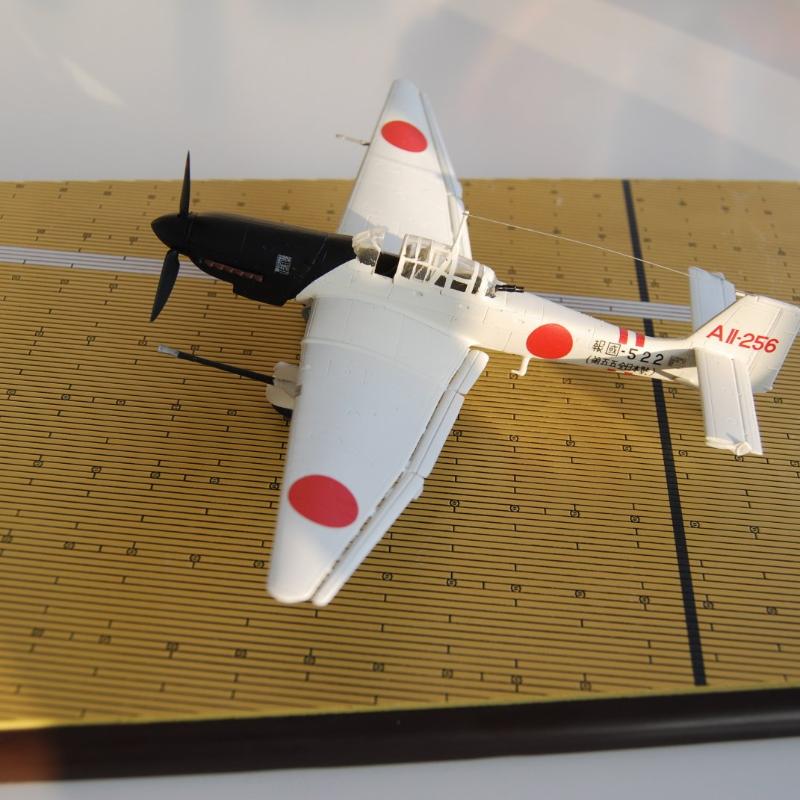
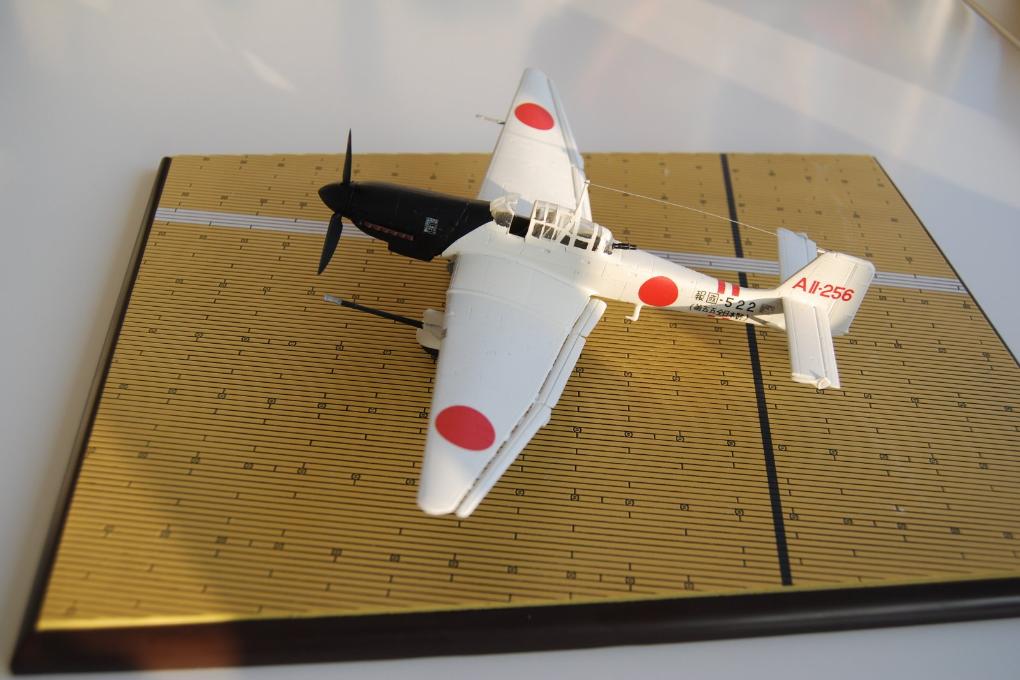
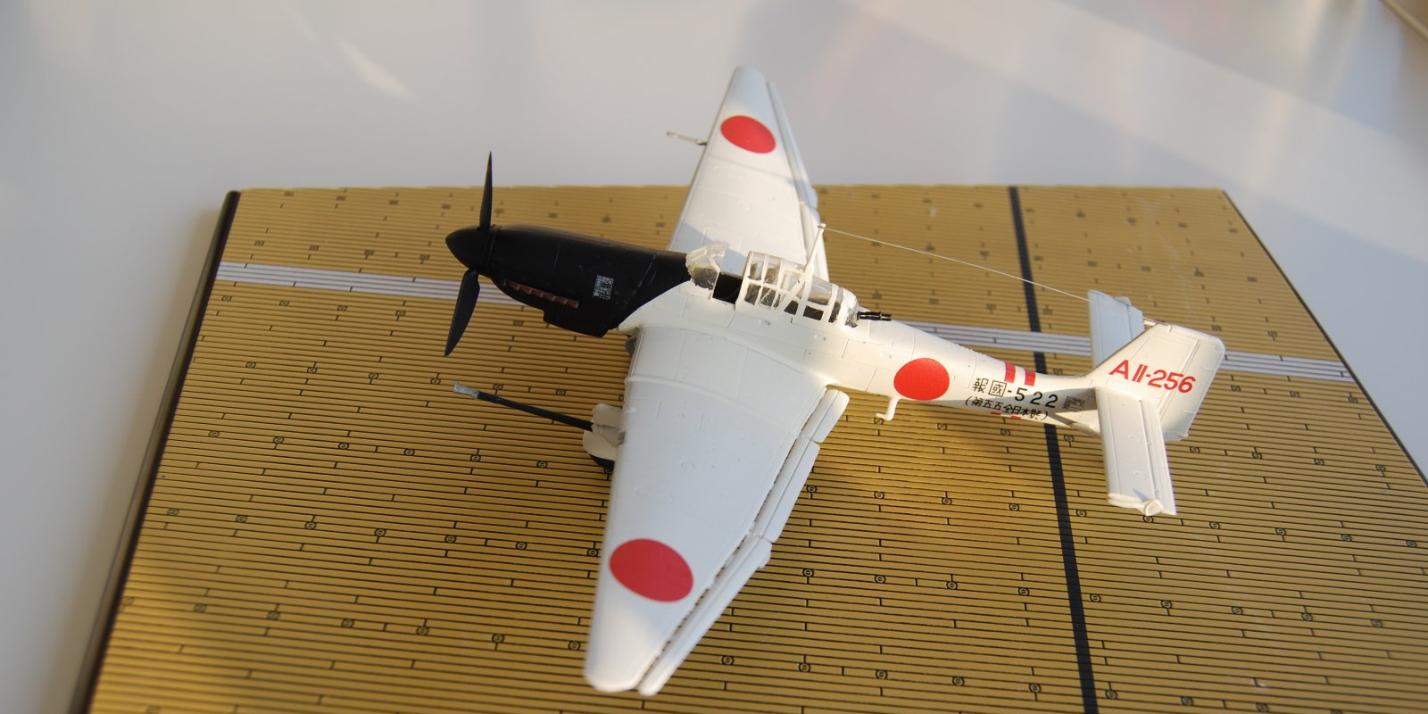
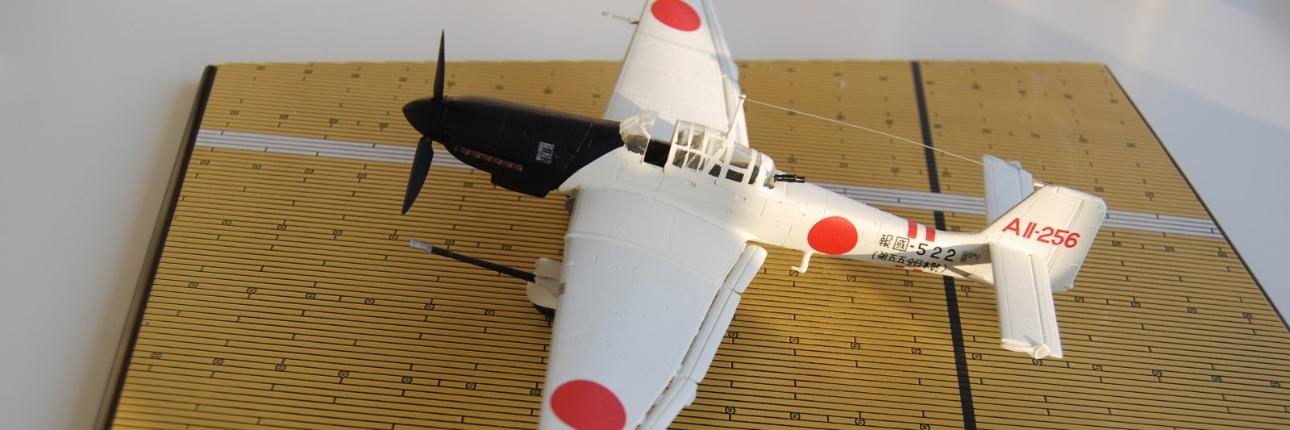
The model showes the first Mitsubishi 87G2 production plane during its rollout in February 1944.
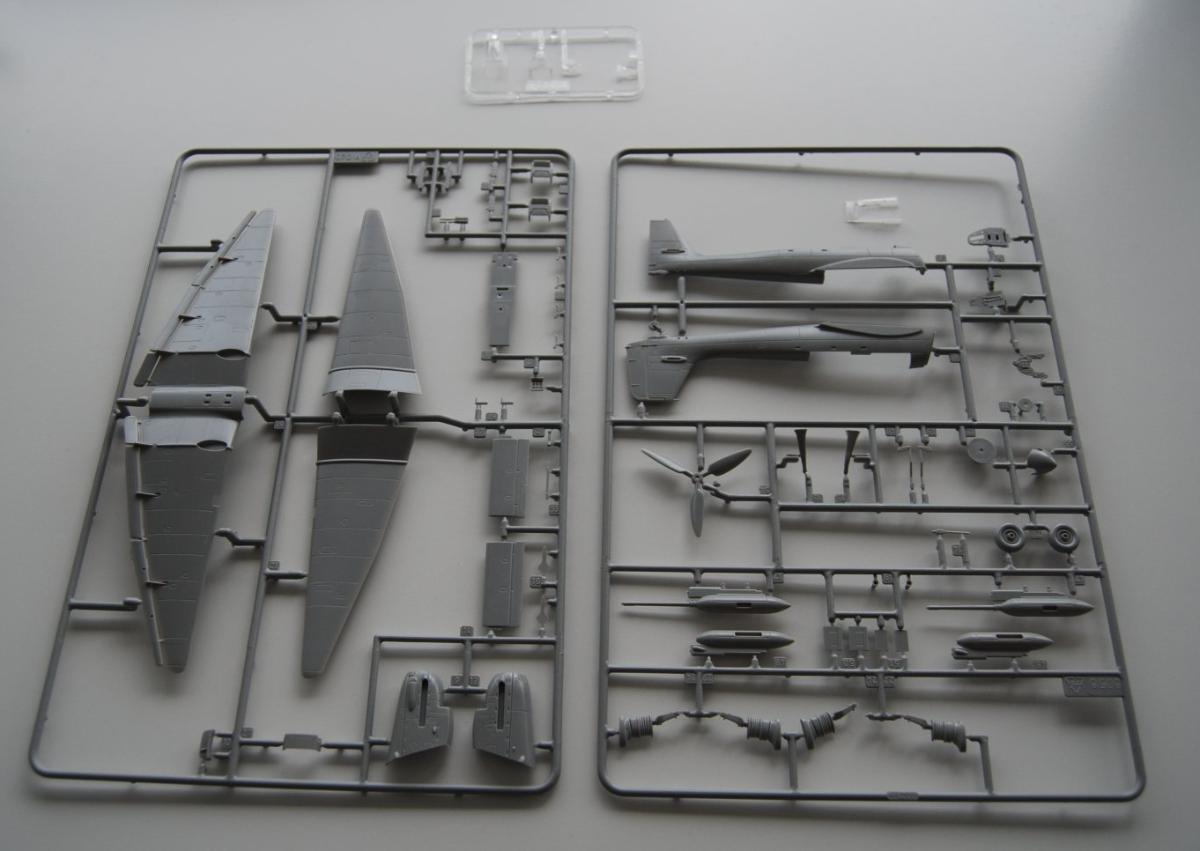
The model was made using a Italieri 1/72 Junkers Ju 87 G2 model. As one landing gear was missing, those were replaced by the ones of a Revell Ju 87 D model. Painted with Revell Aqua Color, the model was build OOB. The decals were taken from an Airfix Val dive bomber model.