Manufacturer: ICM
Scale: 1/72
Additional parts: from the spare part box
Model build: Sep - Nov 2018
Manufacturer: ICM
Scale: 1/72
Additional parts: from the spare part box
Model build: Sep - Nov 2018
Early Summer 2019
The once-idyllic landscape of Midsomer County was marred by whispers of chaos. News reports blared of riots and power struggles plaguing the rest of Britain, fueled by fuel shortages and a breakdown in social order. Even the quaint villages of Midsomer weren't entirely immune. But here, the response was as unique as the murders themselves.
Enter the Midsomer Liberation Army (MLA), a brainchild of the ever-enthusiastic (and slightly eccentric) Lord Hugh Fitzwilliam, head of the Midsomer Military History Association (MMHA) in Little Grimley. Fearing the unrest might spill over from neighboring counties, Lord Hugh decided to take matters into his own tweed-clad hands.
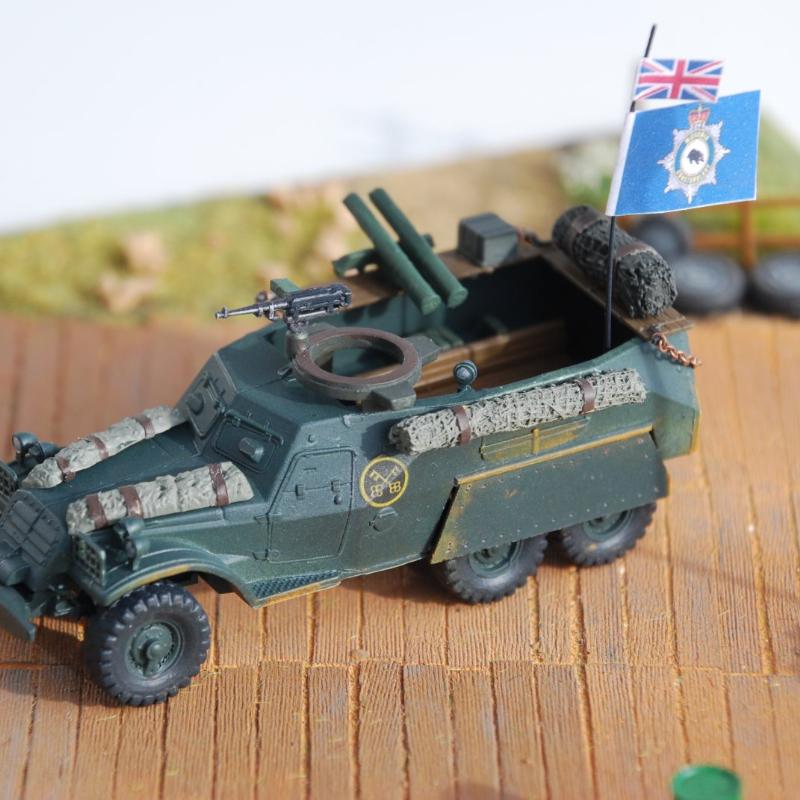
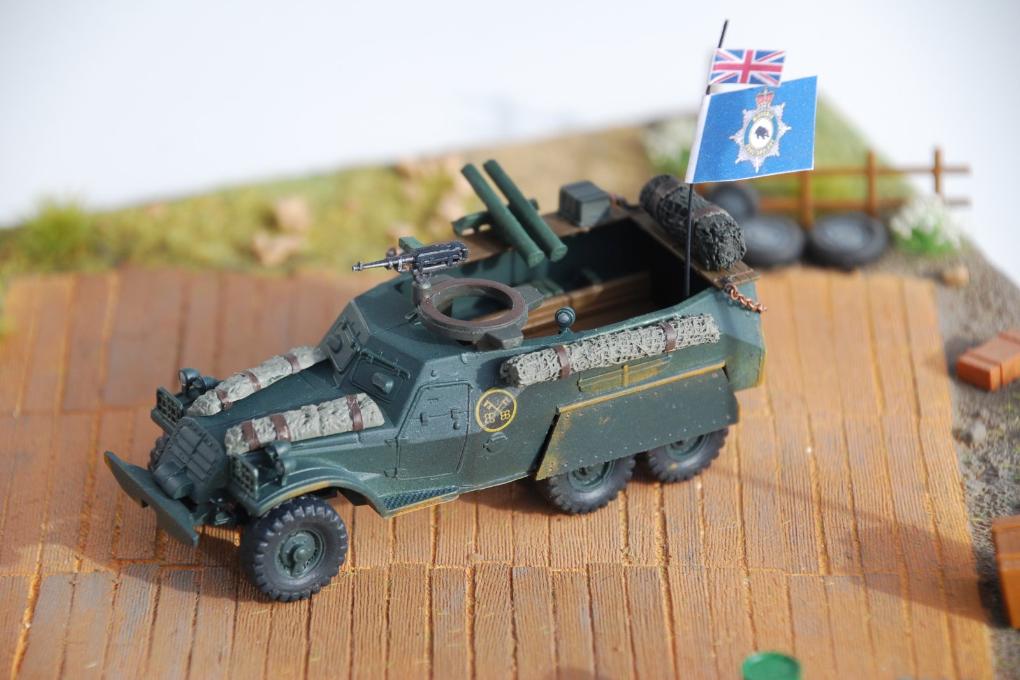
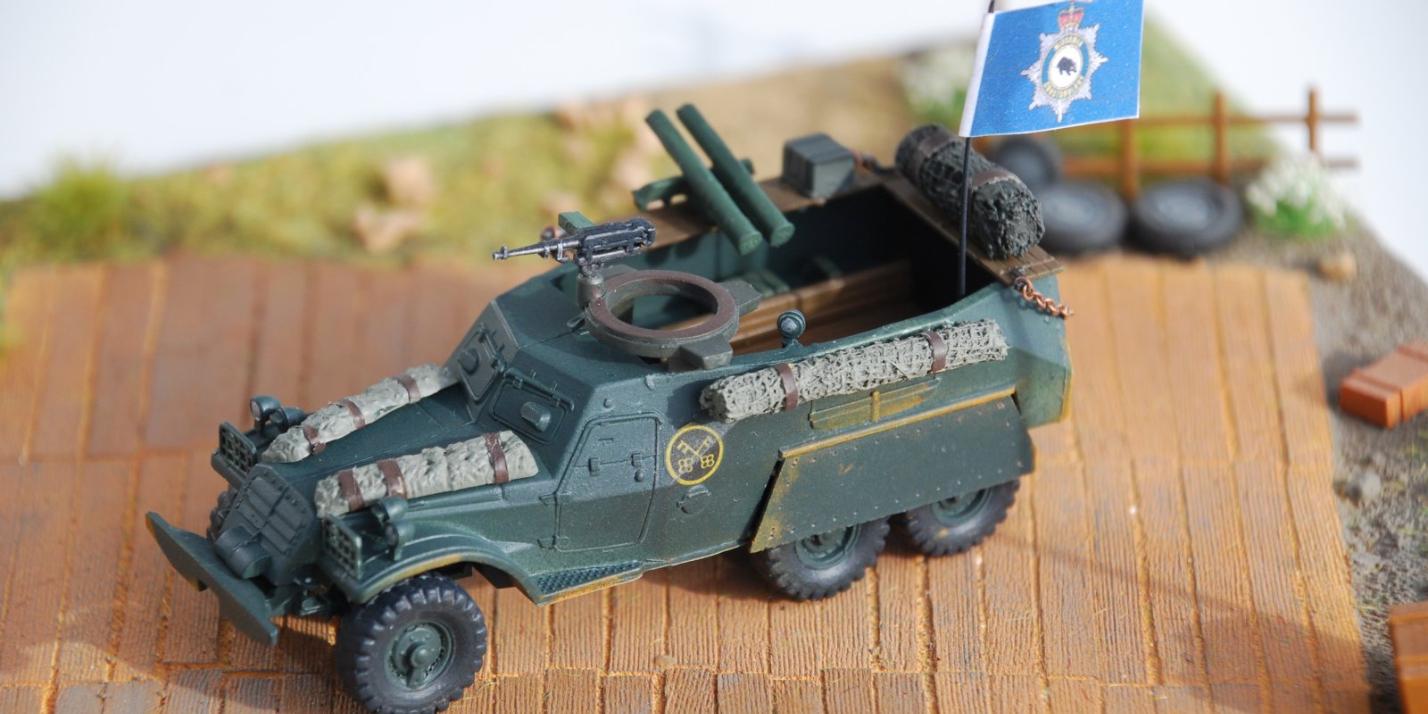
The MLA was a sight to behold. A motley crew of villagers patrolled the rolling hills in a ramshackle fleet of repurposed military vehicles. A rusty Sherman tank, christened "Cromwell" (after a local baker, not the historical figure), rumbled alongside a WWII jeep ("Dougal") and the crown jewel – three Soviet-built BTR-152s, troop carriers that looked like misplaced beetles and sported the rather fetching badger flag.
DCI Barnaby, a man known for his calm demeanor and keen eye for detail, wasn't exactly thrilled. The sight of these Cold War relics thundering down country lanes was enough to raise an eyebrow, even for him. However, to his surprise, the MLA proved effective. The badger flag became a symbol of…well, something between peace and quirky intimidation, and the pre-apocalyptic vibes subsided.
But as always in Midsomer, peace rarely lasts longer than a freshly baked Victoria sponge. One crisp morning, Barnaby found himself staring down the barrel of a very real (and rather rusty) tank gun. The unfortunate victim? Sir Alistair Fielding, a wealthy landowner and noted weapons collector, found lifeless inside his heavily fortified manor house, "The Keep." The murder weapon? A single, well-placed shell from Cromwell's main gun.
Barnaby, ever the picture of composure amidst the rising panic, began his investigation. The suspects were a delightfully eccentric bunch:
As Barnaby delved deeper, he discovered a web of hidden agendas. Sir Alistair, it turned out, wasn't just a collector – he was a black-market arms dealer, using his "Keep" as a covert storage facility. The missing piece of the puzzle? A shipment of high-powered weaponry scheduled to leave Midsomer that very night.
In a thrilling climax that would leave even the most seasoned Midsomer viewer breathless, Barnaby unraveled the truth. It turned out Edgar, desperate for money, had struck a deal with a group of unscrupulous buyers to steal the weapons. But Madge, ever the patriot, discovered the plot and tried to stop him. A struggle ensued, ending with Edgar accidentally firing Cromwell's main gun and blasting a hole through Sir Alistair's prized collection – and, unfortunately, Sir Alistair himself.
With the case solved (and Cromwell back in the MMHA collection, minus its "live ammunition capabilities"), Midsomer returned to its usual eccentricities. The MLA disbanded, their badger flag lowered with a slightly less tearful ceremony (Lord Hugh seemed rather relieved to be rid of the responsibility). And Barnaby, nursing a healthy dose of skepticism towards all things "artillery," settled back into the relative calm of Midsomer life. After all, in a place like Midsomer, even murder had a certain…explosive quality to it.

When the early summer of 2019 dawned over Britain, the country slid into one of the deepest internal crises since the Second World War. Fuel shortages strangled transport, supermarket shelves emptied within days, and within weeks armed gangs and local militias rose in many cities, each determined to seize control of shrinking resources.
London, Bristol, and Birmingham saw some of the worst violence, and the Home Office privately admitted that “local authority structures have effectively collapsed in several regions.”
But not in Midsomer County.
In Causton, a handful of short-lived riots broke out near the industrial district. These were swiftly brought under control by the Midsomer constabulary—helped, some say, by the citizens’ well-known aversion to disorder unless it involves murder in a picturesque village.
Still, the growing unrest in surrounding counties, Buckinghamshire, Oxfordshire, and Hampshire, caused deep unease. Rumours spread that larger gangs were preparing to move into rural areas, seeking control of farms and fuel depots.
This was when the Midsomer Military History Association (MMHA), headquartered in Badger’s Drift, decided that the time for passive observation had passed.
Founded originally as a harmless local society dedicated to restoring military vehicles and reenacting obscure battles, the MMHA possessed an impressive, if somewhat eclectic, collection of Cold War armour. Faced with regional turmoil, the Association voted unanimously on 12 June 2019 to “mobilise for the defence of Midsomer County.”
By the end of the month, every functioning exhibit had been rearmed, repainted, and pressed into paramilitary service.
Thus was born the Midsomer Liberation Army (MLA), 98 members strong, proudly flying the Badger Flag (white badger on green field).
At first, the Midsomer police and county officials were uneasy. Armed civilian patrols in half-restored armour were not part of any known policing guideline. But as reports arrived of MLA patrols deterring raiders and dismantling gangs attempting to cross into Midsomer, attitudes shifted.
It became clear - embarrassingly quickly - that the MLA was doing what the official forces no longer could.
Among the MLA’s improvised fleet were three Soviet-built BTR-152 armoured personnel carriers, remnants of a former East-German stockpile acquired legally (or semi-legally) by the MMHA in the 1990s.
These vehicles, long since repainted for reenactments, now carried:
improvised armour panels
functional radios salvaged from local fire stations
mounted machine guns
bright Badger-flag pennants for “friend-or-foe” identification
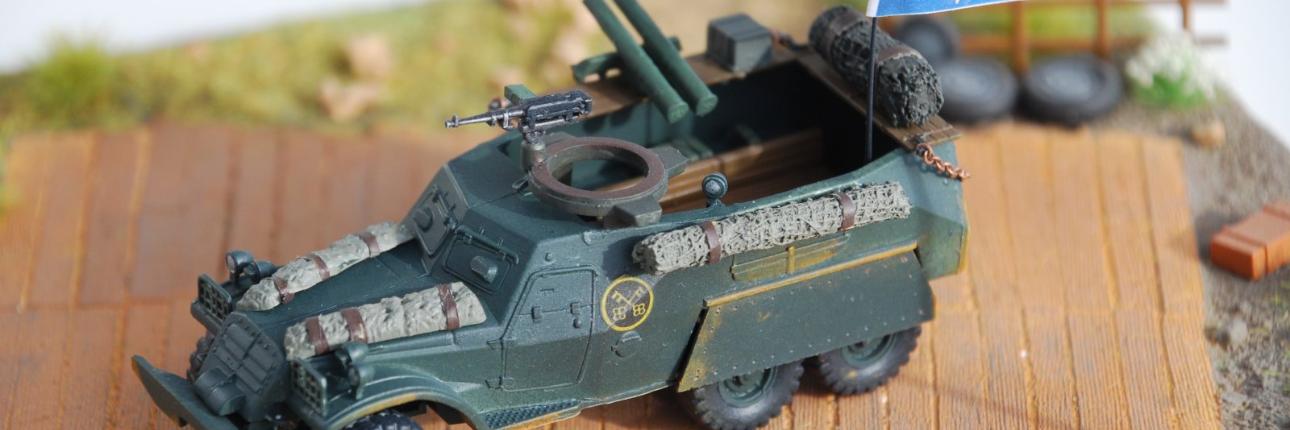
One particular BTR-152 became famous: the so-called “Badger Sting”, fitted with a homemade dual missile launcher fabricated from farm machinery and surplus fireworks guidance circuits.
The missiles were never fired, instead, their very presence discouraged several would-be raiders.
Throughout the crisis, wherever an MLA patrol appeared, normality seemed to follow. Tea rooms reopened. Garden fetes resumed. Murder rates (astonishingly) remained unchanged.
By late autumn of 2019, as government control gradually returned, Midsomer County had emerged as one of the few regions of Britain to maintain relative stability, thanks, bizarrely, to a militia made up of retired historians, reenactors, and enthusiastic collectors.
The MLA officially demobilised in February 2020, returning its BTRs to museum condition.
But in many Midsomer villages, locals still speak of that chaotic summer with pride:
“When the world fell apart,” said one resident of Badger’s Drift,
“it wasn’t the army who saved us - it was the blokes who usually argue about the correct paint shade of a 1950s armoured personnel carrier.”

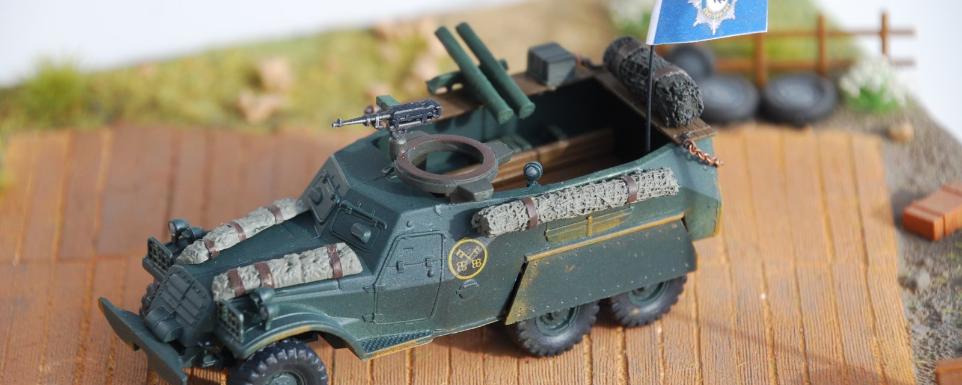
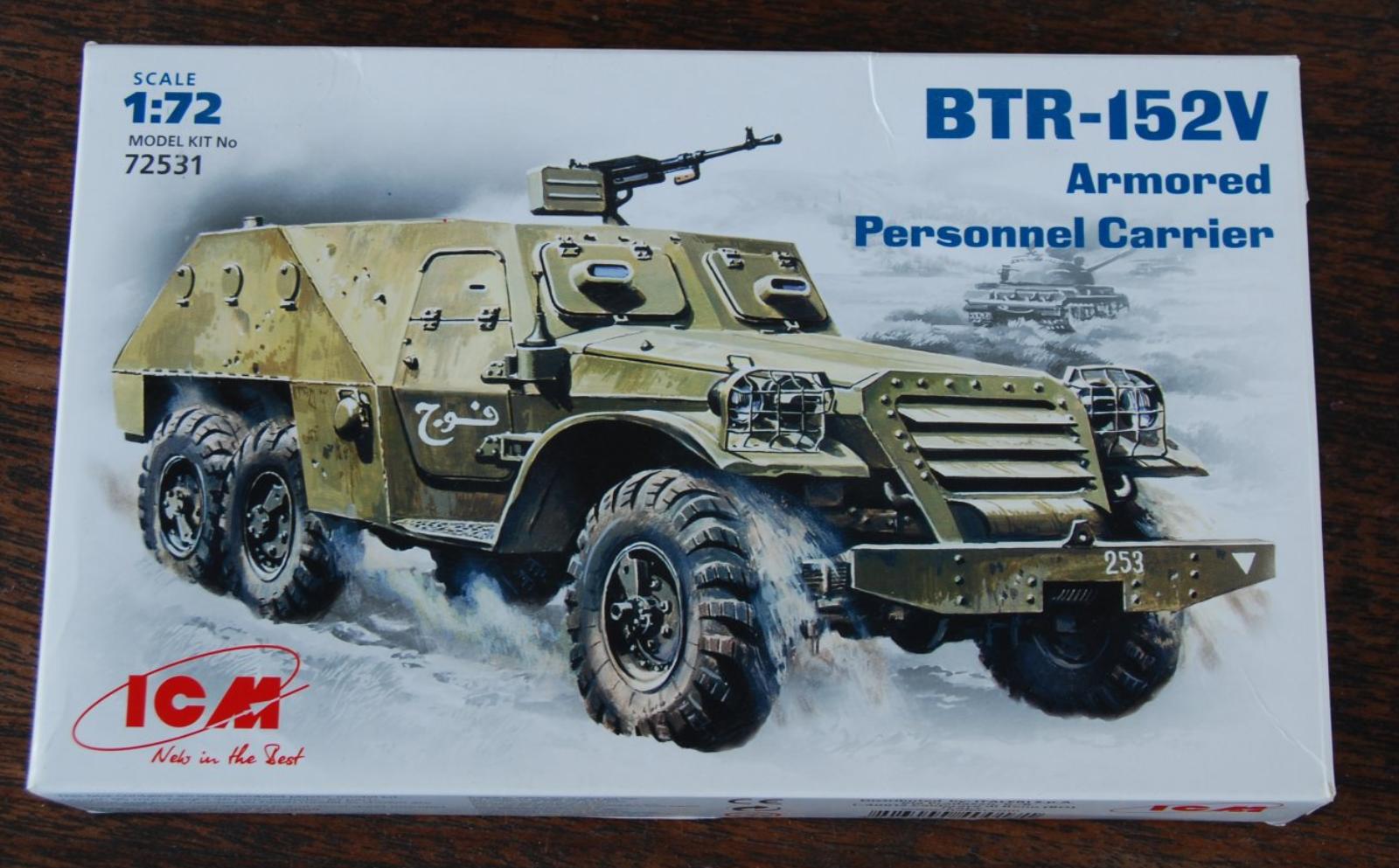
This is a 1/72 ICM model of a BTR 152. although quite simple, its a good fit to build. Little detail, I have built another one of those kits before, the other had metal axles, this one only had plastic ones.
The kit was enhanced with several parts of the spare parts box, like anchor chains form Heller 1/400 scale ship, the camo nets were made from old gauze that has been painted. The model was airbrushed and painted with Revell Aqua Color.