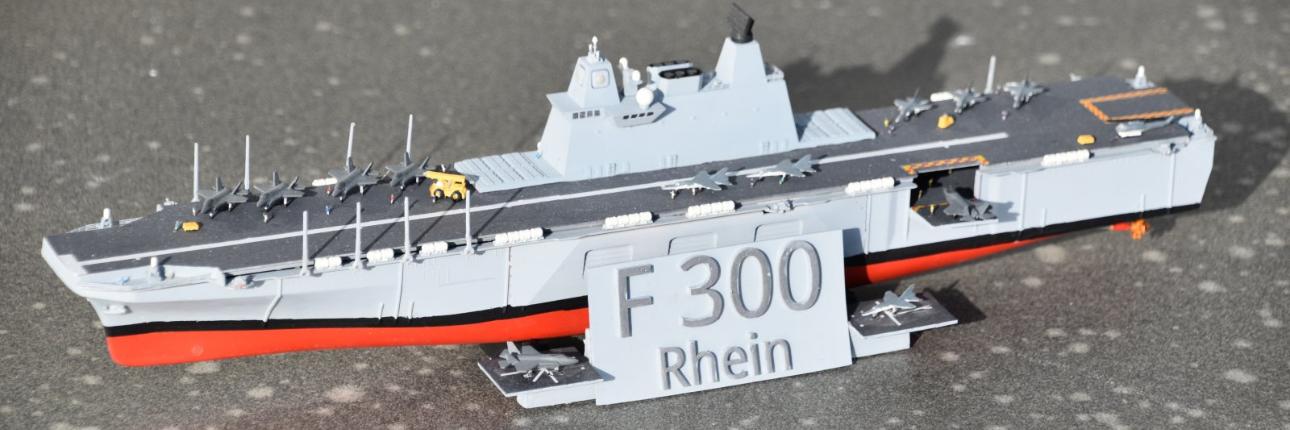
Manufacturer: Revell / Scratchbuild
Scale: 1/700
Additional parts: 3D printed superstructure and extensions. 3D printed aircraft.
Model build: Jan 25 - Mar 26
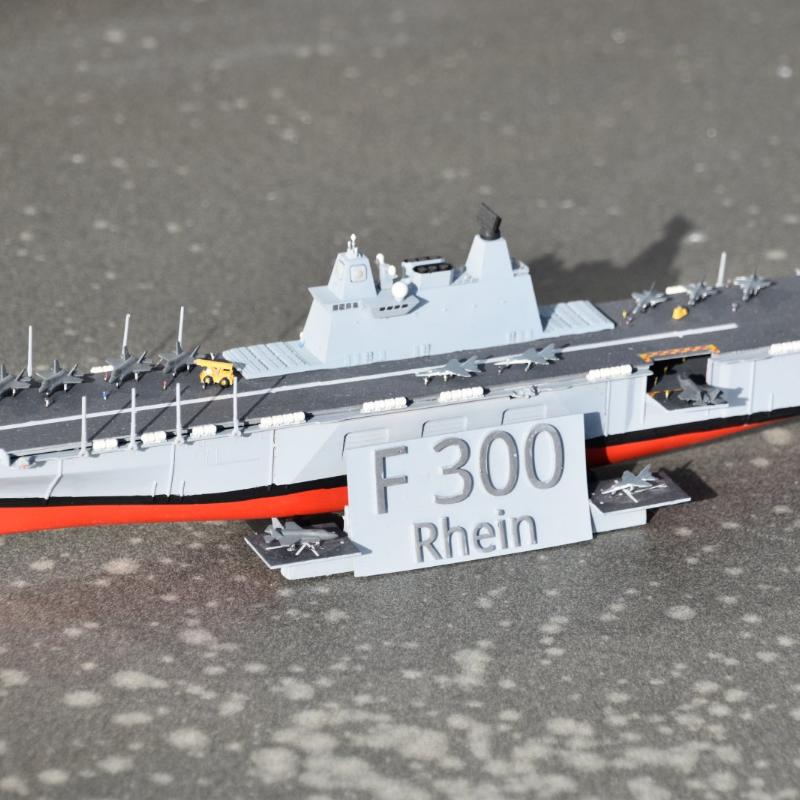
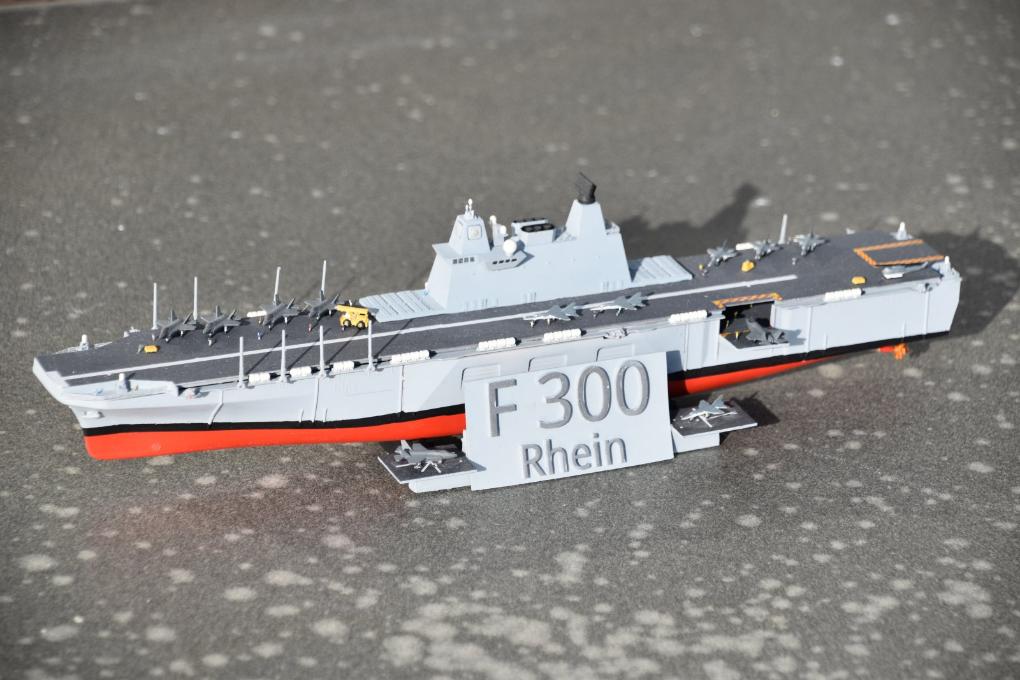
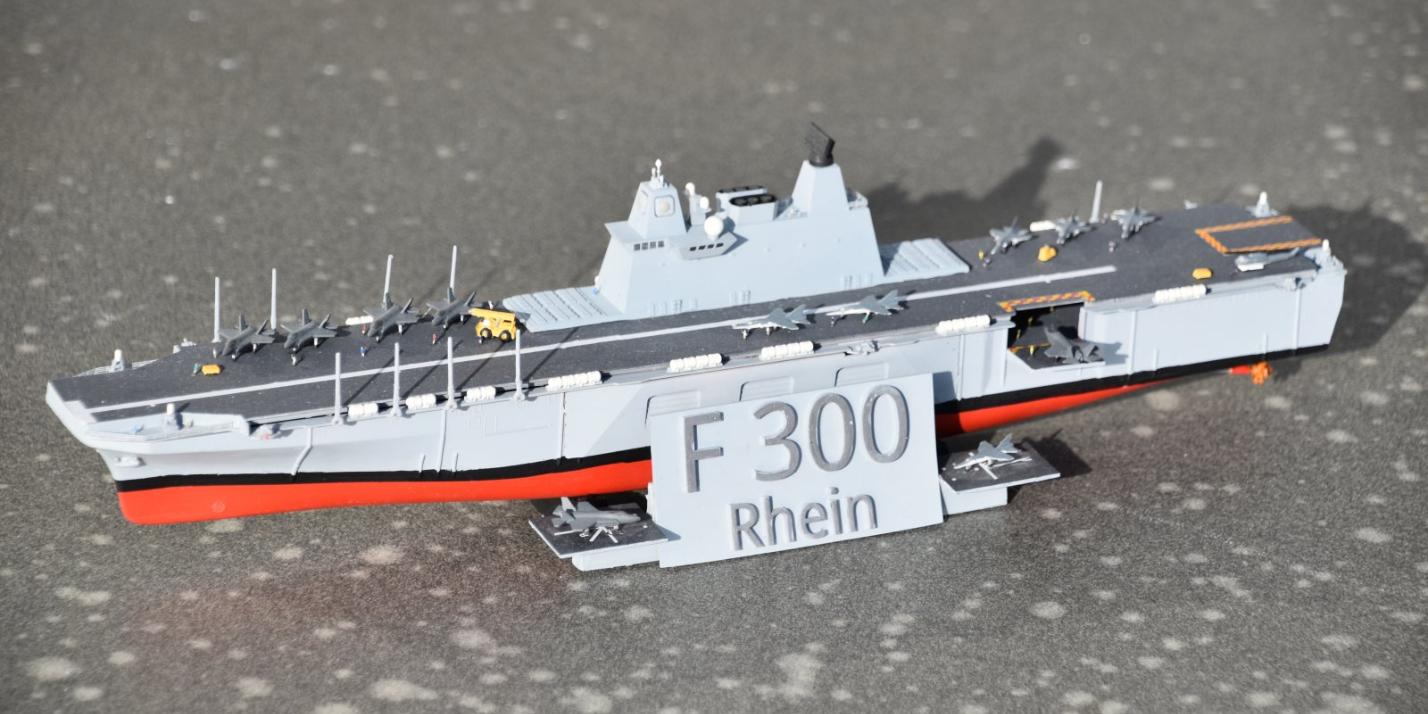
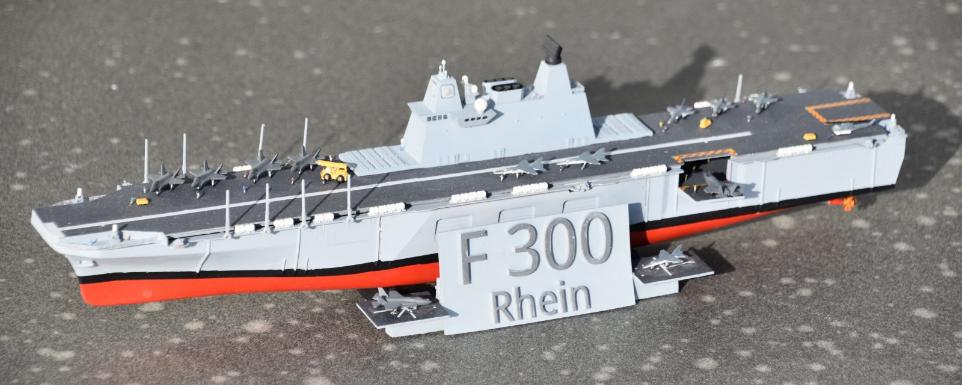
Manufacturer: Revell / Scratchbuild
Scale: 1/700
Additional parts: 3D printed superstructure and extensions. 3D printed aircraft.
Model build: Jan 25 - Mar 26
The year is 2035. A hot, hazy afternoon sun baked the metallic gray hull of the F300 Rhein, its massive silhouette a stark contrast against the deep blue waters of the North Sea. Captain Eva Richter stood on the bridge, her eyes scanning the horizon. This was the maiden deployment of Germany’s new flight deck frigate, a powerful symbol of the nation’s military modernization. It was, as the crew joked, "The Wumms made real."
Their mission was to provide air superiority for a joint naval exercise, a show of force against a rising threat of piracy and coastal aggression. Above her, the flight deck was a hive of activity. Six sleek F-35B Lightning II stealth fighters were lined up, their vertical lift fans silent for now, while a handful of EADF "Skua" light attack aircraft buzzed about, their unique VTOL capabilities allowing them to take off and land with impressive speed.
"Captain, we have a contact," said Lieutenant Fischer, his voice calm but firm. The ARPAR radar had picked up a faint signature, a swarm of small, fast-moving objects approaching from the southeast. They were too numerous and too low to be conventional aircraft.
"Drone swarm," Richter stated, her gaze fixed on the tactical display. "Estimated time to engagement: five minutes. All hands, battle stations."
The ship hummed with a renewed, urgent energy. The crew moved with the practiced efficiency of a well-oiled machine. The SMART-L radar confirmed the threat, its long-range detection identifying hundreds of small, autonomous drones—a serpent’s nest of cheap, deadly technology designed to overwhelm.
"Scramble two Skuas. Intercept and engage the lead group," Richter ordered. "And get our F-35s ready for immediate launch if this escalates."
The Skuas, their twin engines roaring, lifted off the deck in a near-vertical ascent. They were fast, agile, and equipped with precision cannons perfect for neutralizing the smaller, unarmored drones. But the main swarm was still coming.
"Multiple missiles inbound!" a crew member shouted, his voice cracking with tension.
Richter didn't flinch. "Fire ESSM, full barrage. Light up that sky."
From the two 48-cell Vertical Launching System launchers, a flurry of RIM-162 Evolved SeaSparrow Missiles (ESSM) shot skyward. They were a beautiful, terrifying spectacle, leaving white contrails as they streaked toward the incoming threat. The missiles detonated, a series of sharp, bright flashes in the distance, each one taking out a handful of drones. The first wave was decimated, but many still pushed through the gaps.
As the remaining drones closed in, their targeting systems locked onto the Rhein's most vital points. But the ship's defenses were just getting started.
"Deploy countermeasures!" Richter commanded. The FL1800 S electronic countermeasures system activated, sending out a storm of electronic noise designed to confuse and scramble the enemy's guidance. Some drones veered off course, their flight paths erratic.
The drones that got past the jamming were met with a wall of fire. The four Phalanx CIWS (Close-In Weapon Systems), perched at the corners of the flight deck, began to spin, their barrels a blur of motion. A deep, tearing sound filled the air as the systems unleashed a torrent of depleted uranium rounds, creating a dome of defensive fire around the ship. At the same time, the six 30mm cannons engaged the few fast attack boats that had been hiding among the drones, shredding their hulls and turning them into burning debris.
For a moment, the world was a cacophony of explosions, cannon fire, and the high-pitched whine of the Phalanx systems. Then, silence.
The last of the drones had been vaporized. The sea around the Rhein was now littered with the smoking remains of the enemy's attack. On the bridge, a collective sigh of relief filled the air.
Captain Richter looked at her crew, a faint smile on her face. "Well done, everyone," she said, her voice full of pride. "The Wumms holds." The F300 Rhein had proven its worth, a new leviathan of the sea, ready for the challenges of a new era.

The F300 Rhein: Germany's New Flight Deck Frigate
In the spring of 2022, a special 100 billion euro fund—colloquially known as the "Wumms"—was established to modernize the German armed forces. This led to initial plans to expand the number of new Type 126 frigates from four to eight.
However, the German Navy shifted its priorities, expressing a need for a stronger air component. This resulted in a bold decision: to cancel the final two frigates in favor of a "flight deck frigate." While other navies would classify such a ship as a light aircraft carrier, the German Navy refers to all its large warships as frigates to avoid what it considers overly militaristic terminology.
The final design for the F300 class is a 40,000-ton vessel, approximately 250 meters long. It will be the first German warship to use an Integrated Electric Propulsion (IEP) system, which uses gas turbines to generate electricity that powers electric motors connected to the propellers.
Armament and Sensors
As a high-value asset, the F300's armament is heavily focused on self-defense. To protect against aerial threats, four Phalanx CIWS (Close-In Weapon Systems) are positioned at the corners of the flight deck, providing 360-degree coverage. For close-in threats like small boats and drones, six light 30mm cannons offer a formidable defense with a high rate of fire. Additionally, the ship is equipped with two 48-cell Vertical Launching System (VLS) launchers, capable of firing a variety of missiles, including surface-to-air missiles like the RIM-162 Evolved SeaSparrow Missile (ESSM), anti-submarine warfare rockets, and land-attack cruise missiles.
The ship's sensor suite is state-of-the-art, consisting of an ARPAR (Active Electronically Scanned Array) radar, a SMART-L radar, and the FL1800 S for electronic countermeasures.
Air Wing
The air wing is a powerful combination of fixed-wing aircraft and helicopters. It will include 6 to 8 F-35B Lightning II stealth fighters, providing strike and air defense capabilities. The majority of the fixed-wing fleet will consist of 8 to 10 EADF "Skua" light VTOL/STOL aircraft, which will be used for close air support, reconnaissance, and fleet protection. A contingent of 4 to 6 helicopters will also be on board.
The first ship of the class, the F300 Rhein, was laid down at the Thyssenkrupp Marine Systems shipyard in Wismar in 2025 and is projected to be operational by 2032. A second vessel, the F301 Weser, is planned to be laid down in 2027.
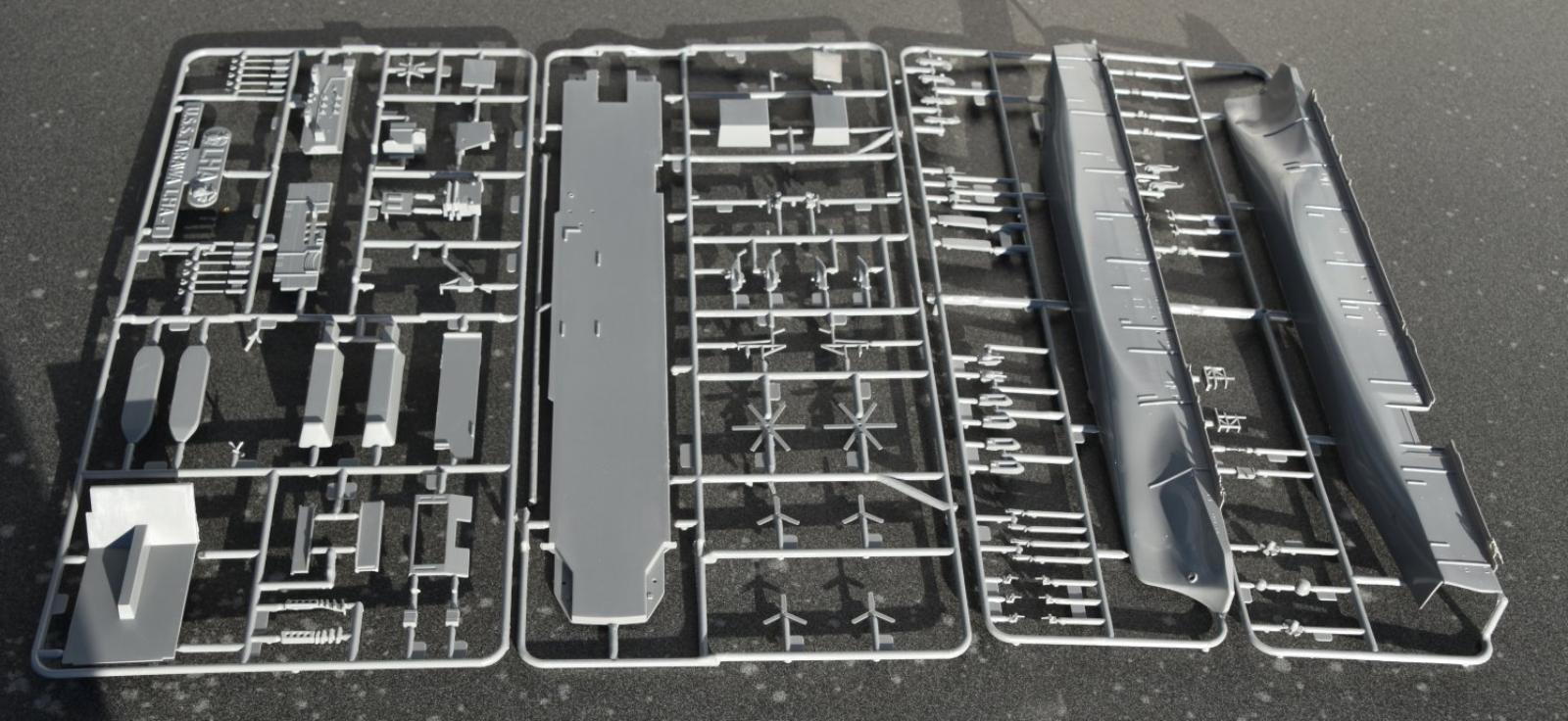
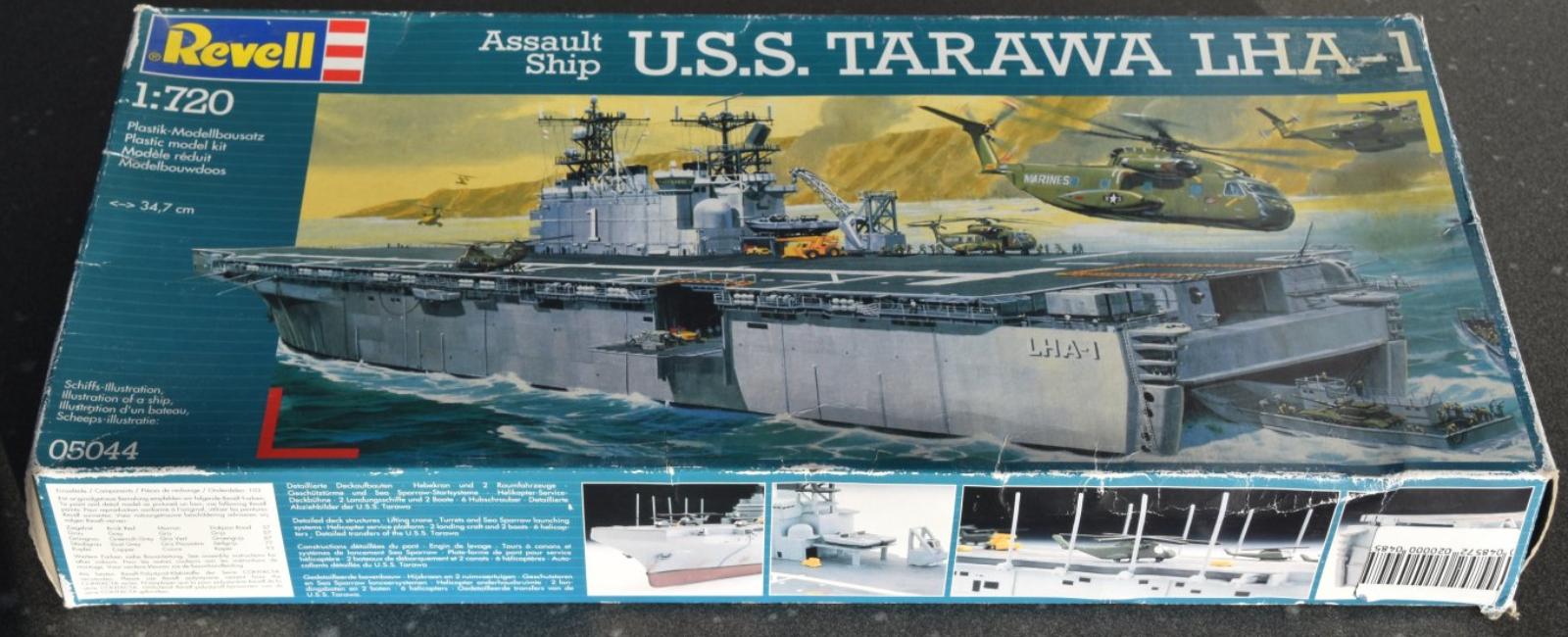
This build is based on the Revell 1/720 USS Tarawa LHA-1 kit. The well deck was closed, and 3D-printed hull extensions were added to the sides. Visible hangar sections were also custom 3D-printed.
The island superstructure was completely replaced with a newly designed and 3D-printed version. Several sensors and weapon systems, including VLS and CIWS, were 3D-printed; the CIWS models were sourced from Thingiverse.
Aircraft such as the F-35 and the EADF Skua (based on a Mirage F1 model) were also obtained from Thingiverse, resized to scale, and 3D-printed.
Additional photo-etched parts were incorporated, and the model was finished with Revell Aqua Color paints.