Manufacturer: HobbyBoss
Scale: 1/1250
Additional parts: 3D prints for mermaid and ornaments
Model build: Dec 25 - Jan 26
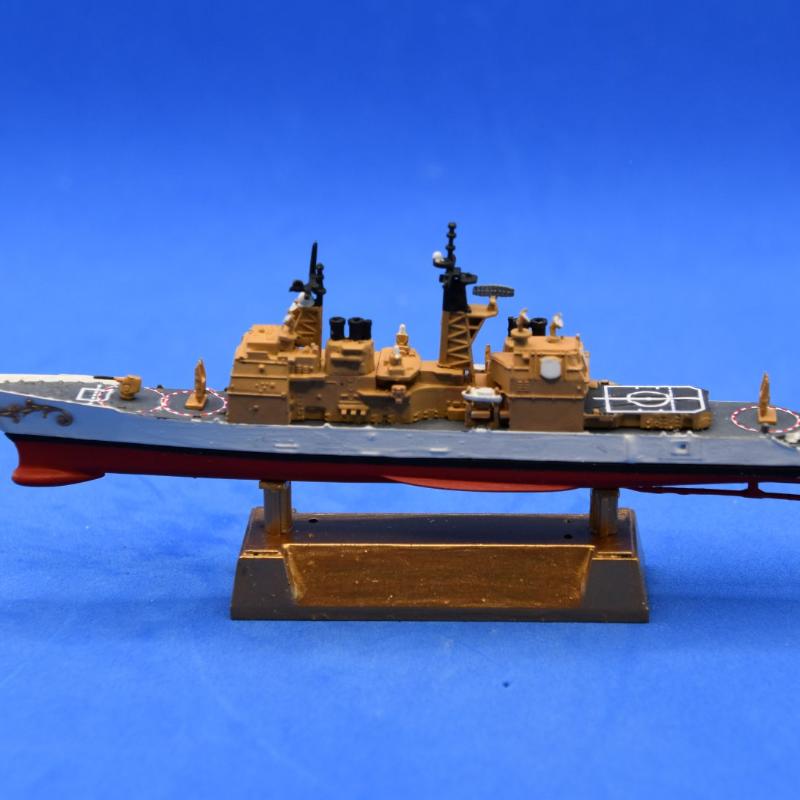
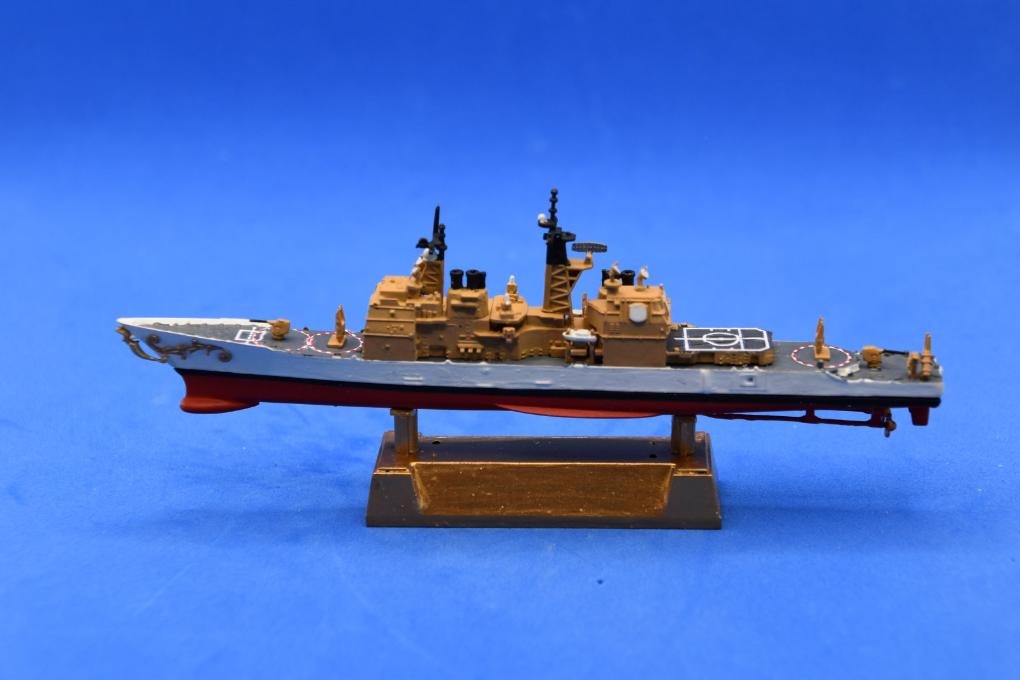
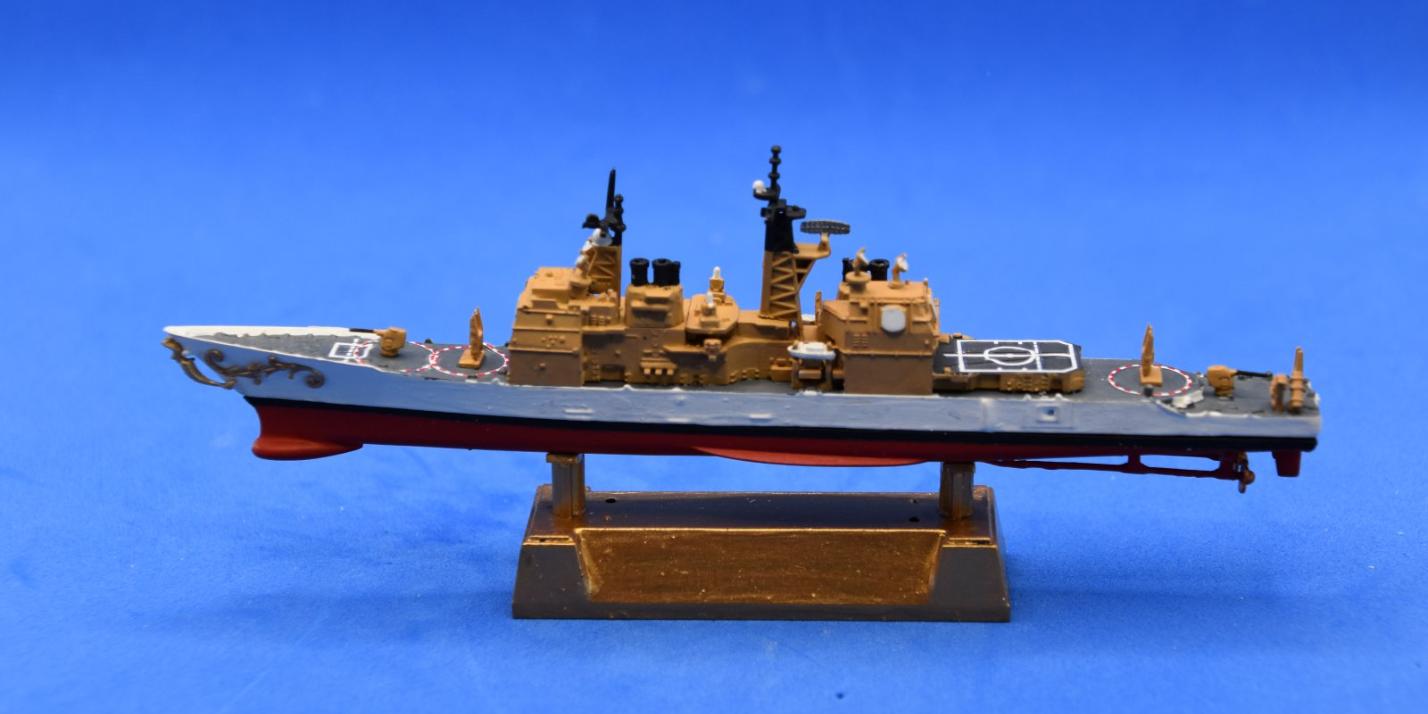
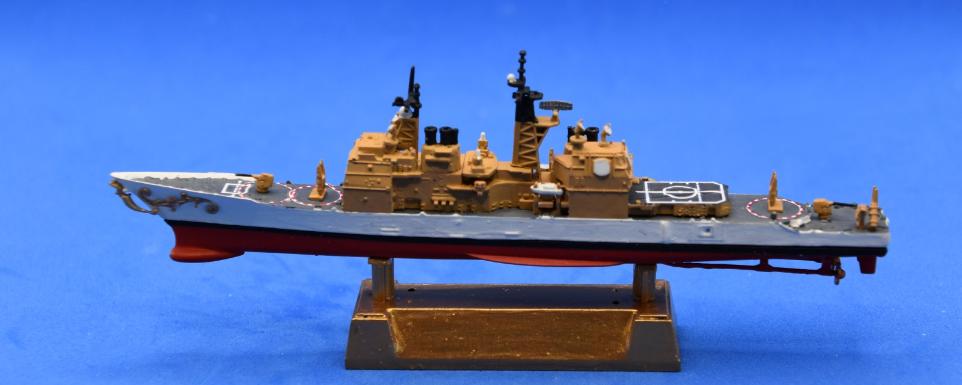
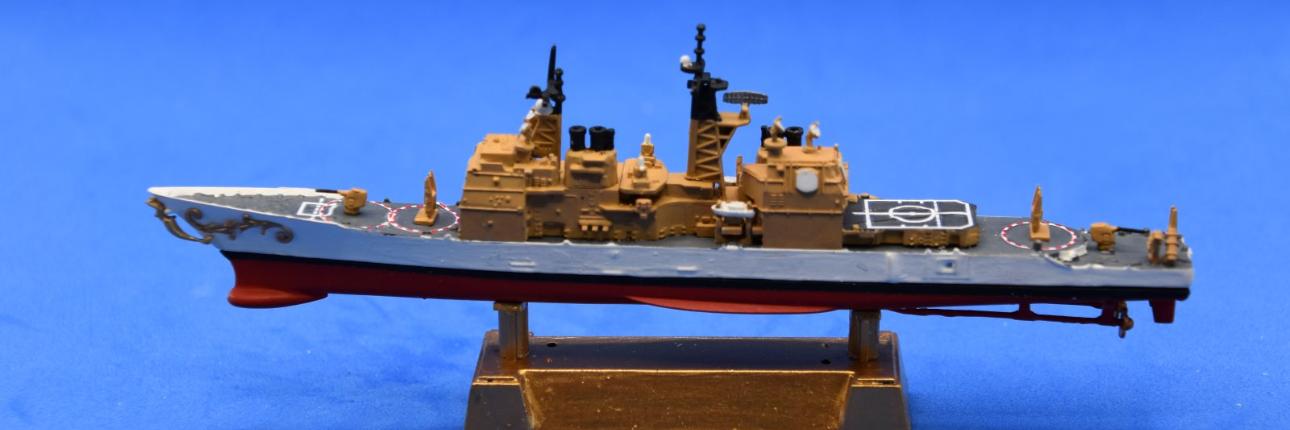
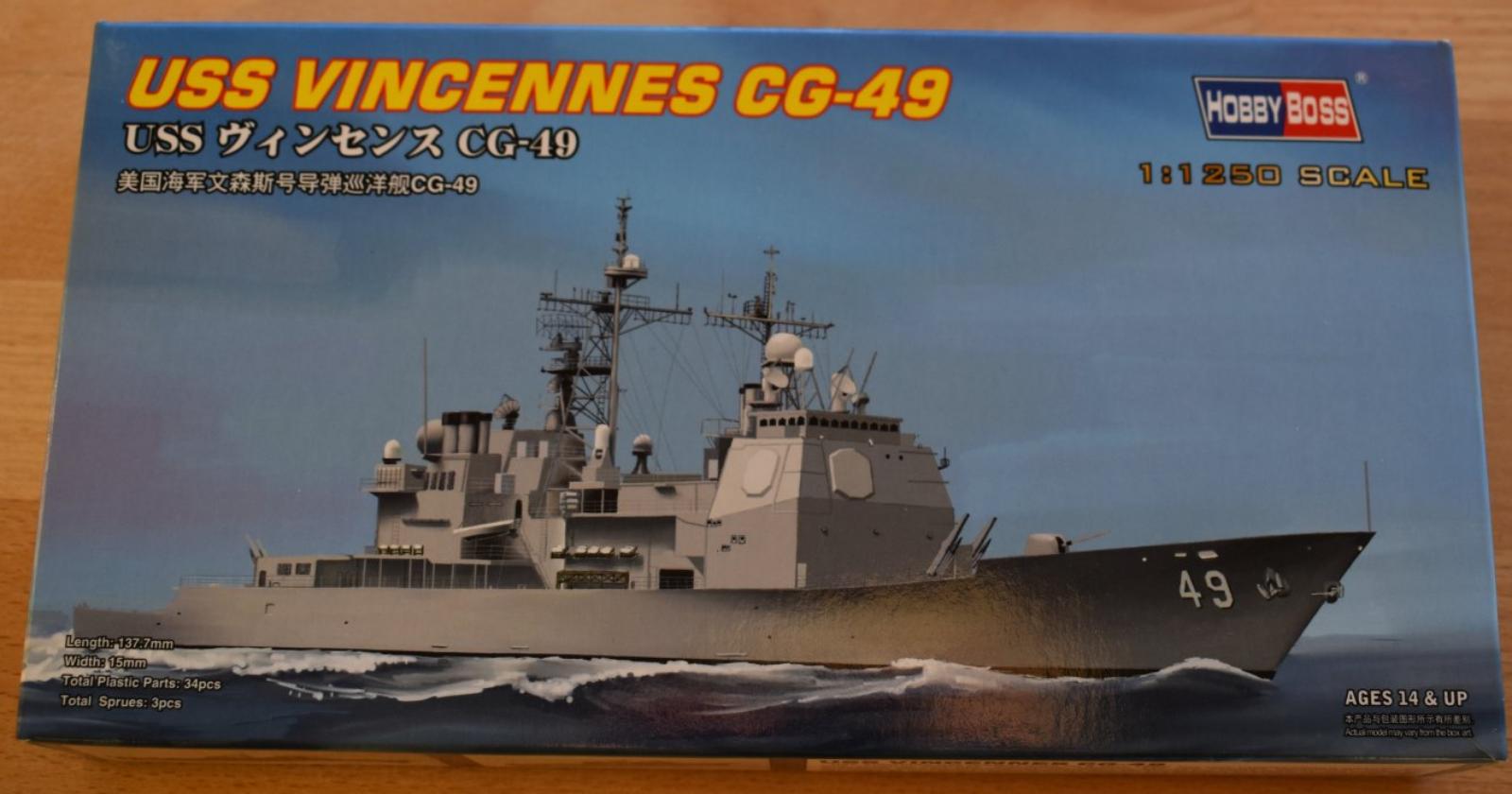
Manufacturer: HobbyBoss
Scale: 1/1250
Additional parts: 3D prints for mermaid and ornaments
Model build: Dec 25 - Jan 26
The radar screens in the Combat Information Center of the Aurum Imperialis weren't just showing blips; they were practically vibrating.
“Captain, we have three bogies closing fast, bearing 045,” the Tactical Officer called out, his voice straining to remain professional while standing under a gold-plated ventilation duct. “They aren’t even using active pings. They can see our reflection on their optical sensors from forty miles out.”
Captain Halloway gripped the polished mahogany railing of the bridge. Outside, the sun hit the 24-karat filigree along the bow, sending a literal beam of light—like a divine signal—straight into the path of the incoming anti-ship missiles.
“Of course they can see us, Miller,” Halloway remarked, squinting against the glare of his own ship. “We’re a floating sun. Ready the point-defense systems.”
The Aurum Imperialis was never meant for a scrap. It was meant for a gala. But as the lead ship of the Golden Fleet, it had a reputation—and a very expensive paint job—to protect.
0900 Hours: The enemy drones crest the horizon. They don't encounter a grey ghost; they encounter a shimmering titan of white and gold.
0902 Hours: The ship’s automated cannons—normally encased in sleek, matte housings, but here encased in ornate, brass-finished carapaces—whirred to life.
0903 Hours: Incoming fire. Two skimming missiles locked onto the "impressive attributes" of the mermaid figurehead, the highest heat-and-light signature on the prow.
“Brace for impact!” Halloway shouted.
The ship didn't dodge. It didn't have to. The junior officer’s "renovation" had included modernizing the point-defense beneath the gold leaf. The Aurum erupted in a symphony of fire. Tracers, reflected in the polished hull, made it look like the ship was firing twice as many rounds. The missiles disintegrated five hundred yards out, their debris pelting the golden mermaid like expensive confetti.
“Return fire,” Halloway ordered. “Give them a taste of 'Imperial' justice.”
The main battery, finished in a stunning ocher-gold, pivoted. There was no stealth, no ambush. It was a heavyweight boxer entering the ring with a sequined robe and a spotlight.
“Targeting solution locked, sir. They’re trying to jam us, but we’re so bright we’re actually burning out their light-sensitive seekers.”
The Aurum Imperialis roared. The recoil sent a shudder through the "yacht-like" decks, knocking a decorative vase off a pedestal in the Admiral’s lounge, but the shells found their mark. A distant explosion blossomed on the horizon.
As the smoke cleared, the crew didn't reach for damage control kits; they reached for microfiber cloths. A stray piece of shrapnel had scratched the gilding on the port side, and to the crew of the Aurum, that was the real casualty.
Captain Halloway looked at the sensor feed. The enemy was retreating. They hadn't been defeated by superior tactics, but by the sheer, bewildering audacity of a ship that refused to hide.
The Mission Log updated:
Enemy neutralized: 3 units.
Ammunition expended: 400 rounds.
Polish expended: 12 gallons.
Status: Radiant.
Halloway turned to his navigator. “Maintain course. And tell the Bosun to get a team out on the mermaid. She’s got soot on her nose, and the Commander-in-Chief is watching the satellite feed.”

The Aurum Imperialis - first of the Golden Fleet
Once upon a time, the Commander-in-Chief was deeply dissatisfied with his warships. He disliked their appearance: grey, bulky, stealthy — not looking like real ships at all, and certainly not like yachts. This simply would not do.
So he made a decision.
“I want a Golden Fleet. The ships shall be the prettiest on all seas. And not grey. And the most powerful ones. And I want the first one finished in two years.”
This announcement caused mild hysteria within the naval high command. How was this supposed to be possible? Designers panicked, planners stared into the void, and budgets quietly wept. A desperate search for a solution began — until, at last, a junior staff officer had a brilliant idea.
“Why don’t we take one of the mothballed ships,” he suggested carefully, “and… make it nicer?”
Silence. Then nodding.
“Yes,” said the admirals. “That might work.”
So the plan took shape: take an old ship, paint it like the Great White Fleet — a shining white hull, an ocher superstructure — and add some tasteful golden ornaments. Plenty of them.
All admirals nodded again. This, they agreed, could be done in time.
Then one of them had another idea.
“What about a figurehead?”
The others considered this.
“A fearless leader?” one asked.
“A lion, to show strength?” another suggested.
“No,” said a third admiral thoughtfully. “A mermaid. With… impressive attributes. The Commander-in-Chief will definitely like this.”
And so it was done.
One of the older ships — scheduled for scrapping within the next few years — was towed into the shipyard and reborn. Vast quantities of paint were applied, gold was added wherever it might possibly fit, and after only eighteen months the vessel emerged in dazzling colors, gleaming ornaments, and a proudly shining golden figurehead.
The first ship of the Golden Fleet had arrived.
The commissioning ceremony was, by all official metrics, a triumph.
A brass band played something vaguely nautical, champagne bottles were sacrificed with heroic enthusiasm, and the Commander-in-Chief himself arrived wearing sunglasses, despite the ceremony taking place indoors. He circled the ship slowly, nodding at the gold, nodding again at the gold, and pausing for a long moment beneath the figurehead.
“Magnificent,” he declared. “Very… convincing.”
The admirals exhaled.
Thus, the Aurum Imperialis officially entered service.
Operational reality followed shortly thereafter.
At sea, the ship was impossible to overlook. Satellites noticed it. Civilian aircraft noticed it. Passing fishermen noticed it and took photos. Enemy reconnaissance drones briefly paused, apparently unsure whether they were observing a warship or a floating casino.
The ship’s combat systems worked perfectly well, though targeting officers reported a curious side effect: hostile radars locked on almost immediately, drawn by the ship’s radiant reflections and decorative gold filigree, which proved to be visible from several nautical miles away — sometimes before the horizon.
Stealth, it turned out, was not part of the design philosophy.
Crew morale, however, was excellent. Sailors enjoyed serving aboard a vessel that sparkled in the sun and looked expensive even when doing absolutely nothing. Maintenance crews worked overtime polishing surfaces that did not technically need polishing, but looked better afterward. The mermaid figurehead became a popular meeting point, morale booster, and unofficial landmark.
“Twelve o’clock, starboard, mermaid,” became a perfectly valid navigational reference.
During its first major fleet exercise, the Aurum Imperialis led the formation. Not because it was tactically optimal, but because it was easier for everyone else to follow. Reports later noted that the rest of the fleet had “maintained visual contact at all times.”
The Commander-in-Chief was delighted.
“This is what power looks like,” he said, watching the ship glide past, sunlight bouncing off every gilded edge. “Strong. Beautiful. Very visible.”
Plans for additional ships of the Golden Fleet were announced the same afternoon.
And so the Aurum Imperialis sailed on.
It did not always sail quietly, nor subtly, nor unnoticed. But it sailed proudly, gleaming across the seas like a golden promise — or a warning, depending on who was watching. Children waved from beaches. Photographers adjusted their exposure. Intelligence analysts sighed and ordered stronger sunglasses.
The Commander-in-Chief slept well at night, secure in the knowledge that his fleet was no longer grey, no longer dull, and certainly no longer invisible.
The admirals learned an important lesson, too: that in times of great uncertainty, it was sometimes wiser to embrace gold than to argue with it.
And if the ship was not the stealthiest, nor the most practical, nor the least expensive vessel ever built — well, that was beside the point.
Because it was beautiful.
And it was powerful.
And it was finished in under two years.
And thus, as all good fairy tales end:
The seas were shiny,
the fleet was golden,
and everyone lived expensively ever after.
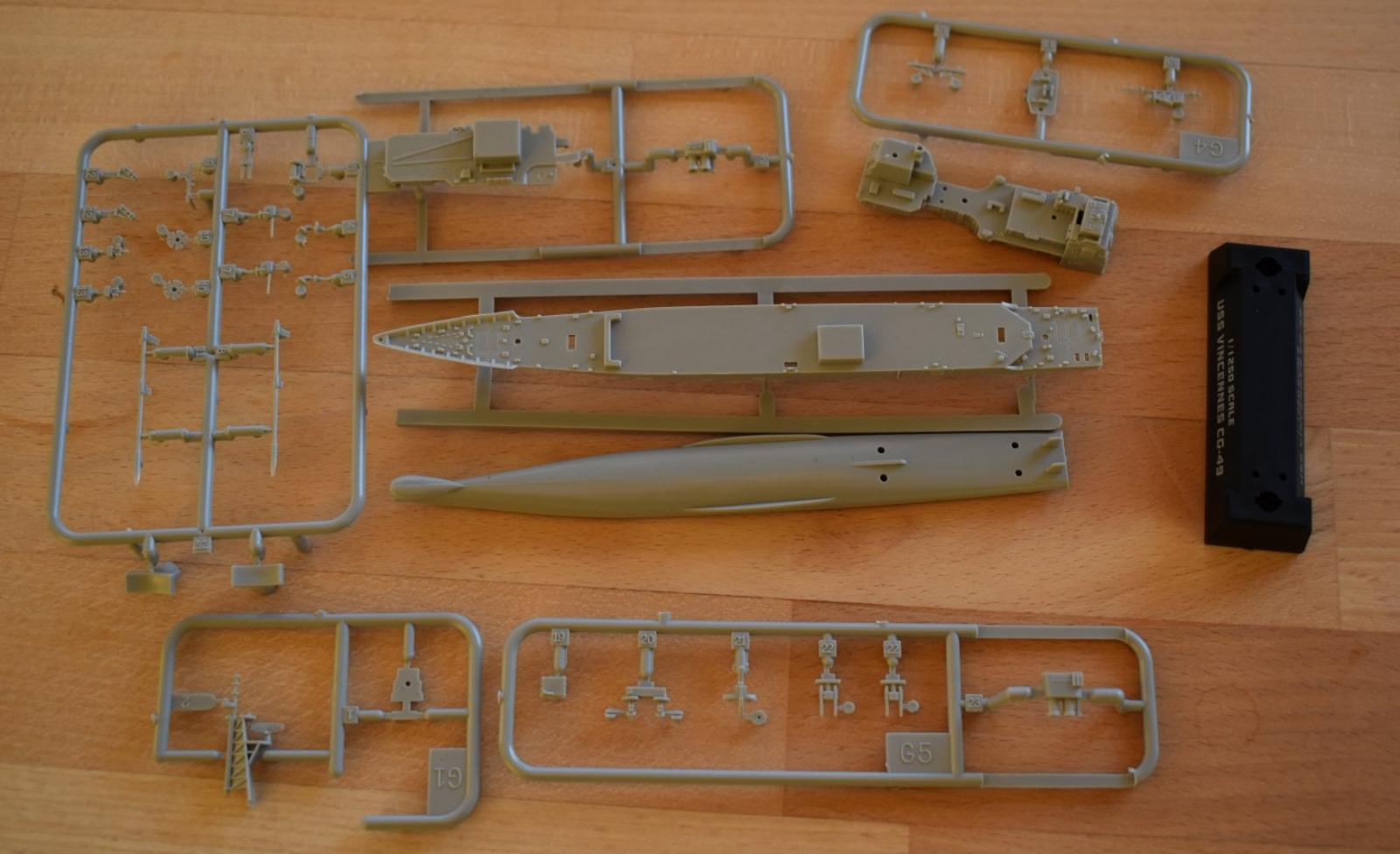
This is a 1:1250 scale HobbyBoss model of the USS Vincennes (CG-49). Built out of the box, the model was painted in the style of the early-20th-century Great White Fleet, featuring a white hull and contrasting superstructure.
The mermaid figurehead and decorative ornaments were custom 3D-printed, a particularly challenging task at this very small scale.
The entire model was painted using Revell Aqua Color paints.