Manufacturer: Special Hobby
Scale: 1/72
Additional parts: none
Model build: Apr-Jun 2019

Manufacturer: Special Hobby
Scale: 1/72
Additional parts: none
Model build: Apr-Jun 2019
June 1963, Bavaria, West Germany
Captain Franz Hartmann gripped the control stick of his Me 200, the sleek jet thrumming with life beneath him. It had been eight years since he'd last flown a German warbird, the Luftwaffe insignia a bittersweet reminder on the tail. Now, this new "Messerschmitt" served a different purpose, training the next generation of German pilots. But today, training wasn't on the agenda.
Franz's radio crackled. "Captain, are you there? We've lost contact with Flight Lieutenant Weber. Last reported position - near the border with East Germany."
Franz's blood ran cold. The border. Tensions with the Soviets were at an all-time high. Weber, a hotshot pilot prone to pushing boundaries, could have strayed too close. Or worse, been intercepted.
" scramble a search party," Franz barked into the mic. "Maintain radio silence. We don't want to spook the commies if Weber's captured."
Against regulations, Franz took off alone. The Me 200 sliced through the sky, a blur of silver against the Bavarian blue. Franz scanned the horizon, his heart pounding with every passing second. Then, a glint of sunlight on metal - Weber's Me 200, spiraling down over a dense forest.
Franz swooped in, spotting Weber slumped over the controls. The aircraft sputtered, trailing smoke. Had Weber been hit? Enemy fire or a malfunction? It didn't matter now. Franz needed to get Weber down.
He guided his own Me 200 alongside the crippled aircraft, a risky maneuver. "Weber, can you hear me? Pull up!" he yelled, his voice strained against the roar of the engines.
No response. The forest loomed closer. Thinking fast, Franz nudged his wing against Weber's, a desperate attempt to stabilize the failing jet. It worked, for a moment. But then, with a sickening lurch, the forest floor rushed up to meet Weber's Me 200.
Franz's heart hammered in his chest. Had he failed? But as the dust settled, a figure emerged from the wreckage. Weber, dazed but alive, stumbled towards him. Relief washed over Franz, a wave that almost knocked the wind from his sails.
Suddenly, the radio crackled back to life. "Captain Hartmann, what's your status? You disobeyed orders!"
"Weber's alive," Franz said, his voice hoarse. "But we have a problem. We're on the wrong side of the border."
Silence filled the air, broken only by the rasping breaths of the two pilots. They were in enemy territory, with a crippled aircraft and no backup. The mission had just become a desperate fight for survival, a rogue flight against impossible odds.

When the Bundesluftwaffe was founded in 1955, West Germany faced the urgent task of rebuilding an air force from scratch under NATO supervision. Among fighters and transport aircraft, one essential type was missing: a modern jet-powered trainer that could also perform light ground-attack duties. The Lockheed T-33 Shooting Star was purchased as a stopgap, but it was clear that a domestically supported European-built alternative was needed.
While the new Air Ministry consisted of Western-aligned officers, many of them had once served in the wartime Luftwaffe. Old professional networks quietly resurfaced. One of these links led to Willy Messerschmitt, who, after the war, was working in Spain for Hispano Aviación. There, he had designed a light jet trainer and attack aircraft: the HA-200 Saeta.
The HA-200 first flew in August 1955. Simple, rugged, and forgiving to fly, it immediately caught the attention of German evaluators. In early 1961, the Bundesluftwaffe conducted comparison trials between the HA-200 and the French Fouga CM.170R Magister. Both aircraft performed almost identically in handling and performance, but two factors tipped the decision toward the Spanish aircraft:
Messerschmitt’s design philosophy and existing engineering ties.
Dual-role capability, with better adaptability for light attack operations.
However, due to political tensions and restrictions on arms imports from Spain, the Bundesrepublik could not simply purchase the aircraft from Hispano Aviación. Instead, Messerschmitt was quietly allowed to return and re-establish his company. In Manching, a new production line was created. The aircraft received a new designation: Messerschmitt Me 200.
Between 1962 and 1967, a total of 243 Me 200s were produced. They served in the Luftwaffe’s Flugzeugführerschulen (pilot training wings) and light attack squadrons. Initially, the aircraft were used in the basic and advanced jet training role, but by the late 1960s, pilot training shifted increasingly to Sheppard Air Force Base in the USA.
The Me 200 was then reassigned to a secondary role:
In several documented cases, Me 200s intercepted Warsaw Pact aircraft that had violated West German airspace—despite being technically obsolete in combat.
By 1979, the Me 200 was withdrawn from service. Some aircraft were sold to Algeria, Tunisia, and Morocco, where they continued flying well into the late 1980s. A handful were purchased by civilian collectors, flight museums, and private flying clubs.
Today, three Me 200s remain airworthy in Europe—two in private hands and one operated by the Messerschmitt Stiftung, occasionally seen flying at airshows in Manching and Berlin-Gatow.
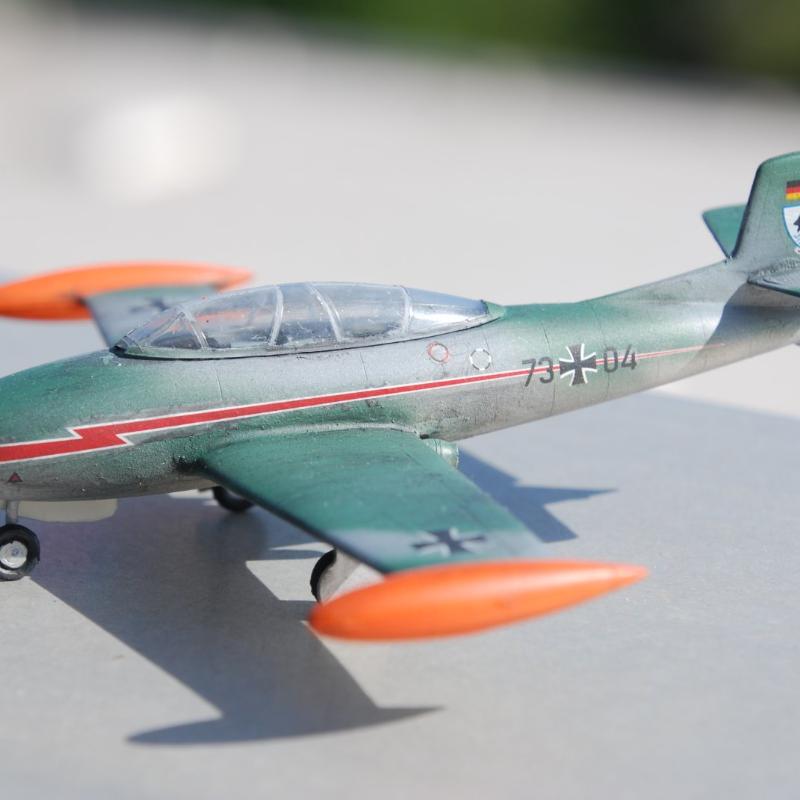
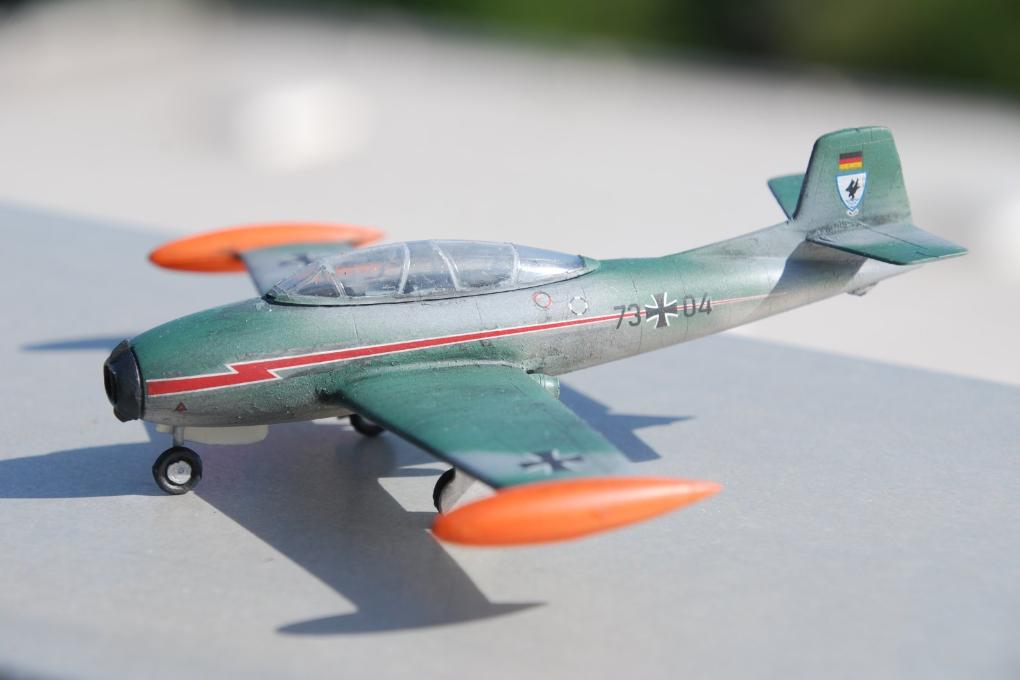
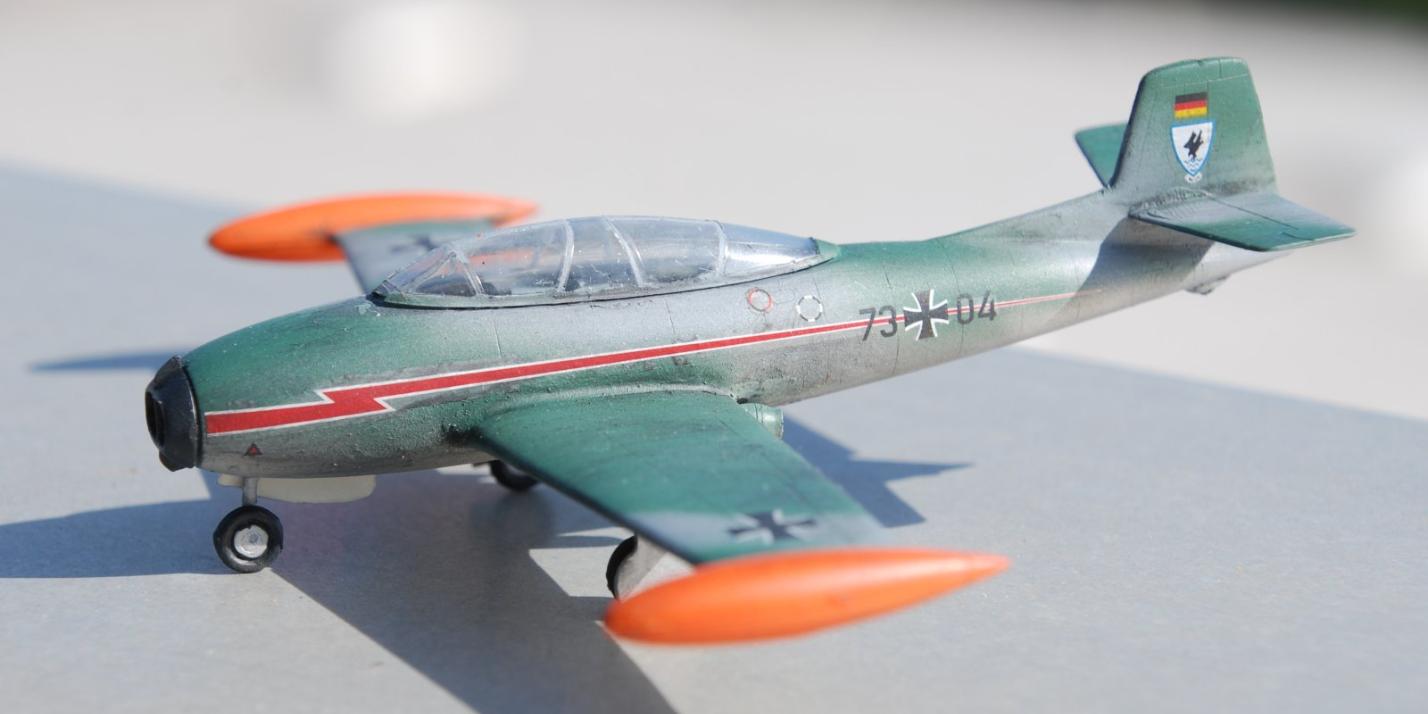
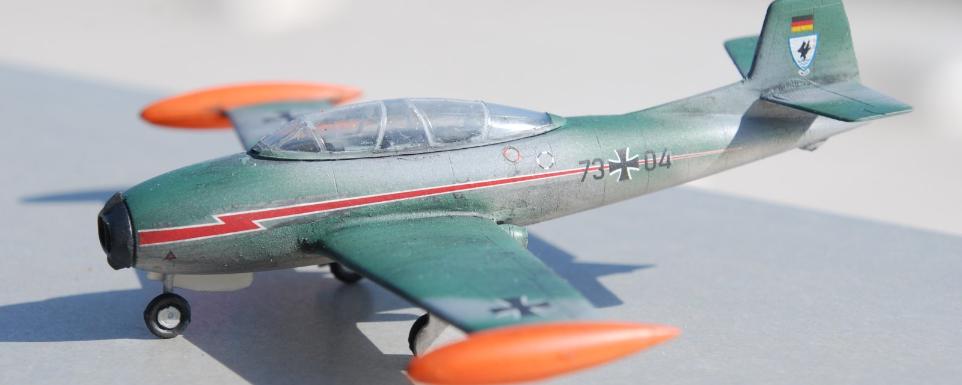
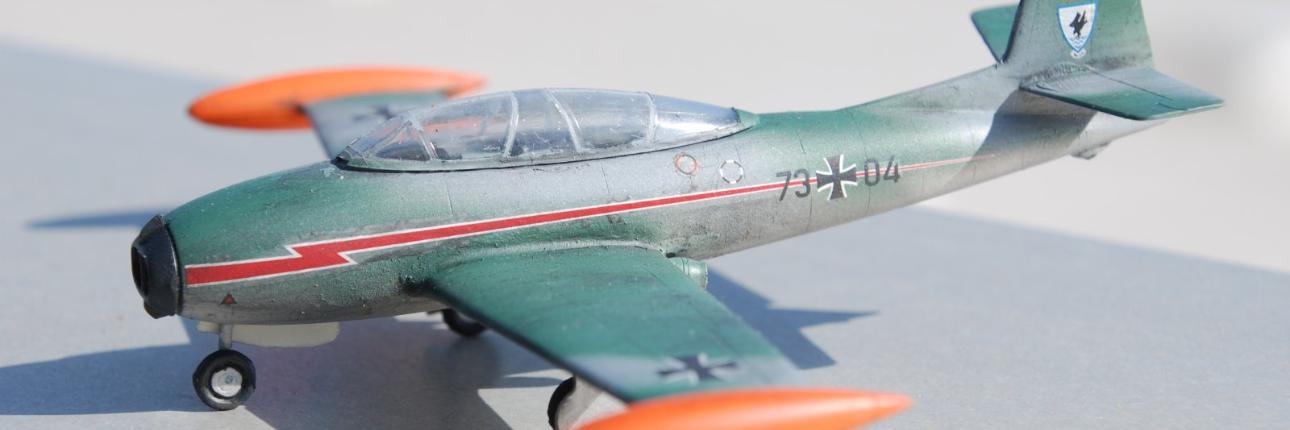
The model shows a Me-200 in June 1963.
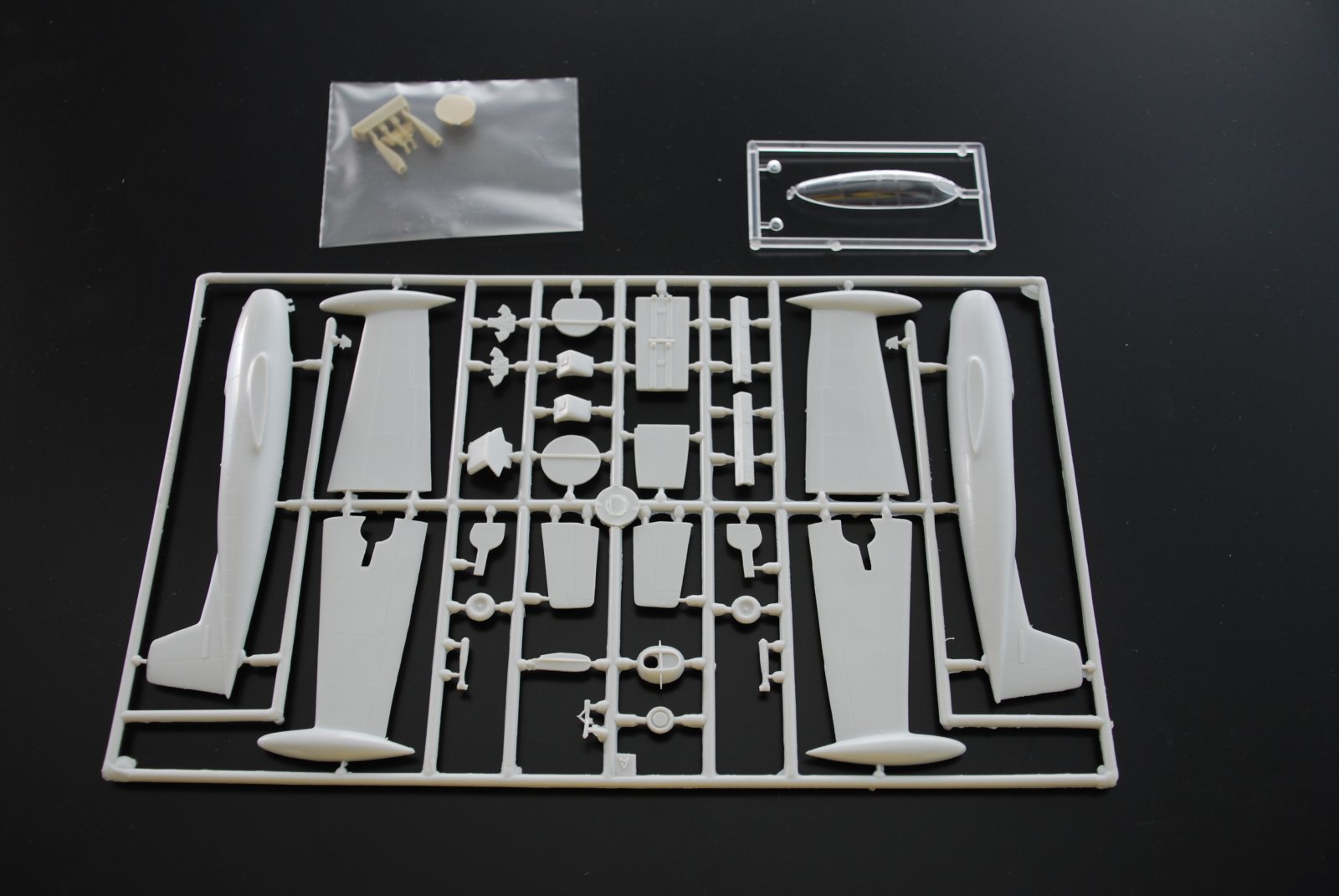
The model is a 1/72 scale Special Hobby Hispano Aviación HA-200 kit. Build OOB, I only added a different colour scheme. Air brushed with Revell Aqua Colour, decals were taken form the original kit and the spare parts box.