Manufacturer: Huma
Scale: 1/72
Additional parts: none
Model build: Nov - Dec 2015
Manufacturer: Huma
Scale: 1/72
Additional parts: none
Model build: Nov - Dec 2015
The crisp mountain air of Oberammergau swirled around Franz, a young Messerschmitt engineer, as he gazed upon the P.1101 V1. Its duralumin skin gleamed in the weak April sunlight, a testament to the tireless nights he and his team had poured into its creation. This wasn't just any aircraft; it was the future of the Luftwaffe, a sleek harbinger of dominance in the skies.
Unlike its predecessors, the P.1101 wasn't built for immediate battle. It was a testbed, a stepping stone towards the P.1110, the true jet fighter that would turn the tide of the war. But the P.1101 held its own kind of magic. Its movable wings, a marvel of German engineering, could be adjusted between 35 and 45 degrees, a groundbreaking experiment in swept-wing technology. With the planned HsS-011 engine still under development, the prototype had to settle for the tried-and-true Jumo-004, but that didn't diminish its potential.
Days bled into nights as Franz and his team meticulously prepared the P.1101 for its maiden flight. Every bolt tightened, every wire checked, was a fervent prayer for a successful test. The roar of a distant engine shattered the pre-dawn silence. It wasn't the familiar rumble of a piston engine; it was a new, high-pitched whine that sent a shiver down Franz's spine. American tanks were rolling into Oberammergau.
Panic threatened to consume Franz, but a steely resolve took hold. The P.1101, their technological marvel, couldn't fall into enemy hands. With a heavy heart, Franz and a small group diverted their efforts, readying the prototype for transport. Just as the American flag was being raised over the facility, the P.1101 was winched onto a waiting truck, its secrets safe for now.
Across the Atlantic, the P.1101 found a new home in the United States Air Force. Though it never soared through American skies, it served a different purpose. Its design heavily influenced the Bell X-5, an American experimental aircraft that bore an uncanny resemblance to the P.1101. The dream of a swept-wing fighter, born in the heart of Bavaria, lived on, albeit under a different flag. Franz, years later, would see a picture of the X-5 in an aviation magazine. A bittersweet smile touched his lips. The P.1101 V1 may never have reached its full potential, but its legacy, like the contrails of a jet, stretched far beyond its intended path.

Messerschmitt P.1101 – The Variable-Wing Pioneer
In the final months of the Second World War, Germany’s aircraft industry pushed jet technology to its limits in a desperate attempt to regain air superiority. Among the last and most forward-thinking designs was the Messerschmitt P.1101, a project that would have bridged the gap between late-war jet fighters and the next generation of supersonic aircraft.
Development of the P.1101 began in mid-1944 at Messerschmitt’s Oberammergau design facility. Intended as both a prototype and technology demonstrator, the aircraft featured an innovative variable-geometry wing system—the first of its kind. On the ground, ground crews could manually adjust the sweep angle of the wings between 35° and 45°, allowing engineers to study how different configurations affected flight characteristics and speed. This principle would later influence several post-war aircraft designs.
The prototype was originally intended to be powered by the advanced Heinkel HeS 011 turbojet, but due to shortages, the less powerful Jumo 004B engine—the same used in the Me 262—was installed instead. Despite this, calculations suggested the aircraft could exceed 850 km/h, making it one of the fastest jet fighters of its generation.
By April 1945, the first prototype, nearly complete, was undergoing final assembly and ground testing. Flight trials were planned for early May, but the war’s end intervened. When U.S. forces captured the Oberammergau facility, they found the nearly finished P.1101 intact, along with detailed plans for the proposed P.1110, an enlarged production fighter intended to replace the Me 262 in Luftwaffe service.
The Americans quickly recognized the aircraft’s value and shipped it to the United States under Operation Lusty, which gathered advanced German technology. The P.1101’s unique design became the basis for Bell Aircraft’s X-5, completed in 1951, which refined the variable-sweep concept into a fully adjustable system operable in flight—an innovation that would pave the way for future aircraft such as the F-111 and F-14.
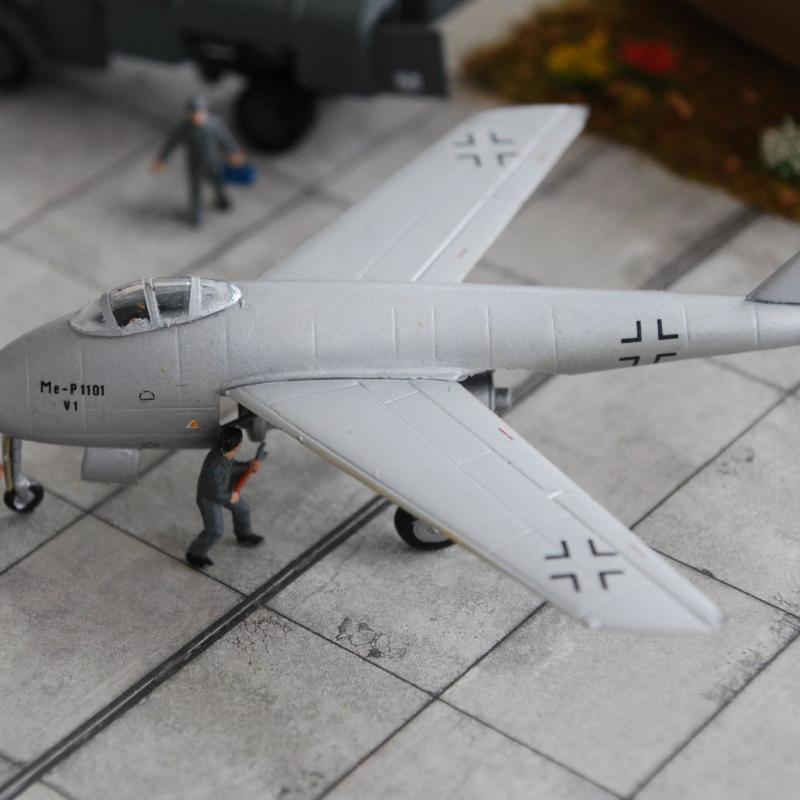
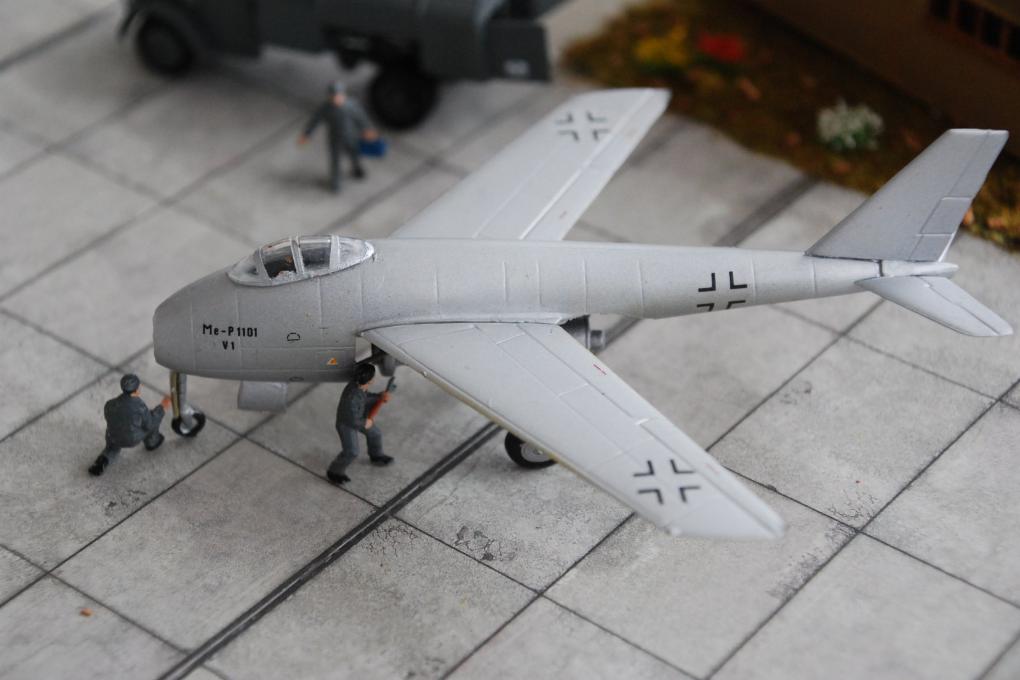
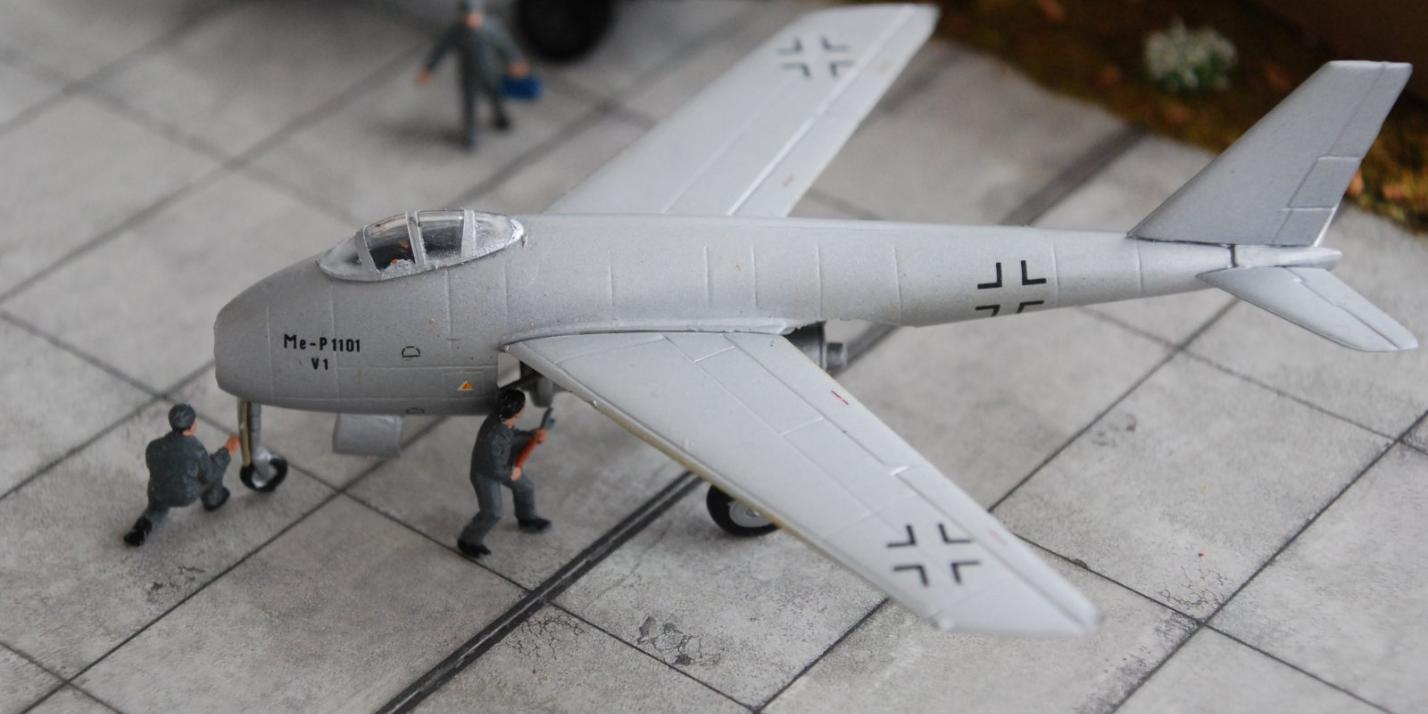
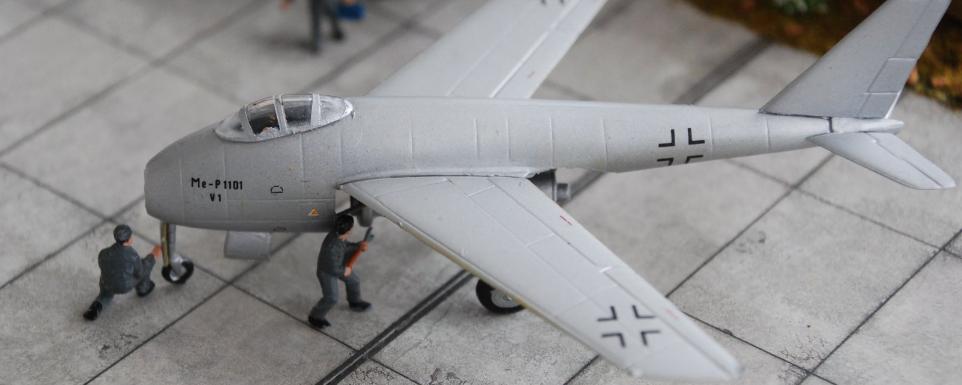
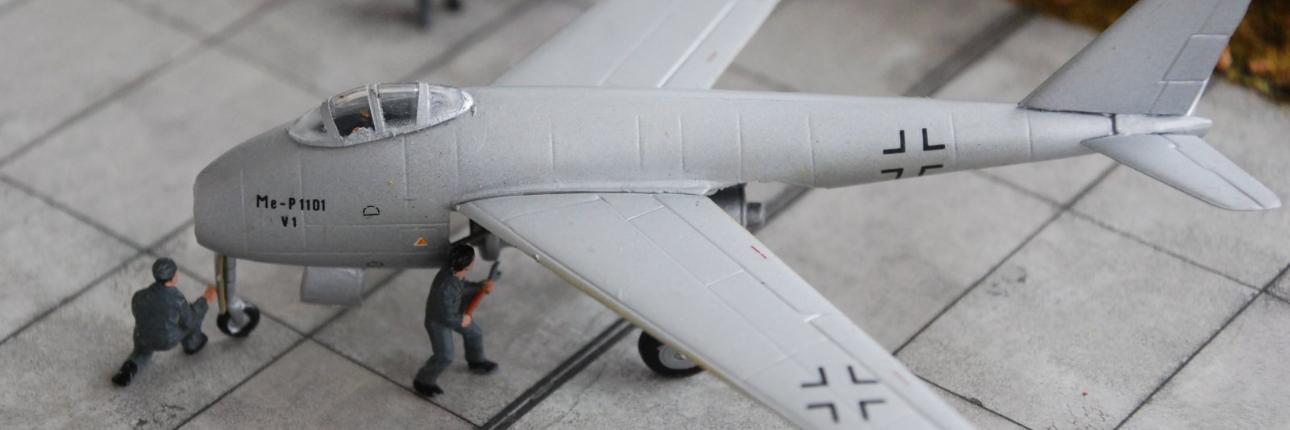
The model shows the P.1101 V1 during flight preperation in April 1945, just before the facility was taken over by the US Army.
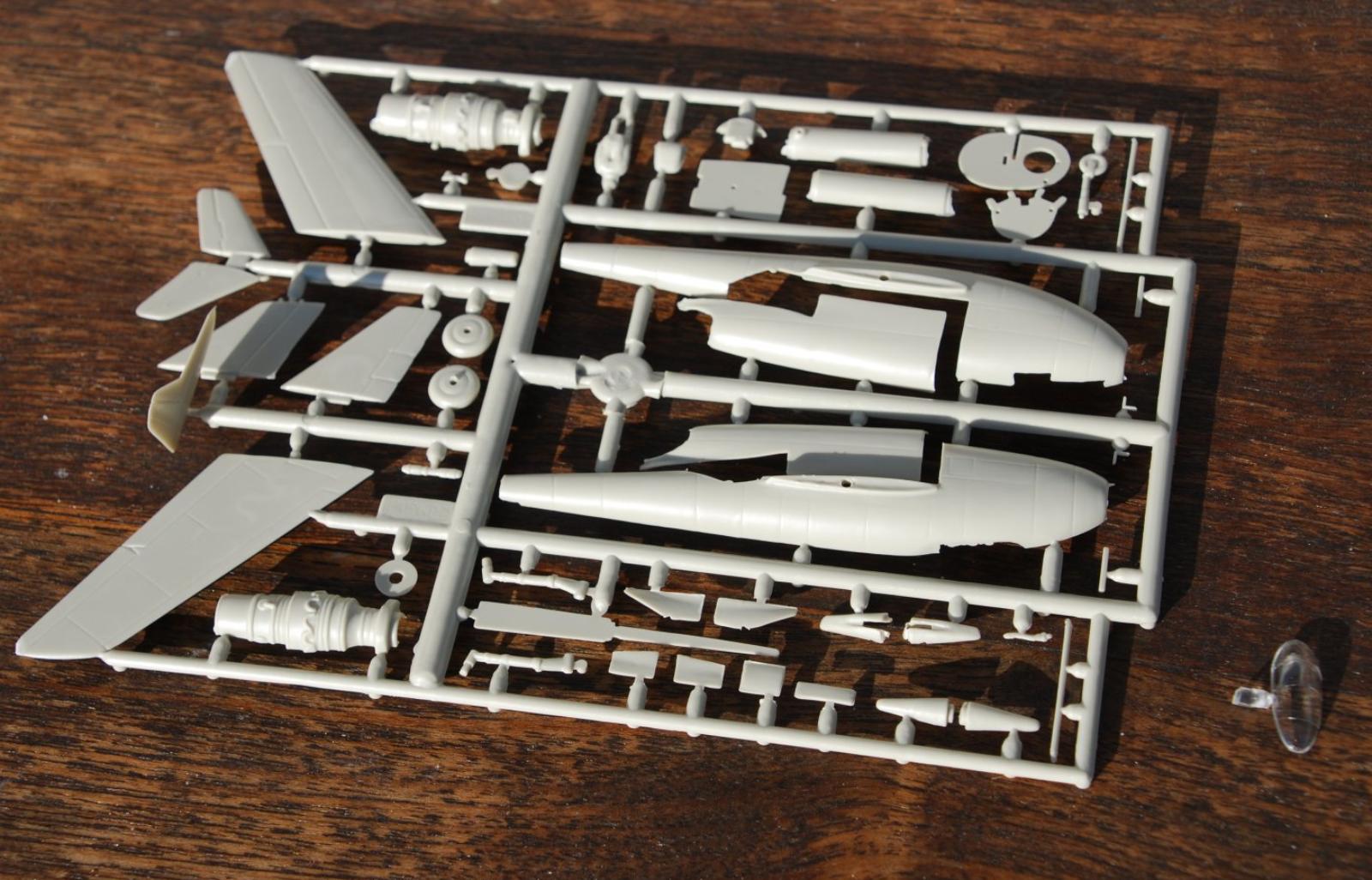
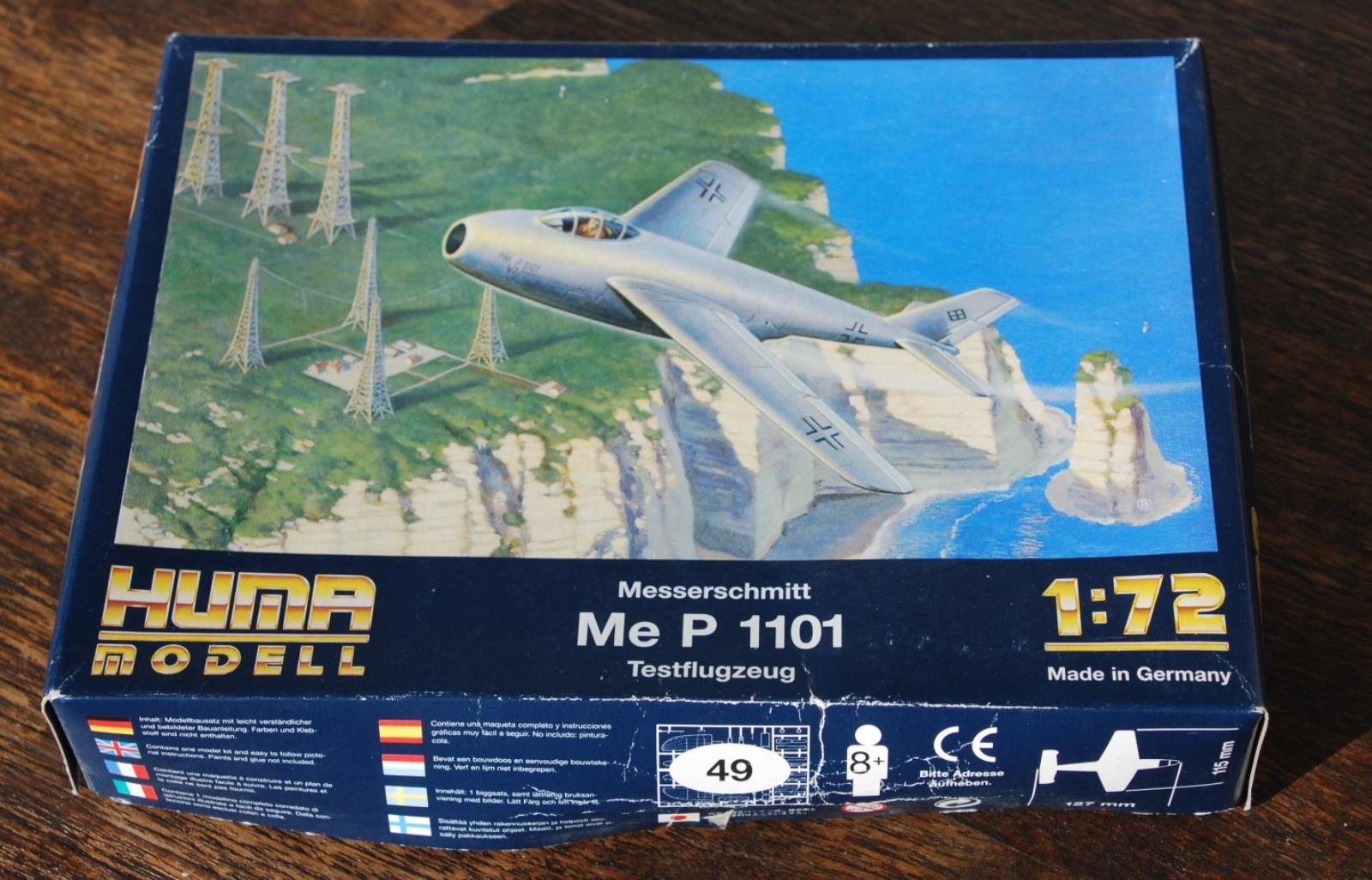
The P.1101 is an old Huma 1/72 scale kit. It did not fit very well so the result is not too good. The model is painted with Revell Aqua Color, decals are taken form the Huma model and some additional ones from the spare part box.