Manufacturer: Revell
Scale: 1/72
Additional parts: none
Model build: Jun-Aug 2014
Manufacturer: Revell
Scale: 1/72
Additional parts: none
Model build: Jun-Aug 2014
August 1948, Czechoslovakia
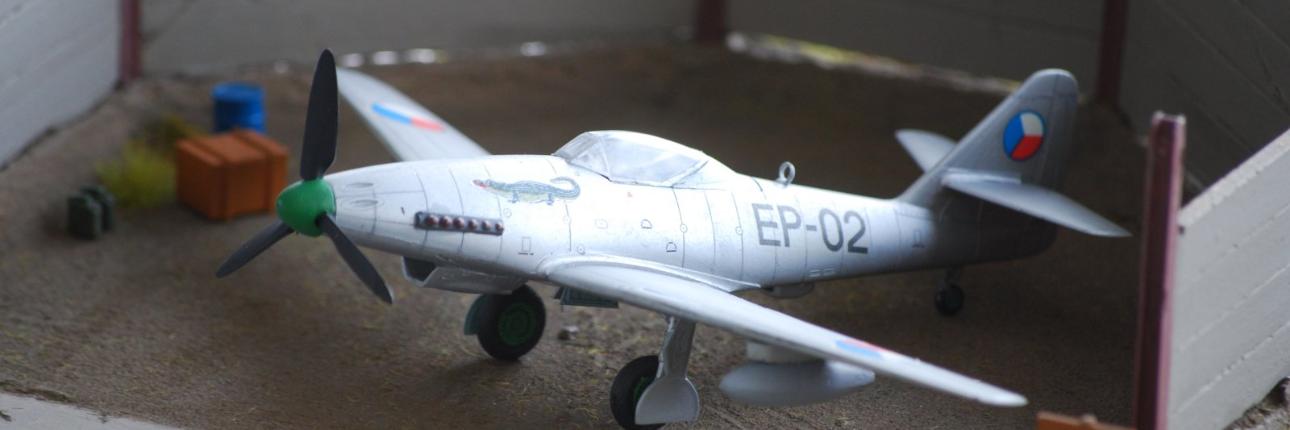
Sunlight glinted off the dew-kissed wings of the Avia S-96 "Jestráb" (Hawk) as Captain Janek "Ironbird" Voříšek strapped himself in. This wasn't your typical jet fighter. The sleek Me 262 airframe hummed with the powerful roar of a Daimler-Benz DB 605 piston engine, a unique Czechoslovakian solution to the early jet's unreliability.
Ironbird wasn't fond of the Jestráb's nickname. It was a powerful bird, sure, but landing this thing with its long nose and tricky tail gear was a constant test of nerve. Today, however, nerves were a luxury he couldn't afford.
Intelligence reports crackled through his headset. A group of heavily armed Soviet fighters had strayed across the border, most likely on a reconnaissance mission. Tensions between the East and West were at an all-time high, and this airspace violation couldn't be ignored.
Ironbird fired up the engine, the propeller churning the air with a satisfying whir. He taxied onto the runway, a lone defender against the approaching steel storm. Taking off, he climbed into the azure sky, the familiar landscape of his homeland shrinking beneath him.
Ahead, a flight of four Yak-9 fighters gleamed under the sun. The Soviet planes were nimble, but the Jestráb packed a punch. Ironbird flipped a switch, engaging the four 20mm cannons nestled in the wings. He dove in, adrenaline coursing through his veins.
The air erupted in a ballet of fire and tracers. One Yak sputtered and went down, trailing smoke. The remaining three turned, their cannons spitting fire. Ironbird's evasive maneuvers were textbook, but the Jestráb's landing gear made sharp turns a gamble.
Suddenly, a Yak clipped his wing. The Jestráb shuddered violently, one engine sputtering. Ironbird fought for control, his heart hammering against his ribs. He couldn't break off. He had to protect his airspace.
With a daring gambit, he lined up the remaining Yaks. He wouldn't get a full burst, but it might be enough. He squeezed the trigger, the cannons coughing a final challenge.
One Yak faltered, smoke billowing from its fuselage. The remaining two, clearly spooked, banked away and disappeared into the distance.
Ironbird, his plane battered and barely responding, limped back towards base. Smoke filled the cockpit, the once proud Jestráb groaning in protest. Every fiber of his being screamed to abandon ship, but the thought of the lush green fields of his homeland falling under foreign occupation spurred him on.
With a final surge of power, Ironbird wrestled the Jestráb onto the runway, the landing a bone-jarring affair that sent the plane skidding to a halt. He slumped back in his seat, coughing, the taste of victory mixed with burnt metal in his mouth.
He may have flown a relic, a cobbled-together marvel from a bygone era, but today, the Jestráb had proven its sting. Ironbird, the Ironbird of Czechoslovakia, had chased away the wolves and secured his homeland's skies, at least for now.

Following the end of the Second World War, the Czechoslovak aircraft industry sought to rebuild itself using surviving German technology and tooling left behind in occupied territories. Avia, the leading Czech aircraft manufacturer, initially focused on completing and adapting Messerschmitt Bf 109 and Me 262 airframes, resulting in the Avia S-99 and S-199 (Bf 109 derivatives) and the Avia S-92 (Me 262 derivative).
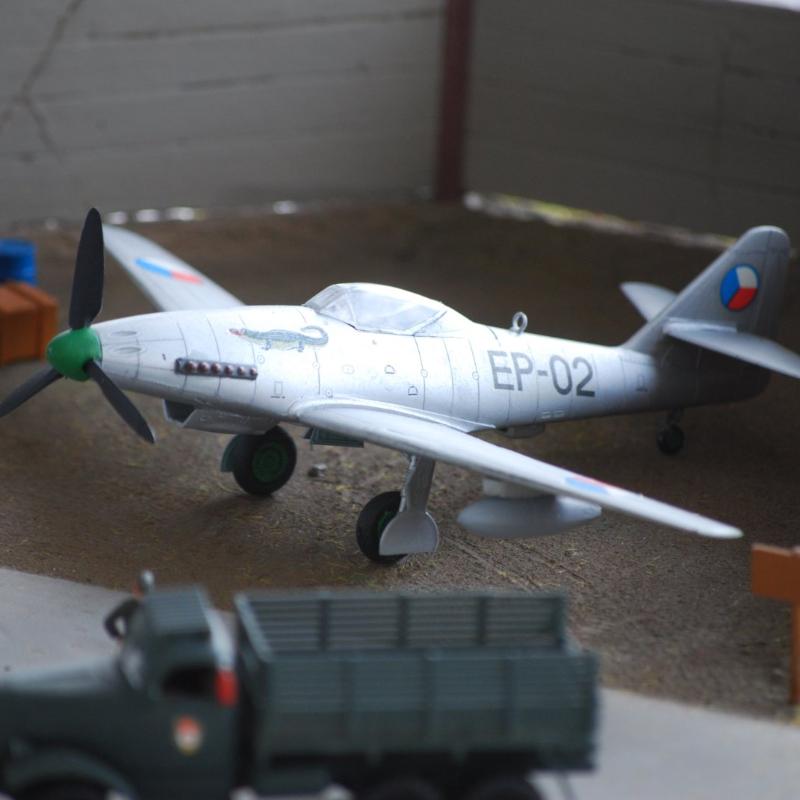
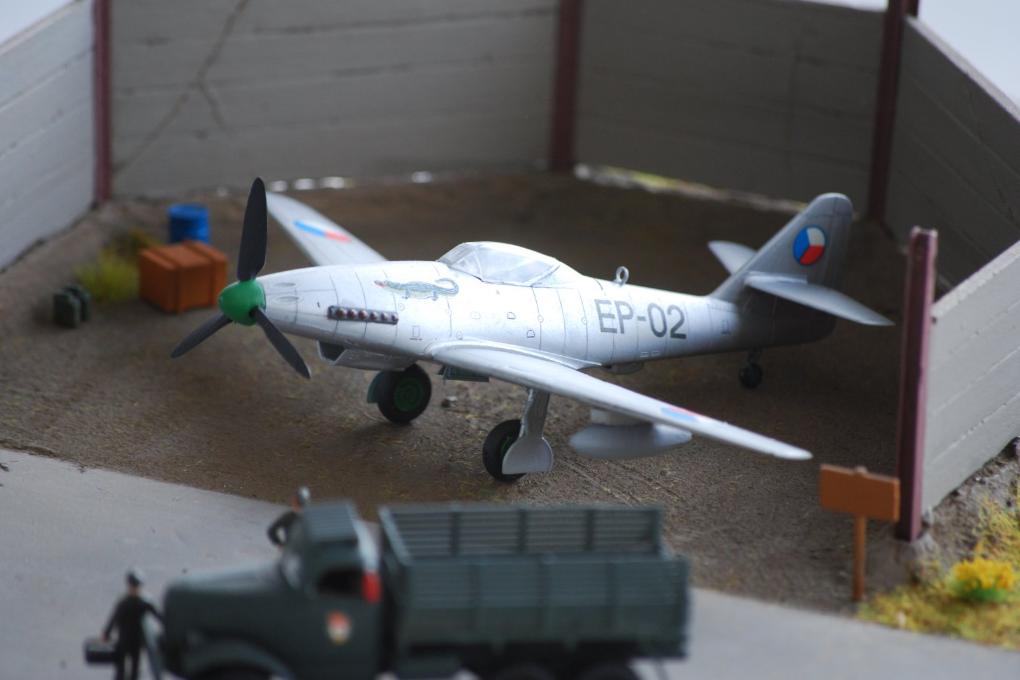
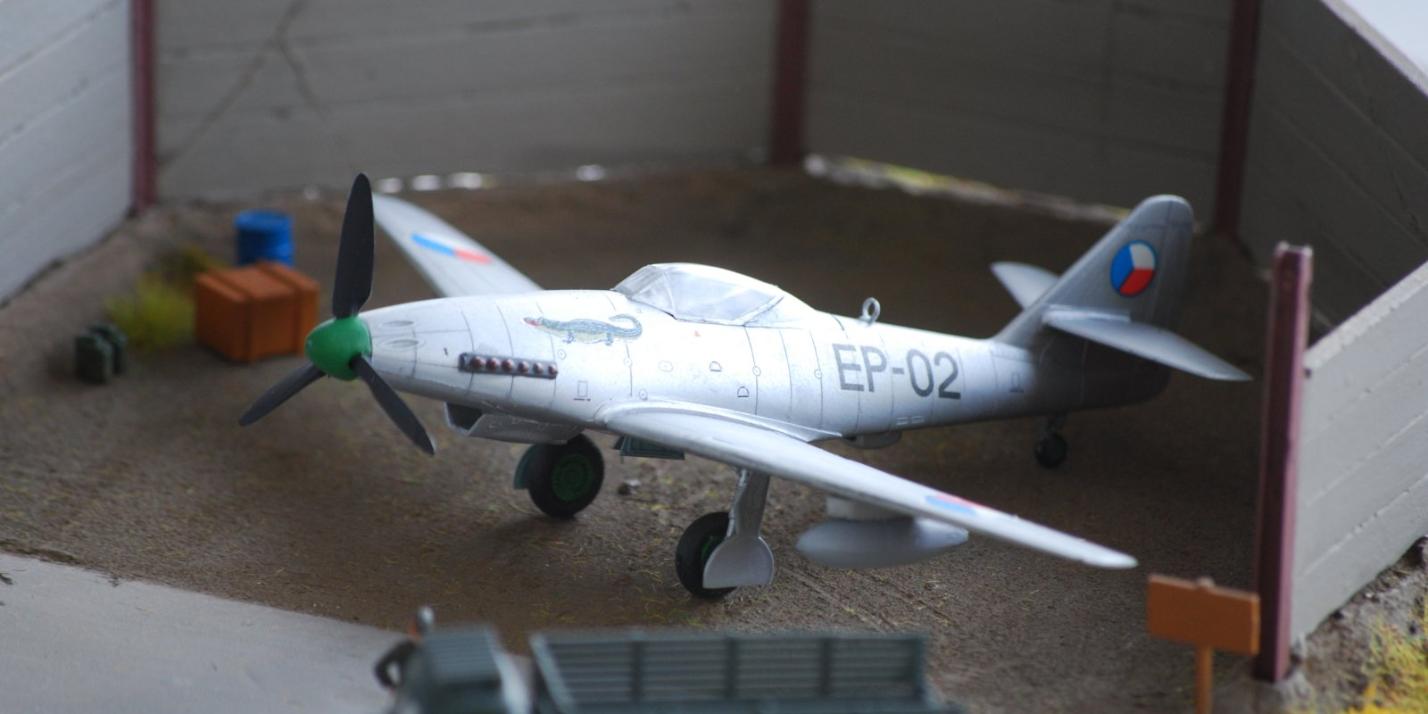
However, as the first generation of jet engines proved unreliable, prone to short lifespans and sudden failures, Czech engineers explored a hybrid solution. In 1946, they developed the Avia S-96, combining the fuselage of the S-92 jet with a powerful piston engine in the nose. The intent was to retain the aerodynamic advantages of the jet airframe while offering the reliability of proven piston power.
The first S-96 prototype flew in October 1946, powered by a licensed-built Daimler-Benz DB 605 engine. The long nose configuration and tailwheel undercarriage created challenges during takeoff and landing, but overall handling in the air was reported as stable and forgiving.
Between 1946 and 1949, 56 S-96s were produced. Initially deployed as frontline fighters, they were quickly overshadowed by the accelerating development of jet aircraft, including Soviet types such as the MiG-9 and later the MiG-15. By 1952, the S-96 was relegated to secondary duties.
Although never decisive as a fighter, the S-96 found a niche in training and ground-attack roles. Pilots transitioning from piston to early jet aircraft used the type as an intermediary platform, making it valuable for building familiarity with high-speed airframes and advanced aerodynamics.
Around 20 aircraft were reportedly converted into dedicated ground-attack versions, capable of carrying small bombs, unguided rockets, and additional machine guns in underwing pods. These aircraft were deployed with Czech tactical aviation units along the western and southern borders, where they participated in several large-scale Warsaw Pact training exercises during the early 1950s.
The S-96 also saw limited operational activity during border skirmishes in 1953–54, when Czech forces engaged in heightened patrols following tensions with West Germany and Austria. Though no confirmed aerial combat occurred, S-96s conducted armed patrols and low-level shows of force, exploiting their reliability and ability to operate from rougher airstrips compared to early jets.
In training accidents and border operations, several S-96s were lost. Despite its limited combat potential, the type earned a reputation among Czech pilots as rugged, adaptable, and more forgiving than the temperamental S-199.
By 1956, the S-96 was largely obsolete, supplanted by all-jet units operating MiG-15s. The final examples were withdrawn in 1959 after serving in secondary roles such as reconnaissance training and weapons trials. Unlike the S-92 jet, none of the piston-hybrid S-96s were preserved, and no airframes are known to have survived.
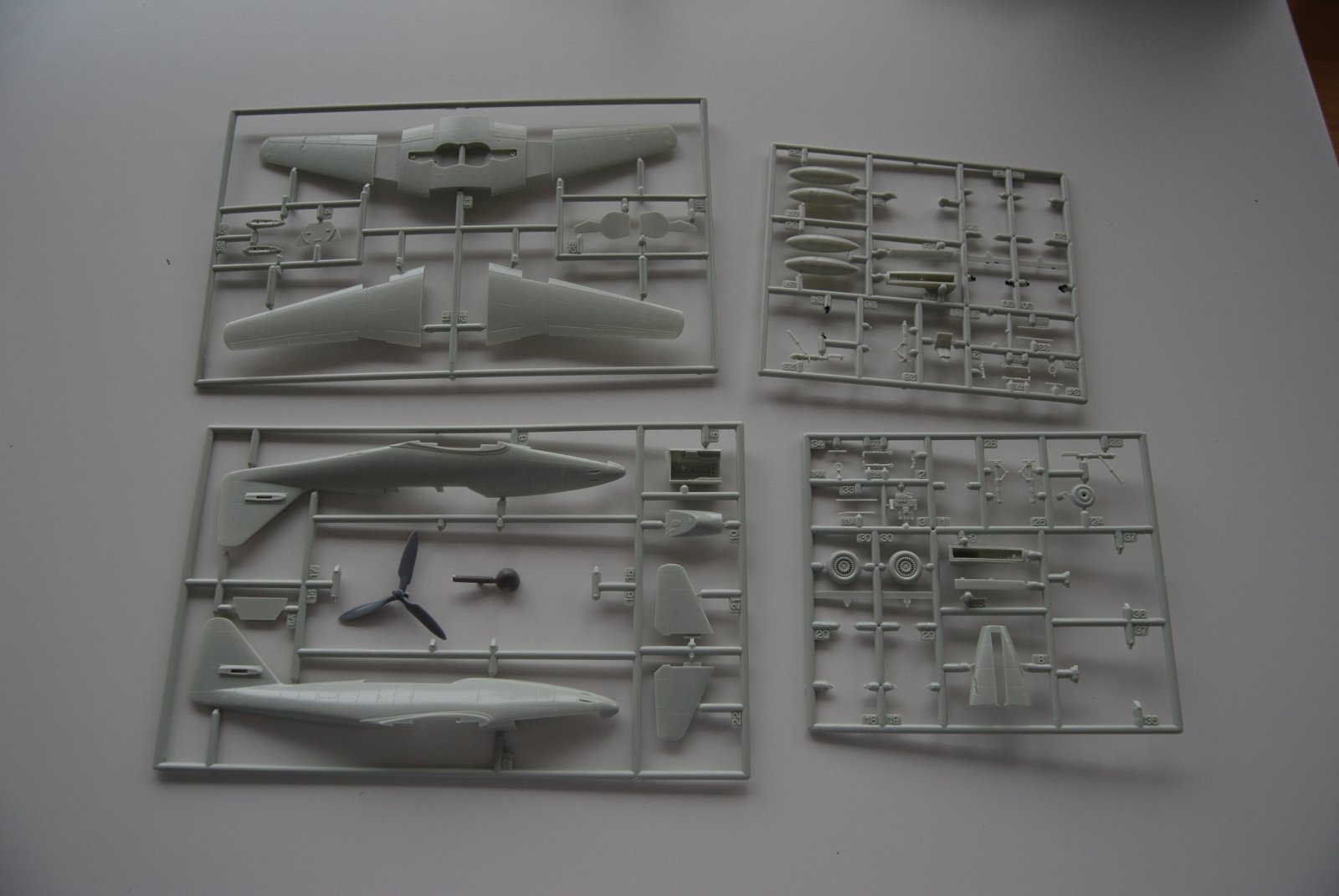
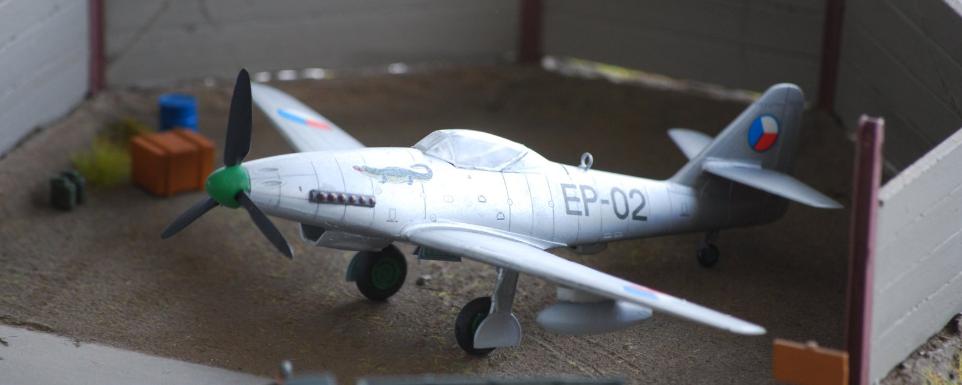
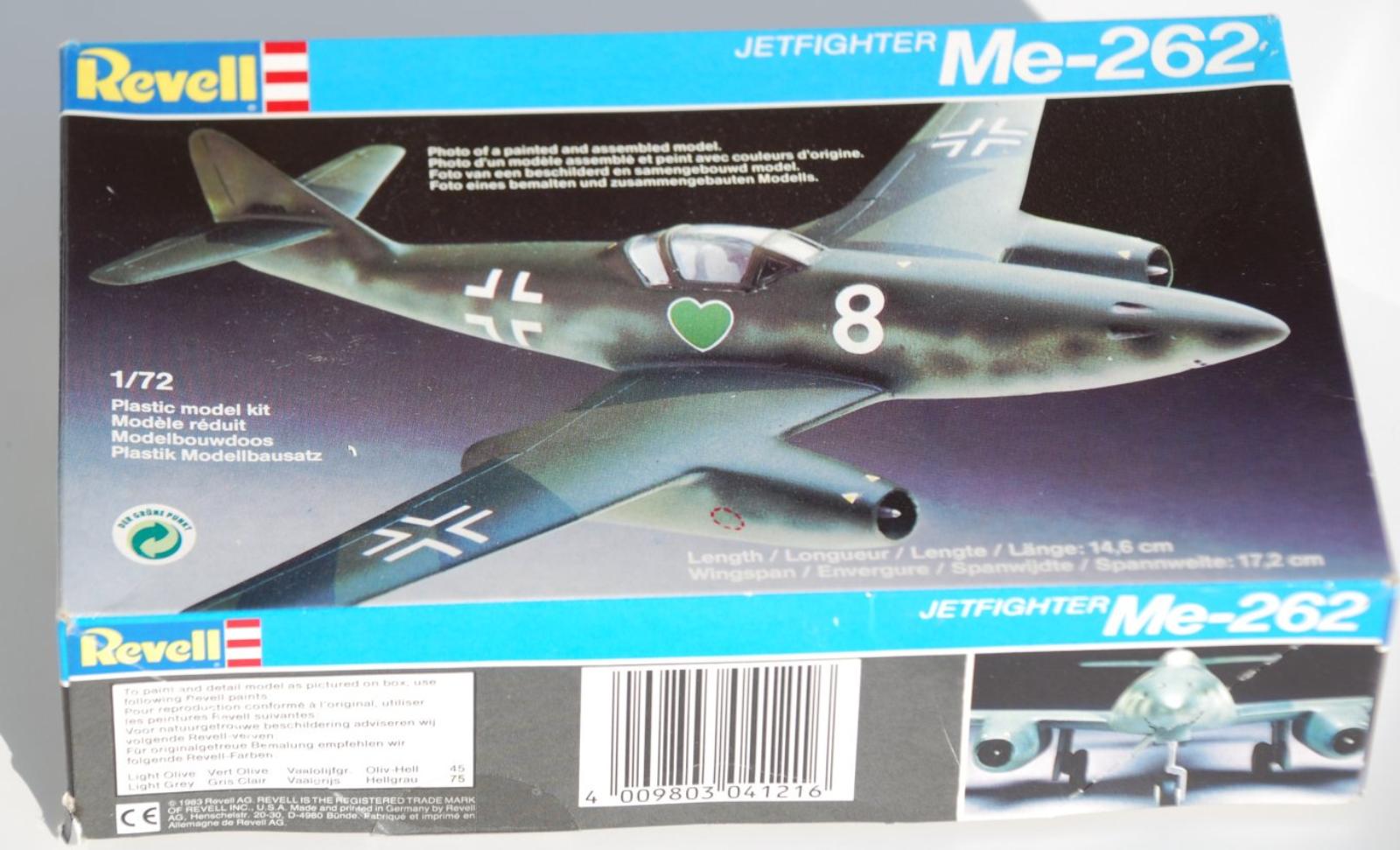
The base model for the S-96 is a Revell Me262 kit. Several parts, like prop and oil coolers were taken from the spare parts box. The model is airbrushed with Revell AquaColor and the decals are form a KP MiG15 and the original Revell model.